“Sociologically he’s sick,” Officer Krupke edition

In recently watching the 2021 film version of West Side Story, this stanza from “Gee, Officer Krupke” stood out.

Yes, Officer Krupke you’re really a slob
This boy don’t need a doctor just a good honest job
Society’s played him a terrible trick
And sociologically he’s sick

The whole song plays with this idea: the Jets are not responsible for their actions as they have been failed by their families and society. Elsewhere in the song, they are said to have a “social disease.” Sure, you could penalize an individual offender – with the police, analysts, social workers, and the courts involved in the song – but that would fail to reckon with the sizable social problems at hand. Of course, the song is meant to invoke laughs.

How much is an individual an individual given their social surroundings? This is one of the questions I raise early on in an Introduction to Sociology class. In the United States, the emphasis is typically on the individual: they make their own choices, develop their own identity, and are responsible for their own actions. Sociology pushes back on that individualistic emphasis by analyzing the social facts and forces that shape and outlive individuals. And West Side Story has its own ideas about individuals and society with its retelling of Romeo and Juliet.

Is Twitter more like a town square or a city full of different neighborhoods?

Finding the right spatial metaphor for Twitter might help reveal what the social media platform does best:

Photo by Deva Darshan on Pexels.com

In Musk’s mind, “Twitter serves as the de facto public town square,” and as such, it should be a place where people are able to speak their minds. This metaphor seems slightly off, though. Yes, for people like Musk it’s a place to have debates they think are important for humanity; people with millions of followers are often the people who think what they’re saying is most important. But for the rest of Twitter—some 229 million daily users—it’s more like a metropolis. People have neighborhoods they stick to; sometimes they go out and talk with friends, sometimes they watch from their windows, sometimes they talk up strangers in a park. Most of these aren’t the kind of world-changing conversations Musk seems to want to have, but they’re just as vital.

As someone who studies cities and suburbs as well as social media, a few thoughts:

  1. The idea of a “town square” seems quaint in a mass society. At the scale of a society like the United States, is there really a single place where everyone can come together? This may have better fit an earlier era of mass media – such as the opening decades of television – or for particular events – the mass viewership of the Super Bowl – but generally does not apply when a country has over 300 million residents.
  2. A “town square” would seem to fit better in a smaller community or neighborhood. The capacity of a town square would be limited. What would the equivalent be in a big city: a plaza? A main thoroughfare or major park where people gather for rallies or protests?
  3. On social media, many users friend or interact with people they know offline. Twitter is a little different model since you follow people but a sustained follow can lead to understanding the other user more. The platforms are not generally set up to interact with random users nor do many users choose to do that.
  4. The goal of participating in durable social media communities is also what Facebook is pushing these days. Even as the early years of the Internet offered potential to connect with anyone in the world, many users found people with like interests and spent a lot of time there. If this is indeed more like city neighborhoods, what then connects the central plaza or town square to all the neighborhoods? How much flow or interaction is there back and forth?

Chicago is a global leader in data centers

The Chicago region is a world leader in data centers:

Photo by Manuel Geissinger on Pexels.com

The Chicago area is tied with Atlanta as the fourth-largest data center market in the world, behind Northern Virginia, Silicon Valley and Singapore, according to a new study by Cushman & Wakefield. The study cites low cost of land, a robust development pipeline and lower power costs than most large data centers as advantages for Chicago.

The study also notes that Chicago-area sites come with “sizable incentives,” a factor that helped bring Facebook/Meta to DeKalb.

In 2019, Illinois created the Data Center Investment Program, offering an exemption from state and local sales and use taxes for companies that invest at least $250 million and create 20 new operational jobs in a data center. The program also requires the data center to be carbon-neutral.

In other words, there is money to be made by putting data centers in the Chicago region.

But, what do data centers offer back to the community? They might sit in buildings that the public does not know are data centers. They may not offer that many jobs; the data center under discussion in DeKalb in the article cited above is a more than 2.3 million square foot facility on 505 acres that will employ 200 people. They are getting tax incentives.

Of course, this is the way the development game is played in the United States. If these deals are not cut, companies will claim they will go elsewhere and they can find more favorable conditions elsewhere. The new data center will end up in Iowa or a “business-friendly climate.” The tech companies are desired by many communities so they will get good offers.

More positively, part of Chicago’s strength over the decades is its position in key infrastructure. The center of important railroad routes. Busy airports. The convergence of commodities from the whole Midwest. The creation of financial instruments. And now data centers.

Many goods come via truck, few want to encounter those trucks on a suburban road

Trucking is essential to the American economy. However, it is not desirable to encounter many trucks on local roads. Here is how one Chicago area county wants to address the issue:

Photo by Craig Adderley on Pexels.com

“The key is really getting trucks onto the interstate as safely and efficiently as possible,” said Patricia Mangano, senior transportation planner with the Chicago Metropolitan Agency for Planning.

As the county grows and the region continues to be an important national transportation hub, the study recommends strategies to minimize the negative impact of freight traffic to residents and the environment…

The report says that high volumes of truck traffic have led to safety and congestion concerns, especially in sensitive areas such as historic districts, neighborhoods or environmentally protected areas. The study notes western Will County’s natural and cultural assets, such as Midewin National Tallgrass Prairie, Abraham Lincoln National Cemetery and the Kankakee River, could be negatively affected by new development and traffic…

“We are the proverbial crossroads of America,” he said, noting residents just want to ensure they can get from work to home to their children’s activities without being caught in traffic.

In recent decades, Will County has become home to an increasing number of warehouses and intermodal facilities. This could be viewed as a positive for economic activity and growth which then leads to more tax revenues, jobs, and prestige.

Yet, certain industries do not necessarily mesh well with the suburban single-family home ideal. Trucks are related to a number of concerns residents have about all sorts of land uses: noise, traffic, lights, threats to the residential ideal they hope for.

I see the point of routing truck traffic along particular roads. This also has the effect of altering those roads. I can think of several major thoroughfares near here that are full of truck traffic during the day. Driving on these roads can be quite different than driving on other main roads. And because the way many suburban communities are laid out, there are often not good alternative routes since traffic in general is funneled from smaller residential streets to larger volume roads.

An impractical suggestion that might please suburban residents: have truck only roads that lead from industrial and commercial properties straight to highways. In many locations, this might work as warehouses and distribution centers are clustered together as are big box stores and shopping malls. On suburban roads without big trucks, suburbanites might occasionally find the opportunity to drive like people do in car commercials: on the open road.

Local residents oppose a casino at three proposed Chicago sites

As Chicago leaders consider where a new casino in the city might be located, local residents expressed their concerns:

Photo by Pixabay on Pexels.com

Earlier this month, the city held town hall meetings for each of the three proposals and got an earful from neighbors opposed to a casino being built close to their homes. Their overwhelming message: Not in my backyard.

“This casino does not belong in a neighborhood,” said Antonio Romanucci, a resident of River North, where the Bally’s casino would be built, if approved. “You are putting a square peg into a round hole.”

Others at the Bally’s meeting raised concerns about traffic, crime and noise from concerts…

And while The 78 is marketed as an entirely new neighborhood, residents from the South Loop, Chinatown and Pilsen spoke in opposition to including a casino in the already approved megadevelopment.

“This is a once in a lifetime opportunity. Don’t blow it on a casino,” said an 11-year-old named Sean, who spoke at the town hall for the Rivers 78 proposal. “A casino does not make a neighborhood. Things that attract families are what make a neighborhood.”

Last week, Lightfoot responded to the community blowback saying there is always “a level of NIMBYism” with large development projects.

Generally, communities and cities tend to like developments that will generate significant revenues. People spend money at casinos and using the property to generate revenues is preferable to having vacant properties or ones with limited revenues.

However, a casino is not a typical land use. They are relatively unusual. They can attract a lot of visitors. They can be viewed as encouraging vice and unsavory activity.

So, the mayor’s claims that this is just NIMBYism might not work with a more unusual land use like this. Sure, residents tend to complain about changes to traffic, lights, noise, and property values with a new nearby development, but does anyone want to live next to a casino?

Watching the decision-making process on this one might just make a fascinating case study for urban scholars for years to come.

Are American cities in trouble or are we focusing too much on the business core of cities?

Recent data suggests the biggest American cities are facing several issues, including population loss. I wonder if the bigger issue is too much focus on the business and downtown core:

They are all among the 20 largest metropolitan areas in the country. All of their populations were growing in 2011. And then, in 2021, they all shrank by a combined 900,000 people, according to an analysis of census data by the Brookings scholar William Frey. That’s an urban exodus nearly the size of two Wyomings.

The great metro shrinkage is part of a larger demographic story. Last year, the U.S. growth rate fell to a record low. The major drivers of population—migration and births—declined, while deaths soared in the pandemic. But America’s largest cities are getting the worst of this national trend. In the past three years, the net number of moves out of Manhattan has increased tenfold. In every urban county within the metros of New York City, Los Angeles, and San Francisco, immigration declined by at least 50 percent from 2018 to 2021. In downtown Detroit and Long Island, deaths actually exceeded births last year.

The great metro shrinkage also appears to be part of a broader cultural story: The rise of remote work has snipped the tether between home and office, allowing many white-collar workers to move out of high-cost cities. Nearly 5 million Americans have moved since 2020 because of remote-work opportunities, according to Adam Ozimek, the chief economist for the Economic Innovation Group, a think tank in Washington, D.C…

So what might this period of urban struggle look like? Just check out what’s happening now. Mass-transit ridership has collapsed from its pre-pandemic highs in New York, Boston, the Bay Area, and Washington, D.C. Although restaurant bookings and travel have bounced back almost entirely, office occupancy remains 50 percent below its 2019 levels. In San Francisco, vacant office space has nearly quadrupled since the pandemic to 18.7 million square feet. In New York, Mayor Eric Adams has practically begged white-collar workers to return to Midtown, even as those workers patronize businesses in more residential parts of the city, closer to where they live. America’s downtown areas support millions of jobs that can’t be made remote—in retail, construction, health care, and beyond. But for millions of white-collar workers, something important has changed: They don’t work “in” cities anymore. They work on the internet. The city is just where they go for fun.

The overall numbers are what they are. Yet, the emphasis in this piece and in others I have read are about a downtown core that COVID-19 weakened. What if American cities no longer need a dense downtown core in the same way? With more work from home, less demand for downtown office space and more interest in downtown residential space, and the ways cars and mass transit allow workers to live in different places from their workplaces, how much focus should be placed on struggling cores?

This could be a larger existential issue about American cities. In the 1990s, a group of scholars in Los Angeles wrote about a new Los Angeles School of urbanism built around the unique features of the LA region. This includes a decreased emphasis on a downtown core and more sprawl and fragmentation across the region. In contrast, Chicago and New York and many other American cities stand as the established alternative: an important business core in response to which all other city activity is oriented.

So is the problem really cities are in big trouble or that the model of an ultra-dense center with all that comes with it is breaking a bit? This could be a huge change for certain places – particularly parts of Manhattan, downtown San Francisco – but there would also be opportunities throughout cities if development and business and residential activity could be more spread out. Indeed, the picture attached to the story says a lot about this:

This picture is taken from the vantage point of a sizable property just south of Chicago’s Loop. Why is it not developed? If the core did not have to be as dense, could this significant property be better woven into the fabric of the city?

More broadly, observers can think about complete cities and complete regions in addition to changes or issues facing the downtown. If activity is moving elsewhere, what does this mean and how might it improve life elsewhere?


If Colorado wants to become home to Disney and be the anti-Florida, would all the evangelical organizations in Colorado Springs want out?

As Florida moved to revoke the local governance power granted by the state to Disney, Colorado Governor Jared Polis extended a welcome to Disney:

Photo by Erick Todd on Pexels.com

Colorado Governor Jared Polis has invited Disney to relocate to Colorado after Florida Governor Ron DeSantis’ “socialist attacks” on the company.

“Florida’s authoritarian socialist attacks on the private sector are driving businesses away,” Polis tweeted on Tuesday. “In CO, we don’t meddle in affairs of companies like @Disney or @Twitter.”

Polis then made his pitch for a new theme park in Colorado. “Hey Disney we’re ready for Mountain Disneyland,” he continued—a statement DeSantis’s office told Newsweek was “an odd invitation.”…

Polis also invited Twitter to launch headquarters in Colorado, regardless of “whoever your owners are.”

States fight over companies and jobs regularly, even as this round includes a particular culture war dynamic.

I am interested in the possible fallout for the cluster of evangelical organizations in Colorado Springs. While Colorado as a state made have made several decisions in the last decade or so toward blue status, it has longer featured two centers of power: a more progressive Denver and Boulder and a more conservative Colorado Springs. Even though the latter center has fewer residents than the cities to its north, it is home to many evangelical organizations. The profile of the city was particularly boosted by the move of Focus on the Family from the suburbs of Los Angeles to Colorado Springs in the early 1990s and the rise of local megachurch pastor Ted Haggard to president of the National Association of Evangelicals in the 2000s.

Would a continued shift left in Colorado lead evangelical organizations to want to go somewhere else? Some of the factors that made Colorado Springs attractive in the first place might still be there but the political climate and state policies less friendly. And where would they go? There might be safer clusters. For example, one study examines three other evangelical parachurch clusters in addition to Colorado Springs – Tulsa, Nashville, Washington, D.C. Would Tulsa and Nashville be safer and/or attractive choices compared to a changing Colorado?

Some city or community might also take advantage of this. Instead of waging a Twitter and media campaign impugning the choices of another state, why not quietly offer tax breaks, a promise of limited red tap and regulations, and a welcome plus reassurance that the evangelicals of Colorado Springs would be welcome in a political environment more to their liking.

Preserve a Brutalist courthouse in the suburbs, can McMansions be far behind?

Landmark Illinois recently released its list of the most endangered historic places and it includes several places in the suburbs of Chicago. This is the largest suburban building on the list:

This is indeed a unique structure. Suburbanites are unlikely to see many large Brutalist buildings in suburban communities as they are traditionally associated with big cities (think Boston City Hall or the FBI Building in Washington, D.C.).

I have asked before whether Americans would prefer modernist structures more broadly or McMansions. Both kinds of buildings have their detractors who critique the materials, the style, and the prevalence of such structures.

If some of the goals of preservation are to protect notable buildings and help show important architecture of the past, both such styles deserve to be recognized. Brutalism is not likely the preferred style in suburbs. McMansions are not favored by many. At the least, both kinds of buildings represent a particular era. At their best, they present a particular approach to buildings and spaces.

Even if certain kinds of structures or certain styles are not appealing to all, there is still value in preserving examples of this work. If Brutalist buildings are in, we can expect to see preserved McMansions in the future. Imagine protecting the subdivision McMansion of the North Shore or the teardown McMansion of Naperville to show how Americans thought about suburban housing at the turn of the twenty-first century.

The complications of switching over from Disney self-governance in Florida to local government

With the Florida legislature voting to strip Disney of its self-governance status regarding the Disney World land, what might this mean for local governments?

Photo by Benjamin Suter on Pexels.com

The counties, on June 1, 2023, would assume all of Reedy Creek’s assets and liabilities and become responsible for providing all of the services currently handled by the district, CNBC reported.

Currently, Disney finances the services supplied by Reedy Creek, which would normally be funded by local municipalities. The company, instead, charges itself property taxes to finance its service and pays the Orange County Sheriff’s Office for law enforcement.

Once Reedy Creek is dismantled, local taxpayers and municipalities would likely be responsible for those services.

’Removing district could transfer $2billion debt from Disney to taxpayers and could potential have an enormous impact on Orange and Osceola residents!’ State Sen. Linda Stewart, who voted against the bill, tweeted Wednesday.

However, Rep. Fine told Insider he believed taxes could go down because the measure was ‘eliminating a layer of government’.

Walt Disney World already pays property taxes to Orange and Osceola counties, so that would not change, however the counties would get to collect the tax revenue Disney currently pays to itself.

The transfer of revenues, services, and infrastructure from a private entity to a set of local governments might take some time to sort out. Who will be responsible for what? How do the revenues compare to the costs required? How does this require local governments to adjust?

Let’s say this process is a complicated one. Does this affect the experience of visitors to Disney properties or to local residents?

While this is a national culture wars story at the moment, it would be interesting to hear from local officials on what they think of this or how they anticipate this working out. Very few local officials would want to lose a major company from their land. Would they vote against their own local economic and political interests in the service of sending a message to Disney?

Looking to global examples to address housing crunches in expensive cities

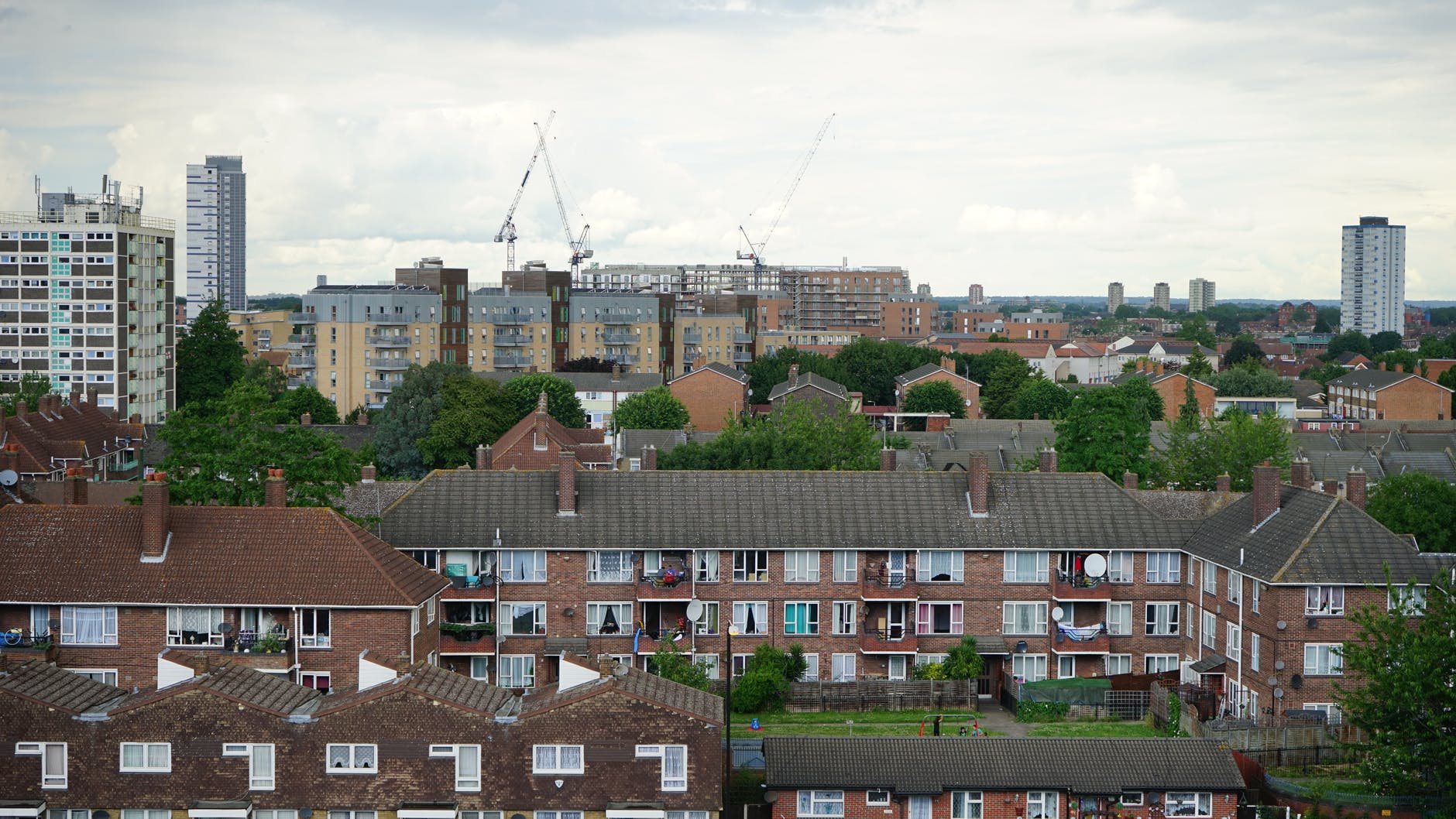
Housing is a very difficult issue to address at the national level. Can the United States look to examples abroad?

Photo by Mike on Pexels.com

Some suggest that Japan is the model to follow. There, rental prices have largely remained flat over the last 25 years, according to data from the country’s statistics bureau. The reason is that the government controls zoning nationally and is more open to development in the number of houses it allows to be built. Just over a third of Japanese citizens rent the homes they live in, protected by a 1991 law called the Act on Land and Building Leases, which makes it difficult for landlords to end leases or prevent a tenant from extending their rental contract…

So where else should we be looking, if not to Japan, for the model to fix the broken housing market in large parts of the west? One option is Singapore, where public housing is built in specially designed communities and sold to individuals with a 99-year lease below market value. Selling on that property is highly restricted to reduce profiteering, but it can happen after five years of ownership. Nearly four in five Singaporeans live in public-sector housing, according to official statistics. “Prices can never get beyond regular working families,” says Ronald. “They have this virtuous circle, and it makes it interesting to think about the role of regulating housing.”…

Until late January 2022, housing developments in Germany were subsidized by the government below market rates for the first five years after being built. “It means tens of thousands of units every year come onto the market, keeping rental prices lower and preventing scrambles to buy a property,” he says.

A similar model exists in Austria and Switzerland, where the split is roughly 55 to 45 percent (in favor of renting in Switzerland, and owning in Austria), compared to an average European home ownership rate of 70 percent. When you get to the Austrian capital, Vienna, the home ownership rate is just 7 percent.

All of these sound like they would require some fundamental changes to housing policy in the United States. This might include:

  1. A stronger national policy. This could be through programs available everywhere or guidelines that all states and municipalities have to follow.
  2. A stronger emphasis on renting.
  3. More government involvement in the construction of housing and/or longer-term government oversight of housing units.

None of these options would be particularly popular in the United States or easy to implement. Here are quick explanations why for each option above:

  1. A national policy would come at the expense of the power of more local governmental actors. With real estate being so much about location, could a national policy truly address all of the different situations? Americans expect to be able to control or at least provide input into the use of land around them.
  2. Homeownership is ingrained in American life as part of the attainment of the American Dream. This is ensconsed in zoning policy, supported by politicians and policies for decades, and Americans can be suspicious of renters compared to homeowners. Renting is more common in some areas compared to others but it is not seen as the ideal among Americans.
  3. Public housing has never been fully supported in the United States. The government’s active role in housing is often viewed as negative unless it is supporting homeownership.

This does not mean that the housing landscape in the United States cannot change. The need for more housing and more affordable housing is acute. But, changes will likely take decades and sustained efforts.