Proposed buildings that could go on for miles

A proposed new city in Saudi Arabia may include the world’s largest buildings:

Photo by Mohammed Ajwad on Pexels.com

NEOM, the brainchild of Saudi Crown Prince and de facto ruler Mohammed bin Salman, aims to build twin skyscrapers about 500 meters (1,640 feet) tall that stretch horizontally for dozens of miles, the people said.

The skyscrapers would house a mix of residential, retail and office space running from the Red Sea coast into the desert, the people said, asking not to be identified as the information is private. The plan is a shift from the concept announced last year of building a string of developments linked by underground hyper-speed rail, into a long continuous structure, the people said.

Designers were instructed to work on a half mile-long prototype, current and former NEOM employees said. If it goes forward in full, each structure would be larger than the world’s current biggest buildings, most of which are factories or malls rather than residential communities.

Imagine a building that stretches on for miles. As one follows it with their eye, it just keeps going and going. A building that goes past the horizon.

How does one get around within such a building? Moving walkways? Segways? An interior mass transit system? Or, exit the building and use a vehicle out there?

I could imagine a fairly self-contained community inside such a building. Going outside might not be very necessary except for going to a different city. What an American suburbanite might desire to be within a ten minute drive just happens to all be in the same structure.

Since this is in the planning stages, it could be years for the development to arise and stretch out to the point where the buildings are the largest and/or longest in the world.

AIM away messages and a “basic form of social liberty”

AIM away messages provided a way for users to show that they were not available:

Photo by Porapak Apichodilok on Pexels.com

Sometimes you had to step away. So you threw up an Away Message: I’m not here. I’m in class/at the game/my dad needs to use the comp. I’ve left you with an emo quote that demonstrates how deep I am. Or, here’s a song lyric that signals I am so over you. Never mind that my Away Message is aimed at you.

I miss Away Messages. This nostalgia is layered in abstraction; I probably miss the newness of the internet of the 1990s, and I also miss just being … away. But this is about Away Messages themselves—the bits of code that constructed Maginot Lines around our availability. An Away Message was a text box full of possibilities, a mini-MySpace profile or a Facebook status update years before either existed. It was also a boundary: An Away Message not only popped up as a response after someone IM’d you, it was wholly visible to that person before they IM’d you.

Messaging today, whether through texting or apps, does not work the same way:

Catapulting even further back into the past for a moment: Old-fashioned phone calls used to, and sometimes still do, start with “Hey, you free?” Santamaria points out. “You were going to tell me if you could talk before we started the conversation.” There’s a version of this today—someone might preface their message with “Not urgent, respond when you can,” for example—but for the most part, we just send the text message without consideration, Santamaria says. Interruption is the default.

The ability to walk away from communication and the demands it makes on a person struck me as similar to one of the three “basic forms of social liberty” humans had before settling in cities and large societies. Anthropologists David Graeber and David Wengrow say the second form was “the freedom to ignore or disobey commands issued by others.” Text messages, emails, and messages in apps create a pressure for someone to respond. To not have these digital “commands,” one practically not use apps and devices.

Is this the freedom we have traded to use social media, the Internet, and smartphones? People can unplug but it is difficult to do that and still participate in regular social life today. Saying no to messages or refusing to respond will likely not garner many friends or close connections. And related to the first form of freedom, “the freedom to move away or relocate from one’s surroundings,” the messages and apps can follow us anywhere there is Internet access or cell coverage.

These platforms succeed by encouraging messaging and connections. But, what if a basic human freedom is the one to say no to that interaction when desired?

The suburbia where those who work from home have money to spend nearby

If more suburbanites are working from home and spending more time in the suburbs, suburban communities and businesses want their money:

Photo by Andrew Neel on Pexels.com

Suburban developers and retailers are working to provide ways to escape home, be around others, and, most importantly, spend newfound time and money…

Neighborhood retailers are eyeing the money she and others are saving on the commute, in addition to the thousands of dollars that office workers typically spend annually in restaurants, bars, clothing stores, entertainment venues and other businesses. In many cases, coffee breaks, haircuts and happy hours that used to happen near downtown offices have moved to the suburbs…

In the Washington region and nationally, the trend is most striking in higher-income inner suburbs, where more residents have computer-centric jobs suited to remote work and money to spare…

The new weekday demand, developers say, has helped suburban shopping centers and entertainment districts reach and, in some cases, surpass 2019 sales. The pandemic also accelerated long-standing pre-pandemic trends toward walkable suburban developments and the “third place” — public gathering spots like coffee shops and bookstores, where people can connect beyond home and work.

I want to expand on one of the ideas suggested above: this may already be happening in wealthier and denser inner-ring suburbs. These communities already have residents with more money to spend and already have a denser streetscape from a founding before postwar automobile suburbia.

But, could this go further? Suburbanites with more money to spend live in certain places. The shopping malls that will survive and even thrive are likely located near wealthier communities. Having more resources could enable certain suburbs to redevelop and add to their offerings compared to others that could languish in a competition for spenders and visitors.

Imagine then an even more bifurcated suburbia where wealthier suburbs have vibrant entertainment and shopping options while other suburbs do not. The suburban work from home crowd is not evenly distributed and neither are the communities and amenities they might prefer.

12 of the 15 fastest-growing cities in the US in 2021 were Sunbelt suburbs

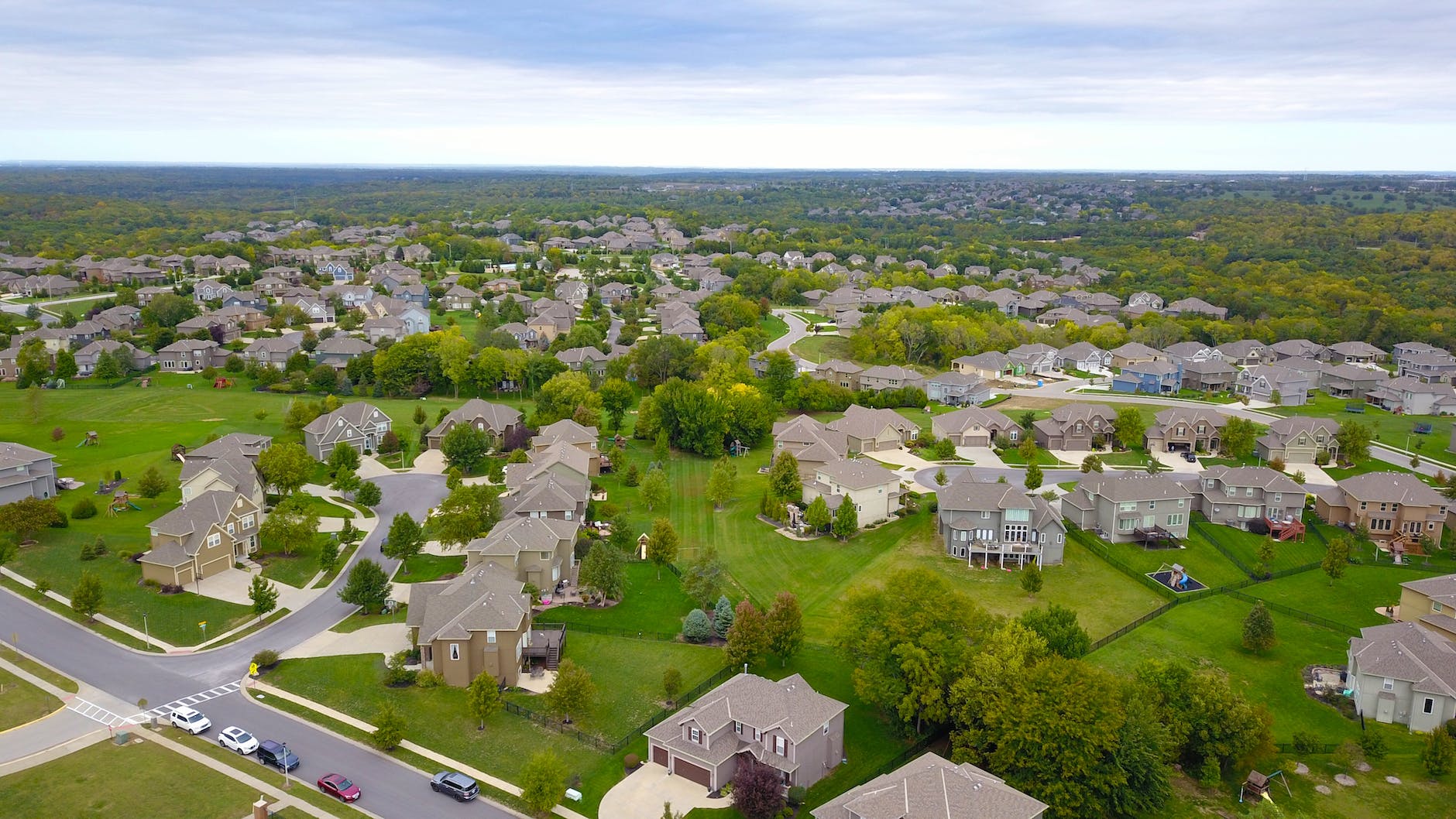
The 15 fastest growing communities – percentage-wise – the United States between July 2020 and July 2021 included 12 suburbs:

Photo by Curtis Adams on Pexels.com
  1. Georgetown, TX – suburb of Austin
  2. Leander, TX – suburb of Austin
  3. Queen Creek, AZ – suburb of Phoenix
  4. Buckeye, AZ – suburb of Phoenix
  5. New Braunfels, TX – suburb of San Antonio – see earlier post about growth in the community
  6. Fort Myers, FL – a central city in Cape Coral-Fort Myers MSA
  7. Casa Grande, AZ – suburb of Phoenix
  8. Maricopa, AZ – suburb of Phoenix
  9. North Port, FL – a central city in North Port-Brandenton-Sarasota MSA
  10. Spring Hill, TN – suburb of Nashville
  11. Goodyear, AZ – suburb of Phoenix
  12. Port St. Lucie, FL – central city of Port St. Lucie MSA
  13. Meridian, ID – suburb of Boise
  14. Caldwell, ID – suburb of Boise
  15. Nampa, ID – suburb of Boise

This is not just about the Sunbelt continuing to grow, as I saw in several headlines, but also about suburban and metropolitan growth in the Sunbelt. Many of these regions continue to grow, such as Austin, Phoenix, San Antonio, Nashville, and Boise, on the edges.

The list of the fastest growing communities by the absolute number of new residents was also weighted toward suburbs.

If you replace a suburban colonial with “a very modern house” rather than a McMansion, is this a win?

A profile a recent teardown in Bethesda, Maryland highlights that the new structure is not a McMansion:

Teardowns can often raise concerns in established neighborhoods when a McMansion suddenly arises in a collection of bungalows. The design team didn’t want that to happen. “We didn’t want it to look like a UFO just landed in their yard,” Bloomberg says. “We looked at scale, proportion and massing.”

This quote above highlights what the new home is: it is has better scale, proportion, and massing compared to McMansions which tend to get these wrong. It was designed by an architectural firm rather than builders.

The best text description of the new home is this paragraph:

“Everything feels very scaled,” Bloomberg says. “It has a warmth to it even though it’s a very modern house – there [is] lots of wood, which helps make it very warm and welcoming.”

The pictures of the interior reinforce this description: it is a more modern structure.

But, one picture early on in the article hints at a contrast between the new home and the neighbor:

The teardown does not appear to be that much different in size than the neighbor but it certainly presents a different style of home compared to the brick and shuttered Colonial. Teardown McMansions are often criticized not fitting in with the existing style of homes.

I have asked before: would Americans prefer to live next to a McMansion or a modernist home? The article says “there has been no neighborhood backlash” to this new teardown. Now, what happens if a teardown McMansion goes up next to this modern home…

Chicagoland suburbanites respond to No Mow May

At least a few residents in the Chicago suburbs have adhered to No Mow May:

Photo by Michau0142 Ludwiczak on Pexels.com

The effect can be dramatic, with neat suburban lots growing shaggy and wild, and the jokes flowing freely along with the #lazylawn social media posts.

But the goal is serious. Scientists are increasingly concerned about studies showing key insect populations are falling due to factors such as loss of habitat, pesticide use and climate change. And the plight of these unsung heroes of the food chain has proved difficult to publicize

The northern suburb of Northbrook suspended enforcement of its mowing ordinance and offered its first No Mow May this year, with free wildflower seed packs for participants. In Glenview, 292 residences signed up for a less ambitious No Mow ’Til Mother’s Day program offered by the village. In Westmont, 236 residences registered for No Mow ’Til Mother’s Day, up from 161 in 2021…

“We’re getting a lot of feedback that, ‘I’m seeing more rabbits, I’m seeing more bees than I’ve ever seen in my yard before’ — these exciting types of new discoveries made at the residential level. And of course, a lot of kids really love dandelions, so that’s a cool outcome.”

Not everyone is happy with No Mow May in general and those extra dandelions in particular. Northbrook received a public comment from a participant who said their neighbor mowed their lawn in the middle of the night. On Facebook, No Mowers said they were concerned about upsetting their neighbors and spreading dandelions. One woman said she had taken to deadheading dandelions to avoid seed spread, a time-consuming task.

This reaction against this new practice is about what I would expect. There is a strong cultural norm that suburban lawns, and lawns in general, should be green and free of dandelions and leaves. Growing anything in the lawn beyond well-manicured green grass is discouraged formally and informally.

This would also line up with a number discussed in the article. A biologist estimated 5,000 Americans participated in No Mow May this year. Given all of the online conversation about No Mow May, only 5,000 people are trying this out? The green lawn crew is even stronger that might be suspected. Perhaps this number grow as the idea spreads and institutional actors, such as municipalities, support it.

Transitioning a glittering downtown shopping mall to a more experiential space

Water Tower Place on North Michigan Avenue has fallen on hard times, as have many malls, and plans are underway to revive the property with new uses:

In consultant-speak, today’s juice is “experiential” retail. It means that people not only want something they haven’t seen before, but they want an experience to go along with their purchase. The Apple Store and the Starbucks Reserve Roastery further south on Michigan Avenue are examples of that — places where shoppers come to see and feel as well as to buy. A pop-up show called the “Dr. Seuss Experience” filled Macy’s former space in Water Tower Place this winter. Down the street, a “Museum of Ice Cream” is opening at the base of the newly renovated Tribune Tower this summer…

But she and her colleagues are already thinking big. A report titled “North Michigan Avenue: Strategies for a Vibrant Future” issued in March by a group of business and city leaders envisions a grand promenade running from the historic limestone Water Tower, past the Museum of Contemporary Art, to the lake along Chicago Avenue; and a soaring pedestrian bridge stretching from Michigan Avenue, over DuSable Lake Shore Drive, to Oak Street Beach. The bridge, modeled on a structure in Moscow, would make it possible to see and get to Lake Michigan from the Mag Mile without descending into dank tunnels under the beachfront drive.

Also in the report: a more run-of-the-mill property tax on landlords raising about three quarters of a million dollars passed the City Council this year; it will be used for cultural events like “Music on the Mile” and for security cameras. The city also awarded Bares’ group money from a federal grant to deploy a team of uniformed “ambassadors” — unarmed security personnel with radios to help tourists, assist the homeless and report criminal activity on the Mag Mile — starting in June.

But most of the report is focused on getting people excited about going downtown to enjoy attractions such as music, art and culture, and Water Tower Place recently scored its own big get on that front. In April, the world-renowned Hubbard Street Dance Chicago surprised everyone and moved from a temporary home on the North Side into the mall’s fourth floor.

For years, shopping in a lively context was enough “juice” to bring in both serious shoppers, curious shoppers, and other visitors. Shopping was one of the most popular activities for Americans and the glamor of a downtown mall plus at least a decent-sized crowd would make it feel exciting.

Now that shopping is decoupled from physical space, these former shopping spaces do not have enough “juice.” They need more experiences, ranging from music to arts to unusual sights to places where people can post intriguing social media images.

Can cities and communities be flexible enough to shift spaces and experiences? And how many experiential areas can there be? On the first question, communities need to open to how spaces might be used in different ways when conditions change. Shopping malls may have worked for decades and brought in significant revenue, but when they struggle, what is next? For the second question, Chicago already has some of these experiential spaces: Navy Pier, the Museum Campus, a Riverwalk, and other concentrations of interesting activity. Can these work together in that a visitor could access several of these in a single day or trip or at some point do they start competing against each other?

The decline of in-person shopping is a big deal and a shift that many communities are struggling to address. Those who find successful alternative uses for these shopping spaces and also develop a mindset of needing to refresh certain places may just come out ahead.

A visible reminder of above-ground (and buried) power lines

I recently noticed what looks like plans to replace nearby poles for above-ground power lines:

I look forward to seeing the way these poles are replaced. I would guess that this does not happen very often and these poles need to stand straight through all kinds of weather to do their job and keep power moving. This transmission line running north-south down an important two lane road through residential areas clearly brings the power.

Seeing this also reminded me of something else: the relatively lack of visible power lines near where I live. This is not the case in other nearby places; older neighborhoods in my suburb have power lines on each street with an attachment to each single-family home. In contrast, most of the streets near me are unmarred by power lines. I primarily see buildings, grass, and roads without seeing power lines.

Additionally, we rarely experience power disruptions. Through rain, snow, and high winds, the power stays on. Presumably, the path our power takes the power plant to our house includes above-ground lines, supported by metal towers or wood poles. A few miles away is a major transmission line running north-south with its own right-of-way and lines several stories in the air.

When I do not see power lines, I rarely think about them. Or, I do not think about sewers that channel waste and water away from suburban homes unless something bad happens. Or, the wifi in the house silently disperses digital bits and I do not need to think about it.

The hidden infrastructure of our lives brings us much. I will watch for the replacement of the power line poles and then I will likely go back to not thinking about how the electricity that makes so much of modern life go around reaches me as much of the infrastructure is out of sight.

Even Woodfield Mall could be enhanced by nearby high-density residential development

As shopping malls struggle, an area near Woodfield Mall in Schaumburg may soon include taller apartment buildings:

Photo by Mike B on Pexels.com

Schaumburg officials are considering drafting regulations for potential redevelopment near the Northwest Transportation Center of Pace Suburban Bus that would permit high-density residential buildings, as well as one or more parking structures.

Trustees are poised to vote Tuesday to direct the village staff to prepare such a transit-oriented district bordered by Woodfield Road to the north, Martingale Road to the east, Higgins Road to the south and the eastern edge of the Schaumburg Corporate Center to the west.

Transit-oriented developments — characterized by a mix of uses including homes near transportation hubs such as train or bus stations — are found in many areas of the suburbs. But this would be the first true example in Schaumburg, Community Development Director Julie Fitzgerald said.

The entire commercial area around Woodfield Mall so far has been free of residential development since the mall was built more than 50 years ago.

Such a plan would build on three trends:

  1. Including more residential units in and around shopping malls (recent examples from the Chicago suburbs here and here). This helps increase the number of people who might frequent the businesses nearby.
  2. Locating higher-density housing around transit hubs. The resulting transit-oriented developments could reduce the reliance on cars with mass transit options immediately accessible.
  3. Placing higher-density housing away from single-family homes and lower-density housing. Such a location is less likely to draw concerns from neighbors who express concerns about traffic, noise, and an impact on their property values.

If plans go forward, it will be interesting to see the price point of these residential units and whether this kicks off more residential development in what is already a busy area. Perhaps Schaumburg will become the home to more businesses and more apartments?

Illinois lost population in the 2020 Census and then it gained population after estimates of an undercount

The Census Bureau reported last week on states where populations were likely undercounted or overcounted. Illinois fell into the first camp:

Photo by Skylar Kang on Pexels.com

The U.S. Census Bureau originally found that Illinois lost about 18,000 people over the prior decade, which was the first time numbers showed Illinois’ overall population had declined since it joined the union in 1818. But after a follow-up survey — something that happens after each once-a-decade head count of the U.S. population — it discovered the state’s population figures had likely been undercounted…

“These latest numbers from the U.S. Census Bureau show that Illinois is now a state on the rise with a growing population,” Democratic Gov. J.B. Pritzker said in a statement. “ … I look forward to celebrating this development with all Illinoisans, including those who routinely bad-mouth our state.”…

The estimate that Illinois’ population was undercounted by 1.97%, or about 250,000, was the midpoint provided in the survey. The population could have been undercounted by as much as 440,000 people, or 3.43%, or as little as 65,000 people, or 0.51%, the survey showed.

I am interested in methodology and how small numbers can affect something seemingly simple like the number of people living in a state.

The Census Bureau puts much effort into getting the count right. This requires years of efforts leading up to the dicennial census, a lot of work in that year, and many resources put into all of it.

Losing 18,000 people over a ten year stretch is a small blip in a state that has over 12,000,000 residents. Similarly, gaining 250,000 people – the midpoint of the undercount estimate – is just a few percent of the total population. Either way, the Illinois population did not change all that much. It stayed relatively the same.

The real issue for Illinois and its leaders are the perceptions about population in Illinois and how Illinois compares to other states. Many agree: populations of state and communities should be growing for them to be deemed healthy. Population growth is good. In contrast, losing people is a sign of distress.

Similarly, even if Illinois grew by 250,000 people or lost 18,000 people, it matters how this compares to other places. Is Illinois more like Rust Belt communities and states or is it more like Sunbelt communities and states? Can Illinois be a shining light for population growth in the Upper Midwest? An so on.

It does not appear the overcount/undercount estimates will become official population figures so this story will likely continue in Illinois with subsequent Census estimates and political claims about population.