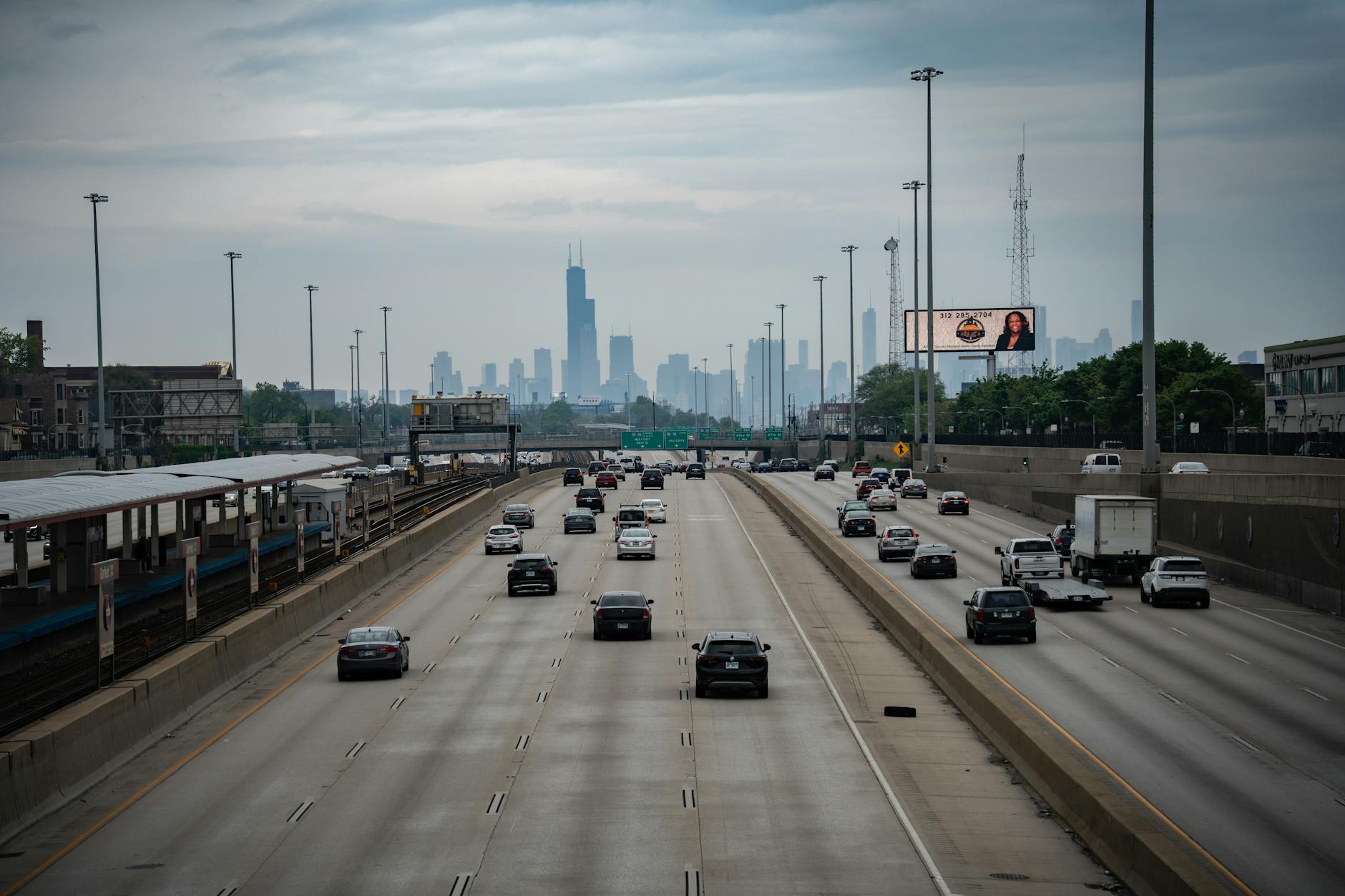
Not many takers of money available to Cook County suburbs to help migrants

Money is available to suburban communities in Cook County to help migrants. Only two have applied for it:

Photo by Pixabay on Pexels.com

As of now, only Oak Park and Ford Heights applied for the fund Cook County created last fall. The lack of effort is frustrating some non-profit leaders who see the need in their communities…

The Cook County Board created a $100 million disaster response and recovery fund last fall, and of that $20 million was earmarked for suburbs if they wanted to play a bigger role in helping migrants. The money can be used for a variety of services, from shelter and short-term rental assistance to helping migrants enroll their children in school or apply for public benefits, according to the application.

Suburbs can pass the money through to other organizations, such as non-profits or community health centers…

She has her theories about why suburbs aren’t applying for the county’s big pot of money. She points to Joliet Township, which was awarded money from the state, then didn’t take it after blowback from residents

But some suburbs are frank about why there’s been little interest — they say they’re already overwhelmed by their existing needs. In west suburban Forest Park, Mayor Rory Hoskins said he already has a lot on his plate. His community is the last stop on the CTA’s Blue Line. He said his small fire department is stretched thin responding to mental health calls, overdoses and assaults.

This is not surprising given the lack of interest suburban communities have shown in having migrants in the community beyond a drop-off and train trip to Chicago. In other words, local officials are likely worried about what residents will say if they take the money. This could lead to them being voted out of office.

Another way to think about this is what incentives would prompt a suburb to provide help to migrants. Is there a dollar amount? Some sort of special project or program could be brought to the community?

It would be interesting if similar funds were made available throughout the Chicago region. How many suburbs would accept money? More than five?

What older adults owe younger adults regarding housing: nothing, something, or everything?

Older adult Americans are holding on to their big houses longer. Should they do this? Here are three options in the American context for how older adults could approach housing in terms of what they might owe younger adults regarding housing.

Photo by Luis Yanez on Pexels.com
  1. They owe younger adults nothing. Older adults worked hard to acquire and maintain their properties. They are holding on to them as valuable assets that can continue to appreciate in value. If they can stay in the homes (considering finances and health), why shouldn’t they stay in the homes they selected as long as they can?
  2. They owe younger adults something. Older adults can balance what they would like as they age – staying in their homes, cashing out the value of those properties – with also helping younger adults who desire housing. This might look different for a variety of households and locations.
  3. They owe younger adults everything. Older adults should actively work to pass along their homes and properties (and their associated wealth and opportunities) to younger people. They should make way for future generations who could benefit from the housing they benefited them. They are passing along a housing legacy that can enrich their children and grandchildren. They have an obligation to insure housing is readily available for those who come after them.

This is a rough approximation of options available within the United States. Numerous articles in recent years highlight this dynamic of generational shifts in housing options and preferences. The housing situation in the United States is unique – emphasizing single-family homes, limited supply, high mortgage interest rates, a big Baby Boomer generation, decades-long housing value increases, and more – and Americans tend to think that housing is a market, not a human right.

Fast forward ten or twenty years down the road: I would guess Americans will follow some middle option above. Some older adults will want to or have to pass along housing, others will hold onto it as long as possible. What might be most interesting is if some of those big houses stop rising in value so much or even lose value – how much might this change the dynamics in housing turnover?

Quick review: best animal display I have ever seen is the whale shark tank at the Georgia Aquarium

I have now visited the Georgia Aquarium in Atlanta three times (first visit in 2010 reviewed here). Each time, I enjoy visiting the Ocean Voyager exhibit:

This picture comes from the viewing gallery at the end of the exhibit after visitors have already walked through a glass tunnel and looked through multiple windows into the exhibit. You can see a whale shark, two manta rays, and other species in the image above. Here is how the aquarium describes this:

Our Ocean Voyager gallery, built by The Home Depot, is home to whale sharks, manta rays and thousands of other fascinating fish. As one of the largest single aquatic exhibits in the world, Ocean Voyager features an acrylic tunnel for guests to view thousands of marine creatures on all sides, as well as a giant acrylic viewing window to explore our oceans like never before.

This exhibit was specially designed to house whale sharks, the largest fish species in the world. Schools of predatory trevally jacks, squadrons of small and large stingrays, enormous goliath grouper and several sharks all ply the waters of this ocean habitat. With 4,574 square feet of viewing windows, a 100-foot-long underwater tunnel, 185 tons of acrylic windows and one of the largest viewing windows in the world at 23 feet tall by 61 feet wide and 2 feet thick, visitors will have multiple opportunities to view all of these magnificent animals.

Zoos and aquariums can tend to offer visitors similar animals and exhibits. To create something truly unique in size and animals is a treat to behold. For good reason, there are always plenty of people sitting in front of this giant gallery wall trying to take it all in.

An abandoned large development in LA turns into graffiti canvas

A large development in Los Angeles that has gone unfinished now goes by the name “Graffiti Towers” to nearby residents:

https://www.cnn.com/2024/04/10/style/graffiti-oceanwide-plaza-los-angeles-skyscrapers/index.html

Climbing up abandoned, unfinishedfloors and tightrope walking across balcony ledges, backpacks clanging with cans of alkyd and acrylic, a collective of Los Angeles graffiti artists have transformed their craft beyond urban aesthetics to champion community issues.

Their choice of canvas: Oceanwide Plaza in Downtown LA. Occupying over a full square city block, the plaza was imagined as a vast mixed-use building project, offering city residents over 500 lavish condominiums, a five-star hotel, retail spaces, restaurants and a private 2-acre park.

However, construction on the $1 billion project, which began in 2015, was shelved after the Chinese-backed contractor Oceanwide Holdingsran out of funding in 2019 — and it has lain unfinished ever since…

Transformed in part into an art installation, Oceanwide became an opportunity for the graffiti artists to leave a message to the city below, and a call-out to policy makers who leave buildings to rot…

“People forget that people live here. People own businesses here and they don’t want to have to spend the time and money to clean it up,” said Blair Besten, executive director of the Historic Core of Downtown Los Angeles, an organization which works to improve the quality of life in downtown neighborhoods. The Historic Core prioritizes street sweeping, trash collection — and graffiti removal.

This article showcases the multiple sides of an ongoing public debate about graffiti: is it a response to difficult social and economic conditions? Is it art? Is it criminal behavior that should be punished?

At the same time, how is there such a large abandoned project in Los Angeles? What can a municipality do to finish the development or pursue another use?

Put these two ideas together: are there cities willing to have large-scale platforms for graffiti in or near their downtowns? If graffiti and its place in society is multi-faceted, how might Los Angeles or other large cities incorporate it or work with graffiti artists?

Searching for the one answer: social media use among young adults, injuries among baseball pitchers

American society often likes one solution to solve an important problem. How many times do we hear that a particular political candidate or a specific product or a change to the educational system could change society for the better?

Photo by Polina Tankilevitch on Pexels.com

Two recent examples of this approach have popped up:

  1. Is social media use among young adults the reason for all sorts of social ills? If we could curb or regulate this use – or perhaps even allow no use – then all sorts of outcomes would improve.
  2. Why are so many baseball pitchers suffering major injuries? If we could find the single cause, more talented pitchers could continue to practice their craft.

Our world is complex. In many situations, multiple factors contribute to issues and multiple solutions could help address the issues. Studying the problem could reveal that some factors matter more than others or discussions about remediation could show that some solutions are easier to pursue or enact. Successfully intervening in the issue may help the situation – and not eliminate the issue entirely.

Actors in these two fields will continue to debate cause(s) and solution(s). There is much riding on these discussions and resulting actions.

Slowed condo construction in downtown Chicago

Who was going to buy all those expensive condos going up in downtown Chicago? The condo building pace has slowed significantly:

Photo by Pixabay on Pexels.com

For the first time in years, there are no new large condo projects under construction in downtown Chicago.

Roughly 2,500 condos have been developed downtown since 2015 as multiple towers were constructed, and about 600 of those units are still available, said Gail Lissner, managing director for Integra Realty Resources.

But the high cost of construction and high interest rates, which are discouraging luxury home sales, have brought large-scale condo construction to an end, Lissner said…

Apartment developers can better handle high construction costs because downtown renters, many needing quick housing after starting new jobs, fill up new rental units much faster than buyers, who typically need to make far bigger commitments, especially with interest rates so high…

Most of the condos built in recent years are large, ultra-luxury homes, with multimillion-dollar price tags and more than 2,000 square feet, Lissner said. Those can be tough sells, especially since according to brokers the downtown is now attracting fewer upper-income empty nesters from the suburbs, who often seek homes easier to maintain.

This is cast as the result of the current economic and housing market conditions. There are fewer buyers because of higher mortgage interest rates.

How much of this is possibly due to less interest from people to move to Chicago? With the city slowly losing residents, is there still the same latent market for downtown condos? If market conditions were better, would there be robust demand for new condos?

Tracking the construction and filling of apartments could help answer this. How many new apartments are available and how demand is there for those? Any chance existing condo buildings will go the rental route?

How much sales tax revenue a mid-sized suburban shopping mall might generate

After the purchase of a local shopping mall by a suburban community, a news article highlights how much sales tax money the mall once brought into the suburb:

Bloomingdale officials faced a similar scenario with Stratford Square, which once brought in $20 million a year in sales tax, but now is mostly empty. The village bought the mall this year for almost $9 million after filing for condemnation against the owner, Namdar Realty Group, as the property fell into disuse.

According to the FY 24 budget of the Village of Bloomingdale, they had $41 million in tax revenue. If the mall once brought in $20 million in sales tax revenue, that is a big change for a suburban community. Because the mall has declined over time, they have had time to adjust to the decreasing sales tax revenue. Still, that is a large amount.

What are the odds that the new land uses generate that amount of money? Given the state of retailers and brick and mortar establishments, this might be difficult. And there appears to be less demand for suburban office space. A mixed use setting, popular in suburban redevelopments (one example not too far away), could sustain some business and office activity. Residential development could provide more housing options but also require some different city services.

This reminds me of the long-term process redevelopment can often be. From the peak of the shopping mall to what the new development might look like, decades could pass. In the meantime, the community has changed and social and economic life has changed.

Flower centerpieces and sacred places

During a recent day of learning and good conversation, I enjoyed this centerpiece:

Where does one find flowers arranged around religious buildings? It makes total sense for a meeting of Partners for Sacred Places.

Robert Brenneman and I argued in Building Faith that religious buildings shape religious experiences and communities. I know nothing about centerpieces but perhaps they could have a similar effect. In a pleasant hotel meeting space with numerous round tables, the centerpieces might play multiple roles: (1) highlighting the topic at hand; (2) providing a focal point in the middle of a table that is difficult to talk across in a crowded room; and (3) providing beauty in a formal setting.

Buildings and physical settings can be purely functional. Imagine the same setting above with no tablecloth and no centerpiece. Yet, that bare bones approach is also influential. Perhaps it communicates efficiency and informality. Perhaps it reflects the resources available. The absence of decoration or “extras” could be highly intentional to promote a different message regarding beliefs and practices.

I am grateful for those with the skills and gifts to design and carry out these additions to our places.

An American downtown with multiple traffic circles

On a recent visit to Sarasota, Florida, I discovered multiple traffic circles on a major roadway (US-41):

I was not there at the busiest time of the day but it seemed that all the traffic was flowing fine through the roundabout. The biggest issue I could imagine for drivers is getting into the correct lane for where the driver wants to exit the traffic circle. For example, in the image above, to go straight, the driver could be in either lane but to go left or right, one has to pick the correct lane and then exit appropriately.

These were not the only traffic circles spotted in western Florida. I saw several under construction, both on existing roadways and along new roadways. The more constructed, the more familiar drivers will be with them.

One big advantage of these is that traffic can often keep moving rather than the stopping required by stop signs or traffic lights. If the driver has yielded, there is no need to stop if the coast is clear.

I do not know which American communities have more traffic circles than others but this could be an interesting way for places to distinguish themselves from others.

Learning about American housing through The Sims

Playing The Sims may just offer a few lessons about housing in the United States:

Photo by Monstera Production on Pexels.com

The Sims felt like a trial run for adulthood, exploring how you’d make use of your future autonomy. Much of this validated the importance of personal space: how to lay out a room, how to choose a sofa that balanced aesthetics and comfort, how to make a house a home…

The official trailer for The Sims 4: For Rent emphasizes the potential of “multiunit life,” promising “ample opportunity … [for] eavesdropping, snooping, or even breaking and entering”—a description that instantly evoked memories of my worst roommates…

Inevitably, a lot has changed. The peaceful suburb I remembered from childhood has been replaced by elaborate “worlds” that I can (effortfully, via a loading screen) switch between to grow my property portfolios. The Sims 4 is more immersive and finely drawn, visually, than the original was, but it’s also more involved: It took me a whole afternoon to create my first Sim and set her up in her “hovel.”…

But soon my frustration (as Edith) with Jazz’s requests started to outweigh my commitment to being the Only Good Landlord. Every notification from the rental instantly provoked my impatience. Not the damn tenant again! The slow, clunky transition within the game between Edith’s home and the rental only added to my frustration and my creeping sense of Jazz as a burden. Why did this guy need so much of Edith’s energy?

With For Rent, The Sims has perhaps moved too far toward reflecting brutal reality, forcing players to choose between being on one side or the other of an often fractious and all-too-familiar power imbalance. As a child, I was drawn to The Sims as a role-play for adulthood, a world of expansive promise and possibility; playing For Rent, I was reminded, depressingly, of how the game is rigged.

The Sims is a game, a product intended to provide enjoyment for players. Can one gamify the rental experience in the United States?

More broadly, The Sims puts a home – owned or rented – at the center of the experience. The United States has a long history of celebrating the single-family home. Renting may be common in some places but it can also be treated with suspicion in other places. Players of the game can make their own choices but they are limited by what is possible in the game as well as what is possible in our society.

Anyone able to offer an analysis of housing, landlords, and properties in general across the Will Wright creations? Simcity offered a particular take as did SimTower – has this changed noticeably over the years? Are there any video games that do a different or better job of portraying property and renting?