“She said, ‘Where will I go?’ How do you start your life again when you’ve lived your whole life in one house?” Kristie Purner said.
What I found interesting in this comment is comparing it to the more regular mobility of Americans in the suburban era. The US government has tracked this since 1947. For several decades after World War Two, the percent of Americans who moved each year hovered around 20%. During mass suburbanization and relatively prosperity, more people moved regularly. Many metropolitan regions, including the Chicago area, boomed during this time. Some of this suburbanization and prosperity was present before the Great Depression as well.
Given all of this, how many Americans can say they lived same place for decades? How many suburbanites stayed in one home? My guess is that it is a relatively small number of people.
Perhaps this might change in the coming decades with decreased levels of mobility among Americans. At the same time, it is hard to imagine a suburbia that is marked by permanence rather than continued growth and change.
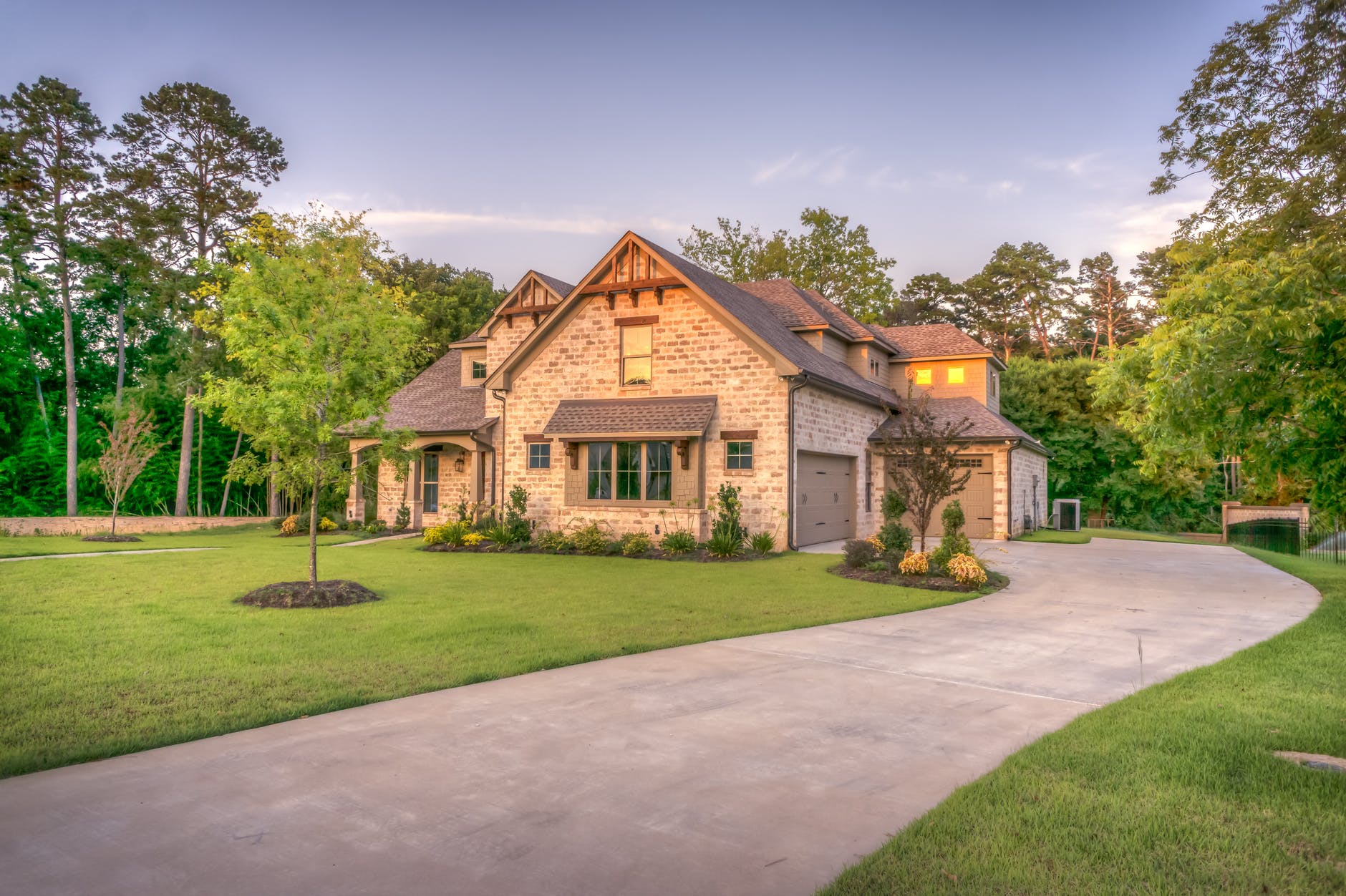
With a recent heat wave plus the upcoming warmer days of summer, different methods for maintaining a green lawn are on full display across suburban neighborhoods. I live in a suburban location where a ten minute walk or run brings me to neighborhoods with homes in multiple different price points. One recent observation about homes at a higher price point: they are more likely to have automatic sprinklers to keep the grass green.
On my street and with residences at lower price points, I have not seen any automatic sprinklers. I see people out with hoses or sprinklers attached to hoses. Or, some people might do no watering at all or all lawn care is left to a homeowners association.
Step over to a different nearby street with larger and more expensive homes and a morning visit leads to seeing multiple homes with automatic sprinklers. The little black sprinkler heads can be viewed spreading water or the amount of water on the top of the grass blades suggests they were recently in action.
As I have chronicled the efforts of suburbanites to keep their lawn free of dandelions, weeds, and leaves alongside having a well-manicuredgreen grass lawn, seeing the automatic watering of lawns among those with more resources leads to this thought: is the whole system of green lawns held in place by those with money and higher housing values as a means to signaling their status and pride in homeownership? The well-kept lawn is often tied to middle-class values but it costs money and time to keep the yard in a certain condition. And how much does the green lawn connect to higher financial and social standing?
For more than 80 years, Naperville was a sundown town. After working in a household, farm or factory during the day, people of color had to be gone from Naperville by sundown…
A historical look at how diversity in the city and five other U.S. towns grew despite decades historic discriminatory practices and segregation is featured in a free online exhibit spearheaded by Naper Settlement and the Historical Society of Naperville.
“Unvarnished: Housing Discrimination in the Northern and Western United States,” found at UnvarnishedHistory.org, was developed through a $750,000 Institute of Museum and Library Services Museum Leadership grant. The Naperville historical museum and five other museums and cultural organizations collaborated from 2017 to 2022 to research and present their community’s history of exclusion…
“It is our hope that this project will act as a model and inspire other communities to research, share and reflect upon their own history. It is through this process that we are able to engage with the totality of history to better understand today and guide our decision-making for the future,” she said.
In doing research on Naperville and two other nearby suburbs, I had uncovered some of what is detailed in this exhibit. However, the local histories of the community rarely addressed any of this. Instead, they focused on the positive moments for white residents, typically connected to growth, progress, and notable members of the community.
Such an exhibit suggests a willingness for Naperville and other communities to better grapple with pasts built on privileging some and keeping others out. The history of many American suburbs include exclusion by race, ethnicity, and social class. This could happen through explicit regulations and ordinances, through regular practices, or through policies and actions not explicitly about race, ethnicity, or class but with clear outcomes for different groups.
As noted in the last paragraph above, hopefully these efforts do not end with past history but also help communities consider current and future patterns. For example, decisions about development – like what kind of housing is approved – influence who can live in a community.
Suburban developers and retailers are working to provide ways to escape home, be around others, and, most importantly, spend newfound time and money…
Neighborhood retailers are eyeing the money she and others are saving on the commute, in addition to the thousands of dollars that office workers typically spend annually in restaurants, bars, clothing stores, entertainment venues and other businesses. In many cases, coffee breaks, haircuts and happy hours that used to happen near downtown offices have moved to the suburbs…
In the Washington region and nationally, the trend is most striking in higher-income inner suburbs, where more residents have computer-centric jobs suited to remote work and money to spare…
The new weekday demand, developers say, has helped suburban shopping centers and entertainment districts reach and, in some cases, surpass 2019 sales. The pandemic also accelerated long-standing pre-pandemic trends toward walkable suburban developments and the “third place” — public gathering spots like coffee shops and bookstores, where people can connect beyond home and work.
I want to expand on one of the ideas suggested above: this may already be happening in wealthier and denser inner-ring suburbs. These communities already have residents with more money to spend and already have a denser streetscape from a founding before postwar automobile suburbia.
Imagine then an even more bifurcated suburbia where wealthier suburbs have vibrant entertainment and shopping options while other suburbs do not. The suburban work from home crowd is not evenly distributed and neither are the communities and amenities they might prefer.
Fort Myers, FL – a central city in Cape Coral-Fort Myers MSA
Casa Grande, AZ – suburb of Phoenix
Maricopa, AZ – suburb of Phoenix
North Port, FL – a central city in North Port-Brandenton-Sarasota MSA
Spring Hill, TN – suburb of Nashville
Goodyear, AZ – suburb of Phoenix
Port St. Lucie, FL – central city of Port St. Lucie MSA
Meridian, ID – suburb of Boise
Caldwell, ID – suburb of Boise
Nampa, ID – suburb of Boise
This is not just about the Sunbelt continuing to grow, as I saw in several headlines, but also about suburban and metropolitan growth in the Sunbelt. Many of these regions continue to grow, such as Austin, Phoenix, San Antonio, Nashville, and Boise, on the edges.
The list of the fastest growing communities by the absolute number of new residents was also weighted toward suburbs.
The effect can be dramatic, with neat suburban lots growing shaggy and wild, and the jokes flowing freely along with the #lazylawn social media posts.
But the goal is serious. Scientists are increasingly concerned about studies showing key insect populations are falling due to factors such as loss of habitat, pesticide use and climate change. And the plight of these unsung heroes of the food chain has proved difficult to publicize…
The northern suburb of Northbrook suspended enforcement of its mowing ordinance and offered its first No Mow May this year, with free wildflower seed packs for participants. In Glenview, 292 residences signed up for a less ambitious No Mow ’Til Mother’s Day program offered by the village. In Westmont, 236 residences registered for No Mow ’Til Mother’s Day, up from 161 in 2021…
“We’re getting a lot of feedback that, ‘I’m seeing more rabbits, I’m seeing more bees than I’ve ever seen in my yard before’ — these exciting types of new discoveries made at the residential level. And of course, a lot of kids really love dandelions, so that’s a cool outcome.”
Not everyone is happy with No Mow May in general and those extra dandelions in particular. Northbrook received a public comment from a participant who said their neighbor mowed their lawn in the middle of the night. On Facebook, No Mowers said they were concerned about upsetting their neighbors and spreading dandelions. One woman said she had taken to deadheading dandelions to avoid seed spread, a time-consuming task.
This reaction against this new practice is about what I would expect. There is a strong cultural norm that suburban lawns, and lawns in general, should be green and free of dandelions and leaves. Growing anything in the lawn beyond well-manicured green grass is discouraged formally and informally.
This would also line up with a number discussed in the article. A biologist estimated 5,000 Americans participated in No Mow May this year. Given all of the online conversation about No Mow May, only 5,000 people are trying this out? The green lawn crew is even stronger that might be suspected. Perhaps this number grow as the idea spreads and institutional actors, such as municipalities, support it.
During the Trump years, many suburban voters, especially women, shifted toward the Democrats. A primary reason was the revulsion many of them felt toward President Donald Trump.
Democrats hoped that shift signaled a more permanent alignment, and it’s true that some college-educated White women became a key part of the Democratic constituency. But what happened in the 2021 Virginia gubernatorial race raised doubts about their reliability as Democrats. Then-candidate and now-Gov. Glenn Youngkin was able to move the suburban vote back in the Republicans’ direction…
Democratic pollster Celinda Lake agreed that her party’s candidates cannot take suburban women for granted in November. “Women elected Biden for stability and in reaction to Trump,” she said. “They really rejected his style of leadership. But we had one woman say in a focus group, ‘I just want to get off this roller coaster.’ ” Under Biden so far, she added, “They’re getting no help in doing that.”…
“Suburban women have moved so far the opposite direction, we’re not going to get all of them back right away. But if we can at least win back a good amount of the suburban men that we lost and some of the suburban women, that’s a formula for us to win in pretty much every state that we need to win in,” said a Senate GOP strategist, who spoke on the condition of anonymity so they could speak openly about the races they are working on.
The bottom line is that any notable move by suburban voters in the direction of the Republicans this fall will prove costly to Democratic hopes of holding down their losses. But a Supreme Court decision overturning Roe v. Wade could counter GOP efforts to woo suburban women.
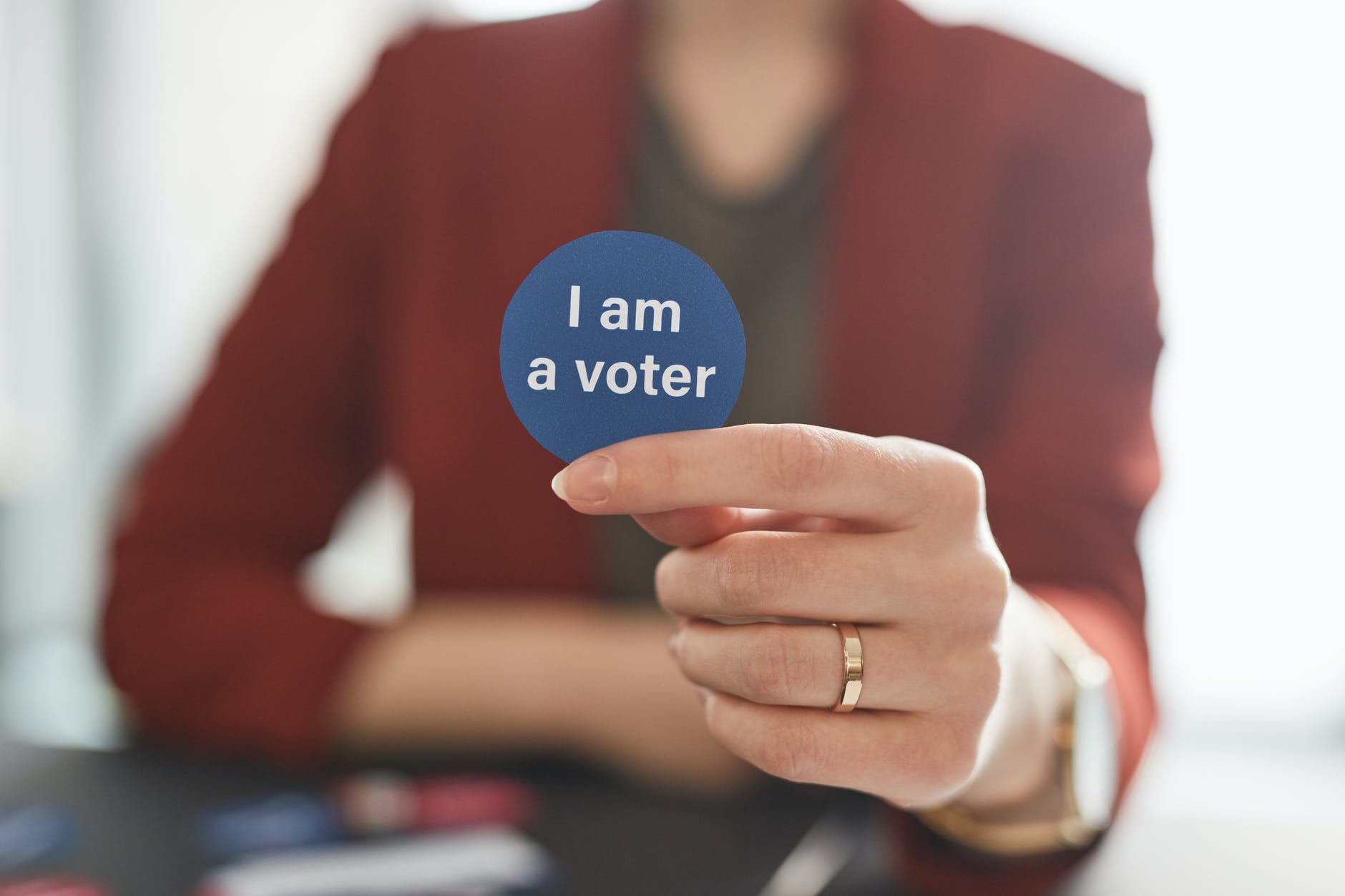
Suburban voters continue to be important in multiple ways:
-They matter in important swing states where both parties would like to win. Think Virginia, Pennsylvania, Ohio, Michigan, Arizona, Florida, and other locations.
-Compared to urban and rural voters, the perception is that more suburbanites are open to switching their votes or are more moderate. Thus, campaign pitches will be aimed toward them with the goal of swaying them to a particular side (maybe just for one election).
-The analysis above suggests there is a divide between suburban men and women and the issues that they care about. Will there be unified messages to suburban voters or will the campaigns clearly differentiate between male and female voters?
-Suburban voters can be reached in particular ways. Will there be big social media campaigns? An endless stream of materials in the mail and through text messages (what I have experienced in recent months in the suburbs)?
To paraphrase a famous slogan, this could be one rallying cry: “suburban voters of the United States, unite!”
The company’s proposals promise a reprieve from California’s existential crisis about its way of life, suggesting that the environmental consequences of the state’s notorious sprawl can be reformed with rooftop solar panels, induction cooktops, electric cars, and careful bookkeeping. The threat of wildfires can be held at bay by stricter building codes. These proposals preserve the idea that, although the climate may be changing, the California dream of sunshine, a single-family home, and a two-car garage needn’t change at all.
But the debate it intense about whether the sustainable features of the development offsets what suburbia brings:
Cheap fossil fuels, the supremacy of private-property rights, and the maximization of shareholder value have, for decades, dictated the patterns of land use in America. People need homes, and, in Southern California and other growing metropolitan areas, those homes get built in areas far from the centers of cities. Disasters that follow this approach are attributed to natural causes or climate change, rather than to the avoidable flaws of poor planning. Consider the Marshall fire that burned a thousand homes last December, including all of a hundred and seventy-one properties in a nineteen-nineties-era subdivision built on the outskirts of Boulder County, Colorado—or the disappearance of water from exurbs constructed in the two-thousands in the Rio Verde Foothills, outside of Scottsdale, Arizona. Even reasonable predictions on a twenty-year event horizon are seen as fussy impediments to construction…
California has a severe housing shortage; a recent state assessment called for more than a million new units in Southern California to meet demand. Barry Zoeller, an executive at the Tejon Ranch Company, told me, “That’s going to have to take, in our estimation, a combination of both infill development in urban areas and also new master-planned communities of sufficient scale that can also meet climate-change criteria.” But many environmentalists argue that the imbalance between jobs and housing in Los Angeles can not be solved by building houses that are a thirty-minute drive from the city’s outermost suburbs. “Aren’t there better places to build?” Pincetl asked. “Yes, but you don’t own the land, so no.” She added, “If we’re turning over the provision of housing and the land markets to private entities, their motivation is not to house people. Why are private-equity firms coming into the real-estate market? Tell me. Not to provide housing.”…
I used my phone to scan QR codes and open the self-entry locks on a handful of model homes by Lennar, KB Home, and Toll Brothers, among others. The houses were built close together. They were large and well appointed, with gray laminate floors, giant appliances, many bathrooms, and cold air-conditioning. Some stoves at Valencia were electric, but many were still gas ranges—the era of banning natural-gas hookups hadn’t arrived when this development was approved. Some of the planned homes were already sold out, and a steady stream of racially diverse prospective buyers in luxury cars made their way around the neighborhoods-to-be. It looked like every other subdivision I’ve ever been in: paved-over farmland with a few transplanted trees, an island in a landscape hostile to pedestrian life. Maybe I just wasn’t seeing it with new eyes. The wind blew hot and the sun beat over the newly built homes, and from far away came the faint screams of people riding the roller coasters at Magic Mountain.
This is a decades-long issue as suburbs, first found in the United States in the 1800s, exploded in popularity and policy in the 1900s. With the expansion of driving and highways, the postwar suburbs sprawled in all directions from big cities and have not stopped since. All of this comes at an environmental cost: all of the materials used, the pollution from all of the driving, the inefficiencies of single-family homes, and the loss of land and habitat.
There are numerous ways to make suburbs more sustainable. This includes the moves suggested above as well as increased suburban densities, mass transit options or walkability or other transit options so that driving is not the only options, and better locations nearer population centers and jobs and away from important land and habitats.
So, where exactly is the line where suburbs might be “sustainable enough”? The article above suggests this line is in flux as communities, states, and other interested actors negotiate and set regulations for new development. It is unlikely that all suburban development will be banned or limited and it is unlikely that all suburban development will just happen without any questions about the environmental costs. This line can also vary across contexts as the local concerns are different outside of Los Angeles than they might be outside Columbus, Ohio or Jacksonville, Florida.
The peculiar yet profound way in which historic preservation bound together issues of aesthetics, finance, and urban change is key to understanding why its popularity grew so rapidly in the middle of the 20th century. It also explains why a culture of historic preservation took root in some places more than others. Most suburbs—like the one on Long Island where Geller I once stood—relied on a different set of tools to stop development, such as open-space requirements and zoning codes that limited the number of new homes. To this day, historic preservation remains a less potent force in such places, largely because these other rules ensure that homes like Geller I are unlikely to be replaced by anything but McMansions. In cities with significant numbers of old buildings, however, preservation became an essential part of the process by which communities fended off urban-redevelopment projects.
Cities also have zoning regulations and NIMBY responses to new structures but the presence of more buildings and uses in denser areas can make this all more complicated. Particularly in areas where redevelopment is hot, a new building might be very different than what has stood there for a long time.
But, as the article notes, historic preservation can be a tool used in a lot of places to halt plans:
Historic preservation not only gave this process of hyper-gentrification an imprimatur of political and legal legitimacy it might otherwise have lacked, but also continues to enable it in the present day. The LPC’s own website still notes that one of the purposes of New York’s landmarks law is to “stabilize and improve property values.” While the commission’s press releases paint an image of a body focused on protecting a diverse new array of buildings, the historic districts that already exist are, right now, a significant intervention in the city’s real-estate markets, whose main beneficiaries are the people who own land within them. Nor is this dynamic unique to New York. In California, wealthy cities like Pasadena and Palo Alto have recently tried to expand their landmarking powers in order to circumvent a new state law encouraging the construction of sorely needed housing. Simsbury, Connecticut, which is 87 percent white, just finalized a sale of nearly 300 acres to a land trust—killing an affordable-housing project in the process—on the premise that the site is historically significant because Martin Luther King Jr. once worked there. In Washington, preservationists have long tried to block the redevelopment of a water-filtration plant that hasn’t been used in 35 years on the basis that it is historically significant.
Glenview officials indicated the Allstate campus is described as Territory D within the Milwaukee Road and Sanders Road Corridor Agreement between the two communities, which specifies that Glenview alone has the right to its annexation and that Prospect Heights shall not object to Glenview’s annexation.
But David Just, community engagement manager for Glenview, said Prospect Heights notified his village in late March that it intends to seek annexation of the former Allstate campus itself…
“We are disappointed to learn that Prospect Heights is now attempting to annex the former Allstate campus,” Jenny said. “This violates our long-standing agreement and partnership with Prospect Heights, and our community intends to take any and all actions necessary to enforce the terms of the agreement that governs annexation and development of this property.”
The statement added that Glenview strongly encourages Prospect Heights to respect the communities’ long-standing partnership and continue to abide by the promises made when the agreement was negotiated and approved.
Based on what I read, this strikes me as having two dimensions. There could be a legal dimension involving boundary agreements and annexations. How might the law and courts look at land between communities that could be claimed by both community or either community?
The second area involves interactions between communities in the long-term. Will Glenview and Prospect Heights see each other differently for years because of this? Will one community do something in response?
Suburban land is valuable, particularly if developers have plans for a land use that will generate additional revenues. Suburban communities are in competition for business and revenues so an opportunity like this might be too good to pass up, even if it ruffles the feathers of other actors. Given a good chance to secure a new development, how many municipalities would abide by agreements?






 Legally Sociable