McMansions as part of or outside of a changing suburbia?

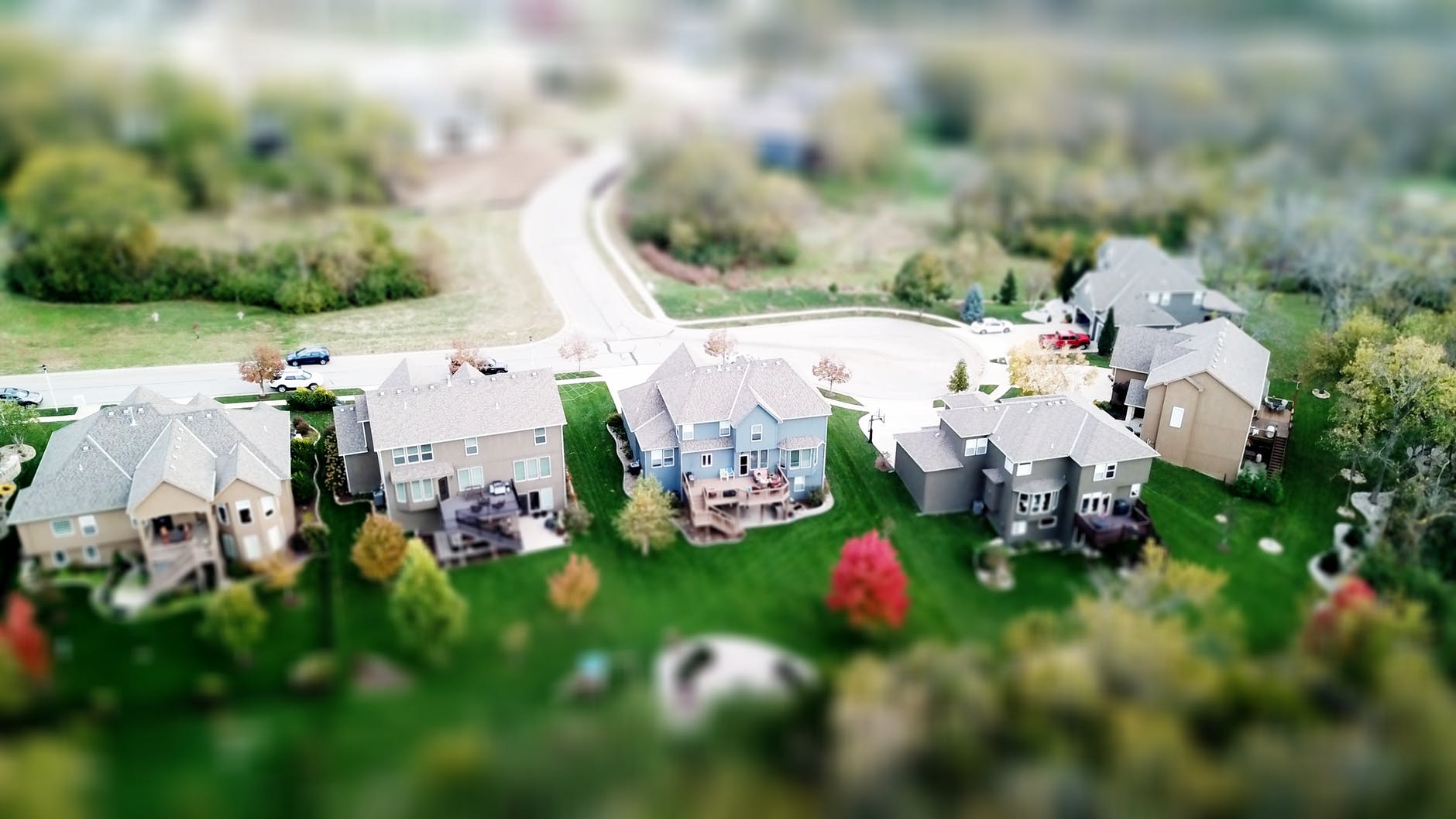
This description of the changing American suburbs includes McMansions:
Photo by Jeswin Thomas on Pexels.com

The demand for something like urban living is real. Even at the outer edges of growing metro areas, mixed-use walkable developments pop up alongside familiar subdivisions and McMansions. “Mixed-use centers—often in suburban locations—continue to be built from the ground up in many communities across the US,” wrote the Congress for the New Urbanism in 2019.

As more immigrants and millennials become suburbanites, and as Covid and remote work give the suburbs another growth spurt, they are evolving into something different. Between 2019 and 2020, the share of millennials who live in suburbs increased by 4 percentage points; and in 2014, more than 60 percent of immigrants lived in suburbs, up from just over half in 2000.

Many communities that were once white, exclusionary, and car-dependent are today diverse and evolving places, still distinct from the big city but just as distinct from their own “first draft” more than a half-century ago…

If a “second draft” of the suburbs is now being written — at least in some of America’s growing and expensive metro areas — what might it actually look like?

This is part of the complex suburbia we have today. Where do McMansions fit into this? The selection above suggests “mixed-use walkable developments” are near McMansions. But, what happens to the McMansions in the long run? Here are a few options:

  1. The McMansions continue in their neighborhoods for those that want them. Even amid proclamations that McMansions are dead, there are some homebuyers and suburbanites that want such homes.
  2. McMansions themselves are altered in ways to fit the new landscape. Perhaps they are subdivided into multiple units for more affordable housing. They could be added to. Their properties could host accessory dwelling units.
  3. McMansions are demolished and replaced with something else. This could be because the quality of the homes does not stand the test of time or the land is more valuable used another way (some of the teardowns become teardowns).
  4. Some McMansions live on through historic preservation marking a particular era of housing and American life.

For some, McMansions represent the peak of an undesirable suburban sprawl and excess. For others, they are homes that provide a lot for a decent price. Their long-term fate is to be determined both by those who like them and those who detest them as the suburbs continue to change.

How many suburbs will be willing to replace suburban office parks with denser housing?

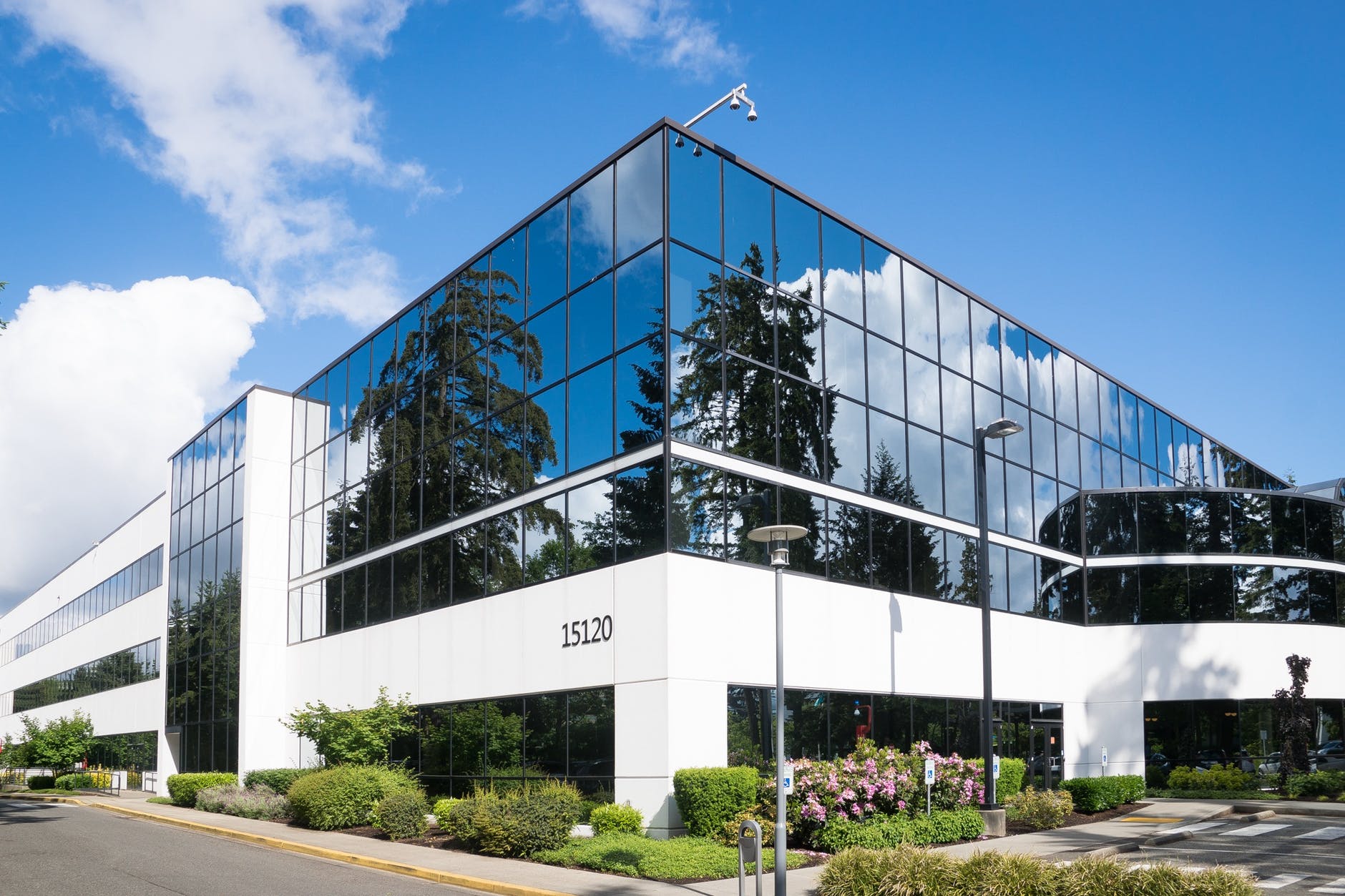
If the golden age of the suburban office park has passed, what will some of the empty properties be used for? One option is denser housing:

Photo by Pixabay on Pexels.com

It will mean taking land long zoned for offices, and allowing townhomes to be built among them, or permitting apartments or industrial-scale warehouses for the first time. Amid a nationwide housing crisis, many obsolete office parks could be ideal sites for denser housing.

However, this is a very pertinent issue:

The problem for some suburban officials: “It’ll be, ‘Oh, what do you mean we can’t just zone for single-family homes and offices? That’s our thing. That’s why we exist,’” said Tracy Hadden Loh, a researcher at the Brookings Institution. “So now it’s like an existential crisis.”

This is an issue that comes up for numerous kinds of large suburban properties, whether they are shopping malls, golf courses, or grocery stores: how to convert a vacant property into a useful long-term use? The number one goal is probably to generate significant property tax and sales tax revenue. In other words, to keep it at its original as approved by the community years before.

But, if that is not possible – and communities might go years trying to fulfill this vision – then the discussions get interesting. Expensive single-family homes, fitting with the upscale suburban character of some suburbs, would fit in. Zoning protects single-family homes for a reason: suburbanites and suburban communities prefer these homes and their lifestyle.

However, single-family homes can bring more children to local schools and add to the loads of local services. They do not necessarily produce the revenues that offices and retail do. Denser housing is even less desirable because it adds even more residents, which can add to community services and traffic, and some suburbanites are concerned with apartment dwellers.

My guess is that mixed-use redevelopment will be a popular path a number of these communities will try to pursue. Replace that office park with a “metroburb.” But, it remains to be seen how many such developments are viable and how eager suburban leaders and residents are to pursue them.

How much the big city mayor needs to fight to keep the major league team

Chicago Mayor Lori Lightfoot has publicly stated what the city could do to keep the Chicago Bears:

Photo by Trace Hudson on Pexels.com

Via Sports Business Journal, a Chicago mayoral committee will recommend that the city consider the feasibility of putting a dome over Soldier Field.

A dome, as reported by Crain’s Chicago Business, could cost between $400 million and $1.5 billion.

Other possibilities include upgrades to the stadium (including significant rebuilding of certain parts of it) and selling naming rights to generate revenue for improvements.

The Bears are most interested in pursuing plans for suburban Arlington Heights.

In the long run, it is not probably not worth it for the city and the others to spend hundreds of millions to keep the Bears. The team would benefit the most from new arrangements. The money spent on eight Bears home games a year will be spent elsewhere in the city. The team is not leaving for another market but just for the suburbs.

At the same time, losing the biggest team in town to a suburb is not a good look for leaders. The Bears have played in the city for a century. They are the most popular sports team in town. Soldier Field hosts other events but it has been the home of the Bears for decades. The loss of the Bears could be added to the narrative of losing companies and residents.

Discounting whether the offer from the city is a viable one – putting a dome on Soldier Field is no easy task – I think this is a necessary political move. The mayor and city leaders need to make a good offer to save face. The big city leader cannot let the big team leave without a fight. And ten years from now, when the Bears are playing in a suburban property that earns the team even more money and the city of Chicago has moved on, there may still be lingering blame for those who let the Bears leave no matter what offer or public statements they made.

What is gained and lost in trading a grass lawn for artificial turf?

Prompted by climate change and other factors, more property owners around the world are switching to artificial turf. What is gained in the trade?

Photo by Digital Buggu on Pexels.com

A couple of decades ago, artificial turf was often a thin carpet atop a hard surface—rough on the knees as well as the eyes. Athletes playing on it complained that it wore their legs out. But as the product improved, so did homeowners’ interest. From the US to the UK, artificial grass retailers have seen sales tick up during pandemic lockdowns, when housebound property owners put their money toward home improvements. Indeed, Google Trends shows a worldwide surge in searches for “artificial grass” during the middle of 2020.

Even the most famous grass enthusiasts like the All England Lawn Tennis & Croquet Club are open to the idea. The organization behind the Wimbledon championship is trialing hybrid court surfaces—real grass weaved with plastic fibers—to promote lawn tennis in climates worldwide and extend the season in the UK.

Still, all of this fake grass sprouting across the planet has sparked backlash. Some of the biggest protests have been in Australia, where synthetic turf installations became more common in home gardens and playing fields during the Millennium Drought—a roughly 12-year dry spell that ended in 2009. Many cities and regions faced extreme water restrictions that included a total ban on lawn watering in some areas…

The most obvious environmental problem with artificial grass is it’s rooted in the biggest climate nemesis of all: fossil fuel. Synthetic turf is made from a stew of petroleum-based components, making it nearly impossible to recycle. At the end of an artificial lawn’s useful life, which is about 15 years, it will likely go to a landfill or be incinerated…

Yet, even if artificial turf becomes easy to recycle, real grass will still in some ways be greener. Grass naturally absorbs carbon dioxide. Its soil supports wildlife from worms to birds. There are varieties for almost any kind of climate. Unless, of course, that climate doesn’t have enough water.

The legacy of the suburban lawn will be long indeed if the manicured green grass is replaced by green artificial turfs for decades. If it is no longer grass, is the desirable part the color or the nostalgia?

As noted elsewhere in the article, the artificial turf is not the only option. In places like Las Vegas, a rockscape or desert setting is more appropriate. Elsewhere, a yard may be filled with native plants or a garden. If the purpose of the lawn is to provide a connection to nature for the residents, these options can fit the bill in a way that artificial lawns cannot.

The real trick would seem to be creating an artificial turf that better mimics a grass lawn in look and feel without negative environmental impact. A soft and lush lawn that does not need watering, does not rely heavily on fossil fuels, and is similar to the image many Americans have of the proper yard of a single-family home? That may be the lawn worth keeping in yards across the country.

What is in the name of a new suburb, Calgary edition

As the suburbs of Calgary expand, how are new community names selected and who approves these names?

Photo by Lisa Bourgeault on Pexels.com

Just last week, a committee of city councillors discussed a report on eight yet-to-be-approved new suburbs, including a proposed community called “Nostalgia.”…

Tuscany? No offence to residents of this northwest suburb, but it has little in common with the birthplace of the Italian Renaissance.

Walden? Yes, there’s a pond — located a short drive from the McDonald’s, TacoTime and Save-On Foods. I doubt Thoreau would find much solitude.

And don’t get me started on Ambleton, currently under construction at the far north end of the city. As in, you can “amble” past monotonous rows of houses along Ambleside Avenue and Ambleton Street and other future roads with proposed names like Amblefield, Amblehurst and Ambledale…

These bad names are a shame because Calgary is rich in history and stories. Community names, which will outlast all of us, are a chance to show this off…

Calgary has long had a naming policy. Its current version states that community names “should either reflect Calgary’s heritage or local geographic feature(s) including flora and fauna, and/or further a sense of community.”

Yet, somehow, council approved a community named Cityscape, even after a 2013 city report said that name “could imply any part of Calgary,” and can be shortened to “City,” which is plain confusing. 

The names of suburbs are indeed interesting to consider. They are marketing tools to differentiate a new community or subdivision from existing locations while also drawing from a similar playbook to not be too unusual within suburbia. They are often generic names intended to appeal to suburban values, whether that involves nature or nostalgia (perhaps literally as suggested above) or likeable destinations or middle-class values. Names can be changed later in a community’s existence, but this is not common.

It is intriguing that there is an official naming policy, even if it is applied inconsistently or could be improved. In the United States, subdivision names likely need approval from a municipality or whatever local government body approves the development. For a new suburb or community, someone considers that name. But, I have not run into written naming policies or guidelines in American contexts.

On a related note, see this name generator for Chicago area suburbs.

How many suburbanites settle for a “bridesmaid suburb”?

I discovered the term “bridesmaid suburb” used in an Australian context:

Photo by David McBee on Pexels.com

A “bridesmaid suburb” is a second-choice postcode and could become a strategic buying trend as ballooning interest rates bite into borrowing capacity…

“Buyers will still have to consider alternatives or the bridesmaid suburbs to their first preference, possibly not because of price but because of diminished borrowing capacity.

”Bridesmaid suburbs are adjacent to higher-profile neighbouring suburbs. They cost less to buy into but share many similarities to the first-pick suburb next door, including access to public transport routes, schools and major shopping hubs…

“A bridesmaid suburb can still allow you to secure a lifestyle with comparable amenities and appeal, and only a short drive down the road.”

While this is used in Australia- a quick Google search suggests this term has been around there for several years – I wonder if it might also apply to suburbs in the United States. Are there many homeowners who would have preferred to live in the most desirable suburb but could not afford it and so settled in nearby communities? There are several assumptions at work here:

  1. Many people want to live in the most desirable suburbs. If supply and demand is the only factor at work, more people wanting to live in desirable suburbs drives up home prices so much that there is not enough housing. Additionally, my own sense of American suburbs is that some of the most desirable and exclusive suburbs also intentionally limit their housing supply to help maintain their character and status. Are there such suburbs that always stand out above any other location in the region and where most people would want to live?
  2. Suburban homeowners want to max out their borrowing capacity and get the most they can – a more expensive home – through their mortgage. People can borrow up to a certain point decided by lenders, but how many go all the way to the maximum allowed?
  3. The exact community in which you live matters less than the clusters of suburban communities you can access. It is less about a particular zip code and more about a cluster of adjacent zip codes. Suburbia offers driving access to a lot of communities so perhaps you do not have to live in a particular place to enjoy the benefits. At the same time, communities that appear similar on certain factors can be quite different in terms of character and everyday experiences.

Fighting for water in Southwest subdivisions

Suburbanites in the Southwest are looking to secure water:

Photo by Steve Johnson on Pexels.com

As the Southwest enters its second decade of megadrought, and the Colorado River sinks to alarminly low levels, Rio Verde, a largely upscale community that real-estate agents bill as North Scottsdale, though it is a thirty-mile drive from Scottsdale proper, is finding itself on the front lines of the water wars. Some homeowners’ wells are drying up, while others who get water delivered have recently been told that their source will be cut off on January 1st. “It’s going to turn into the Hunger Games,” Harris said grimly. “Like, a scrambling-for-your-toilet-water-every-month kind of thin.” The fight over how best to address the issue is pitting neighbors against one another. “Water politics are bad politics,” Thomas Loquvam, the general counsel and vice-president of EPCOR, the largest private water utility in the Southwest, told me. “You know that saying, ‘Whiskey is for drinking, water is for fighting’? That’s very true in Arizona…

Most Foothills residents draw their water from wells, but several hundred homes sit on land without reliable access to water, so the inhabitants rely on cisterns, which they fill with a delivery from a water truck every month or so. When Cindy Goetz moved to Arizona from Illinois, in 2012, she had never heard of hauled water. “But I did some research on it – you know, is a well better, or is hauled water better? And my decision was, hauled water is better,” she told me. “A well can get contaminated, it can run dry. How about just pay a little extra to have someone bring it in from the city? It’s already drinkable. I asked [my real-estate agent] and he said that it’s done a lot in Arizona. And it wasn’t like a homestead out in the middle of nowhere. There were streets and power and phone lines and all that. I assumed it would be O.K. It’s wasn’t presented as, ‘By the way, it could stop.'”…

Homeowners who didn’t have wells were suddenly uncertain that they’d be able to wash their dishes or flush their toilets. Some water haulers reassured their customers that they could find water for them, at least for now. Hornewer, who runs a water-hauling company, told me that not all haulers were scrupulous about the legality of their sources. “To them, it’s just kind of like the Old West,” he said. “If the water’s there, grab it. If you want to get it from Phoenix illegally, sure, you can do that. But that’s a short-term fix.”

Some residents came to believe that the best long-term solution for the hauled-water homes was to form a Domestic Water Improvement District, or DWID. The DWID, as a political subdivision, would be able to buy land to extract water from one of the few aquifers in Arizona that still had excess capacity for sale. A DWID could also get funding, or apply for grants, to eventually build water-treatment infrastructure for the area.

But not everyone in the Foothills wanted their neighbors to form a new government entity. Rumors spread on Facebook, claiming that the DWID was a power grab. People who had once acted as if worries about water scarcity were overblown began imagining their own elaborate worst-case scenarios: What if the DWID imposed taxes, or used the power of eminent domain to seize non-members’ wells, or put liens on people’s houses? What was next, an H.O.A.? “They have the power to condemn, whether they claim they’re going to use it or not,” Christy Jackman, the DWID’s most vocal opponent, told me. “They do have the power to put in streetlights, to pave areas. So here’s this little group, and they’ll have those powers.” The pro-DWID faction grew frustrated that their neighbors, many of whom had wells, were blocking their ability to secure water for themselves. “It’s the haves and the have-nots,” Nabity said. “Literally, some neighbors were like, ‘Screw you guys. You bought a property that doesn’t have water. That’s not my issue.’”

The suburban sprawl of the American Dream assumes there is cheap, accessible water for the new homes. Few residents would even think about water not being available unless there are some unusual circumstances.

So what then happens to sprawling subdivisions when water is hard to obtain? The article above discussed multiple solutions that either do not work well when a whole region has limited water or when they run up against the preferences of suburbanites.

Since having water is essential for life, including in the suburbs, it will be interesting to see what solutions are reached. One solution – not building sprawling communities – does not seem like a viable option since there are many people who want to live in such settings and Americans have constructed such developments for decades.

54% of my block flew an American flag today and what this means

On a quick walk on this July 4th morning, I counted the number of residences on our block with an American flag on display. In roughly a quarter-mile of houses, 22 of 41 residences had a flag. What might this all mean? Several ideas:

Photo by David Dibert on Pexels.com
  1. The July 4th holiday tends to bring out the flags to symbolize the United States of America. Yet, is the number of homes with a flag displayed different than displays for other holidays? I would guess the numbers are not that different on this block regarding those who put something up for Christmas or for Halloween, the two primary holidays for decorations. I do not know if some people are celebrating all of the holidays or if different people are celebrating different holidays but this number of flags does not seem out of the ordinary.
  2. I have read online in multiple places that Americans are enthusiastic in displaying their flag compared to residents of other countries. Connected to #1 above, perhaps the real test of this is to see how many residents display flags when there is not a patriotic holiday? (At the same time, they might be frequenting other places that have a flag including schools, civic buildings, and churches.)
  3. YouGov recently released data on how Americans regard flags. Even with declining patriotism and less regard for the flag from younger Americans, 77% had a “very positive” or “somewhat positive” view of the American flag. This is quite a bit higher than any other flag asked about. The more popular a flag is, the more likely it is for homeowners to display it?

The use of flags in suburban settings and among single-family homes with their connection to the American Dream could make for a fascinating study, if it has not been done already.

Primary suburban voter turnout in Illinois under 20%

Experts suggest the turnout for Illinois’ primary earlier this week will be under 20% in the Chicago suburbs:

Photo by Tara Winstead on Pexels.com

When the votes are certified by the Illinois State Board of Elections late next month, officials believe fewer than 20% of the state’s registered voters will have cast ballots…

In the suburbs, only DuPage County reported more than 20% voter turnout, according to unofficial results on the county clerk’s website.

Cook County Clerk Karen Yarbrough is still reporting one uncounted precinct late Wednesday, but just 19.1% of suburban Cook County voters cast ballots, according to her website.

Unofficial results show voter turnout in McHenry County at 19.4%, 18.2% in Kane County and 18.7% in Will County.

The suburbs are where the political action in the United States is today, yet Chicago suburbanites did not vote in large numbers for the primaries ahead of the 2022 midterm elections. Given the congressional redistricting in Illinois and an impending gubernatorial race, where the stakes not high enough for suburban voters?

The article goes on to discuss reasons why voters may not have felt very motivated to vote in this primary. How many of these reasons – summer voting, lack of interesting races, limited midterm turnout – explicitly affect suburbanites? Summer vacations are a marker of middle-class and above suburban lives but how many of them overlap with the late June 28 voting day? Do suburbanites need more contested races than other voters? Do suburbanites not feel the pressure of midterms or only pay attention in the presidential cycles when there is more at stake amid their busy day-to-day suburban life?

Those candidates and actors that can inspire suburbanites to get to the polls and vote may just get the winning edge.

A shopping mall with protected wetlands

I recently shopped at a mall with protected wetlands:

The first thought I had upon seeing this was of “nature band-aids” that can often be found in suburbia as described by James Howard Kunstler. Shopping malls are known for many things but nature is not one of them.

Or, perhaps these are real wetlands that make contributions to the local ecosystem? This outlet mall has a location similar to many other malls: in the suburbs along a major roadway. I could imagine a need for land for animals and water amid development in the recent decades.

It would be interesting to know how these areas came about. Was part of the development of the land contingent on setting land aside for wetlands? Was a discovery made later about local nature? Is there some precedent among shopping malls for this?