Nextdoor as a kinder, community oriented social media platform and still looking to make money

Nextdoor wants to offer more positive content but is also trying to figure out how to increase profits:

Photo by Michael Tuszynski on Pexels.com

“We actually have data that shows that in the short run, toxic content absolutely drives more engagement,” Nextdoor Chief Executive Officer Sarah Friar said in a recent interview. “But over a six month period, it drives down overall engagement.”

It explains why the company chose the ticker KIND when it went public on the New York Stock Exchange last year. Nextdoor wants to distinguish itself from social media peers like Twitter Inc. and Meta Platforms Inc.’s Facebook as a friendly, down-to-earth platform that fosters connections between real neighbors, not anonymous trolls and scammy bots. There’s also local utility: Users can find a couch to buy, a plumber to fix a leak or a barbecue to attend…

The strategy has not translated into profitability for Nextdoor, which reported a loss in 2021 on revenue of $192.2 million, almost all of it from advertising. Friar says the company is in “investment mode” with plans to expand abroad in the UK, Germany, France, Canada, Denmark and Australia. It’s ramping up marketing and trying to figure out a way to capture more small businesses beyond the 30,000 that currently advertise on the platform. The company is focused on the hyperlocal, but large national advertisers are still how it makes most of its money.

But Nextdoor is competing for those accounts with advertising behemoths, and its users are still older and whiter than other social media networks, according to a survey by the Pew Research Center. Its $51 million in first quarter revenue is a 48% year-over-year jump, but a blip compared to advertising giants like Meta and Twitter, which posted revenues of $27.9 billion and $1.2 billion, respectively. Frontdoor Inc., a platform for home services and repairs, and Yelp Inc., both eclipsed $250 million for the quarter. Unlike Nextdoor, all of them have been profitable. 

This description of the platform raises multiple questions. Here are a few in my mind:

  1. Is profitability in the social media space now inextricably tied to anger and provocative content?
  2. Platforms offer different affordances, features for users and groups to utilize. How much can these features specific to different platforms tame negative content and behavior or is this a problem endemic to social media or society at large?
  3. Can a social media platform be more of a public service than a profitable private company?
  4. Once a social media platform has an established base – other parts of the article discuss Nextdoor’s appeal to suburbanites interested in crime and safety – can it actually change audiences and purposes?
  5. What happens if Nextdoor is acquired by another tech or media company?

As a Nextdoor member, I will keep my eye on this.

New “Unvarnished” exhibit on Naperville’s exclusionary past

A new project from Naper Settlement shows how Naperville – and several other communities – excluded people for decades:

https://www.unvarnishedhistory.org/local-spotlights/naperville-illinois/

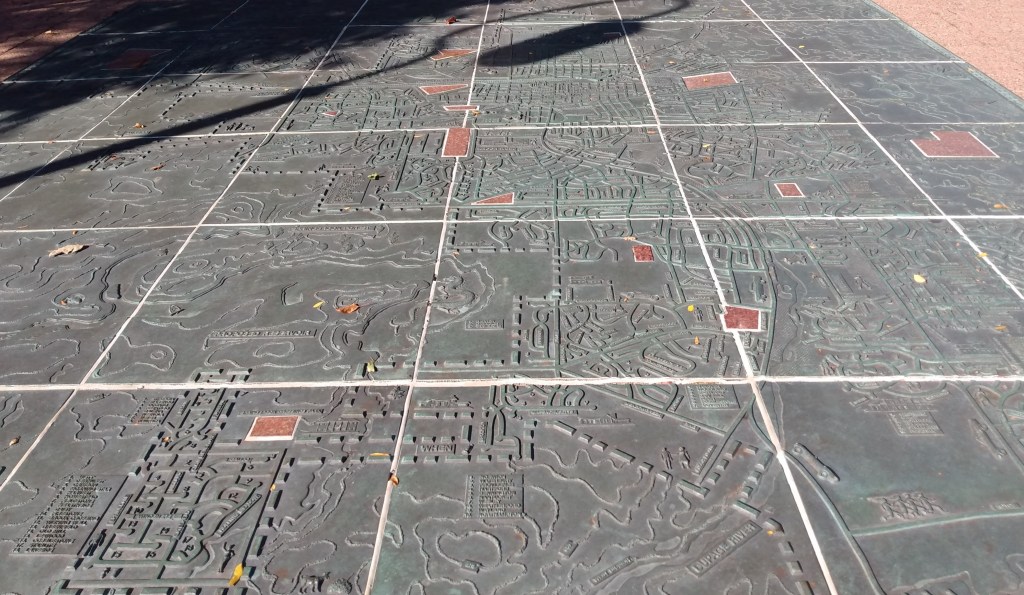
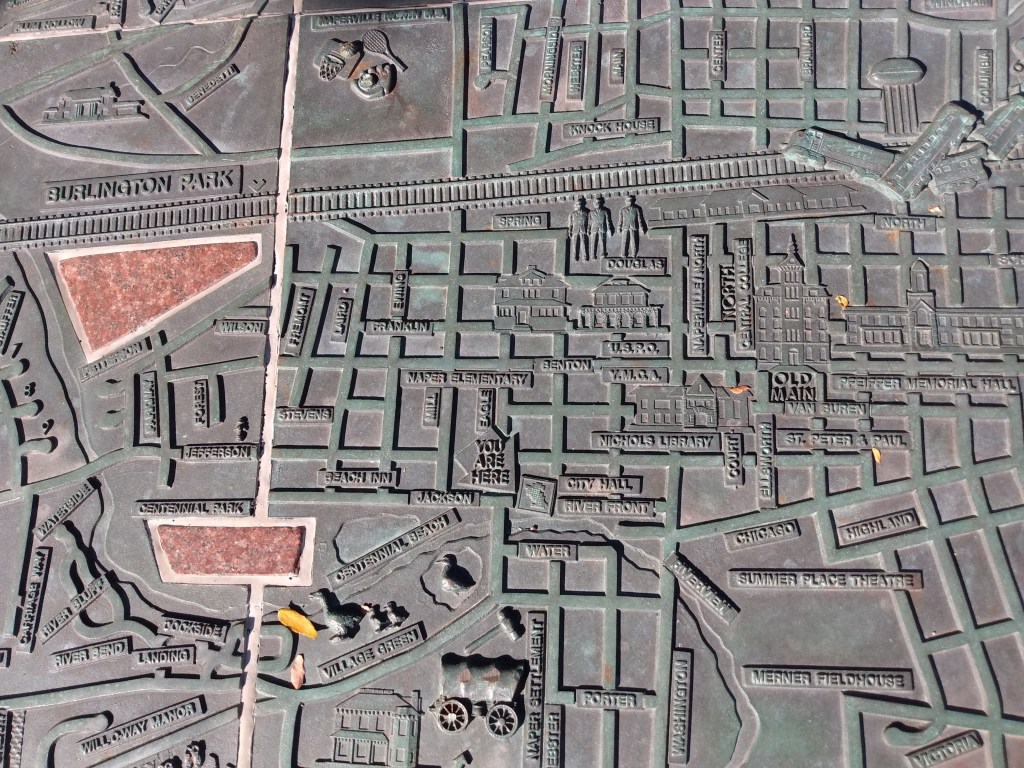
For more than 80 years, Naperville was a sundown town. After working in a household, farm or factory during the day, people of color had to be gone from Naperville by sundown…

A historical look at how diversity in the city and five other U.S. towns grew despite decades historic discriminatory practices and segregation is featured in a free online exhibit spearheaded by Naper Settlement and the Historical Society of Naperville.

“Unvarnished: Housing Discrimination in the Northern and Western United States,” found at UnvarnishedHistory.org, was developed through a $750,000 Institute of Museum and Library Services Museum Leadership grant. The Naperville historical museum and five other museums and cultural organizations collaborated from 2017 to 2022 to research and present their community’s history of exclusion…

“It is our hope that this project will act as a model and inspire other communities to research, share and reflect upon their own history. It is through this process that we are able to engage with the totality of history to better understand today and guide our decision-making for the future,” she said.

In doing research on Naperville and two other nearby suburbs, I had uncovered some of what is detailed in this exhibit. However, the local histories of the community rarely addressed any of this. Instead, they focused on the positive moments for white residents, typically connected to growth, progress, and notable members of the community.

Such an exhibit suggests a willingness for Naperville and other communities to better grapple with pasts built on privileging some and keeping others out. The history of many American suburbs include exclusion by race, ethnicity, and social class. This could happen through explicit regulations and ordinances, through regular practices, or through policies and actions not explicitly about race, ethnicity, or class but with clear outcomes for different groups.

As noted in the last paragraph above, hopefully these efforts do not end with past history but also help communities consider current and future patterns. For example, decisions about development – like what kind of housing is approved – influence who can live in a community.

McMansions as the fad of 2001

If we had to pick a year when McMansions were the key fad, would 2001 be it?

2001: McMansions

McMansions, shorthand for the oversized homes developed en-masse in the suburbs, were seen as status symbols by some and architectural abominations by others. By 2008, the crash of the housing market left many of these multi-bedroom behemoths empty or foreclosed upon.

The list of fads has McMansions in the right era. From the article I published in 2012 on defining a McMansion, the term and kind of home arose in the early 1990s and the term was more widely known and used by the early 2000s. By my count of mentions of McMansion in the New York Times and Dallas Morning News, the use of the term roughly peaked in 2005 and 2006.

So why 2001 – a very specific year – on this list of fads by years? It could be that surrounding years had more time-limited fads listed. Right before McMansions come Furbys, Latin pop, and Heelys and right after come beyblades, flash mobs, and wristbands for a cause. McMansions had to fit somewhere in a roughly ten year stretch and perhaps 2001 had the biggest opening.

Or, McMansions represented a different era in 2001 before September 11th of that year. A growing suburbia, SUVs and big homes, entering a new millennium. Enough homeowners had money to spend on big homes with a lot of square feet and a facade to impress the neighbors. The housing bubble crash came a few years later but perhaps McMansions had already peaked years before.

Looking at the full list of fads, the McMansion is the biggest item in the list in terms of price and size. When history is written (and rewritten), it will be interesting to see where McMansions fit into the late 1990s and early 2000s narratives as well as the broader sweep of housing.

Building a car-free 1,000 person development in Arizona

Construction of a small community with no cars is underway in Tempe, Arizona:

Photo by Steven Arenas on Pexels.com

Culdesac, a 17-acre car-free community being built in Tempe, has leased out its final retail spot ahead of its opening later this year.

Culdesac Tempe, which cost $170 million to develop, will have 761 residential units but with zero parking spaces for its residents. The final retail spot fits into Cudlesac’s “post-car” design and ethos – Archer’s Bikes, which will offer bicycle and accessory sales, test rides, rentals and repair.

Three thoughts on this limited description:

  1. This fits with a number of trends including denser areas (both in cities and “surban” spaces) and utilizing other forms of transportation beyond personal cars. Add in an exciting mix of shops, restaurants, and entertainment spaces and I could imagine a new development like this charging top dollar for units.
  2. Such a development could help make more day-to-day activity car-free but residents would likely still need motorized transportation to access areas outside of these 17 acres. It is important for such a development to be near other walkable/bikeable areas and mass transit options so residents can easily access the rest of the city and more of the region.
  3. Once this development opens up, it would be interesting to track residents in how they move, where they work, the relationships they build, and more. If this is going to catch on elsewhere, positive data – and hopefully some data on how such developments could be accessible to a wide range of people – could help make the case.

NIMBY vs. acronym opponents

I have heard of YIMBYs but this profile of a vigorous NIMBY resident of California suggested multiple options:

Photo by Donald Tong on Pexels.com

To distinguish themselves from NIMBYs, the current generation of housing activists has adopted new “back yard” variants (YIMBY, “Yes in my backyard”; PHIMBY, “Public housing in my backyard”; YIGBY, “Yes in God’s backyard”) to declare how they are for things (everything, subsidized housing, building on church parking lots) that a NIMBY presumably is not. Politicians have piled on: In California, homeowners who are used to being catered to with a host of regulatory and tax policies recently woke up to discover that their governor, Gavin Newsom, told The San Francisco Chronicle, “NIMBYism is destroying the state.”

YIMBY has the advantage of being a clear and obvious alternative to No opinions on development and housing. PHIMBY looks better spelled out but could confuse hearers about whether it is FIMBY. YIGBY sounds like a religious or spiritual version of YIGBY.

A catchy and clear acronym could help make the anti-NIMBY case but it will not be enough on its own to combat the common NIMBYism present in the United States.Even with the concerns expressed about NIMBYs, they likely have the decided advantage in numbers and sentiments across American communities. Many residents want to protect their properties, views, neighborhoods, and investments from a variety of perceived threaters. It will be on actors who have the opposite point of view than NIMBYs to push sentiment and regulation in other directions. This is not an easy task, and this is true even in a state like California that needs a lot of affordable housing.

Can a McMansion dweller have the last laugh?

A controversial TikTok video suggests a housewife could get the last laugh in her McMansion:

Photo by Karolina Grabowska on Pexels.com

Finally, Drummond, who also considers herself a content creator, took issue with women who criticize other women who marry their bosses: “Women will bully the woman who’s the secretary who married the doctor, but who has the last laugh?” she asked on camera. “Her in her McMansion with her husband and her baby.”

This last line quoted above is not what is driving the conversation about the video but it does highlight the divisive nature of McMansions. One person could live there and love the house, the space it offers, and the success it symbolizes. Another person might say they would never live in a McMansion and they are an abomination on the housing landscape.

These two opposing views come into conflict in different ways. Those opposed to McMansions are unlikely to move into a neighborhood full of them. A teardown McMansion might create conflict between a possible new McMansion owner and neighbors with other kinds of homes. Proposed McMansions can invite comments and action by people inside or outside a community. The conversation cited above is a more abstract scenario involving life in a McMansion.

Adding opinions about McMansions to another hot conversation is unlikely to lead to resolution on McMansions. However, it does provide a reminder that real people live in McMansions and many like living in McMansions or would want to live in one. This also reminds me of an earlier set of posts about gendered life in McMansions

What children learn from HGTV #3: Houses are symbols of success and making it

In watching HGTV with children and studying suburbs and housing, I have several ideas of what kids learn while watching the network’s programming.

Photo by David McBee on Pexels.com

Put together the ideas in the previous two posts – homes involve emotionally satisfying arcs and they pay off financially in the end – and add decades-long American ideology and houses are symbols of success and making it. The house, typically a single-family home on HGTV, is a visible, tangible monument that the owner is successful. Residents and show hosts talk about how the house symbolizes all of the struggle and work of a family. They talk about passing down a legacy to kids. They usually do not come out an say it but the home and its exterior provide a positive impression to neighbors and those passing by about the status of the residents.

Homeownership is celebrated on HGTV. An attractive house that meets the needs of the residents and broadcasts a message of success to others is the ideal. Almost no one wants to rent or live long-term with family or friends. Almost everyone is trying to move up to a better and/or more attractive home. The goal is to acquire one’s own home which provides well-being and financial security.

Ultimately, HGTV helps perpetuate homeownership and its link with the American Dream in the way it presents houses and what they are for. The people on the network find success in acquiring and improving homes and almost nothing else is discussed. Kids watching HGTV see that people need to acquire and/or improve a house to be a successful adult.

What children learn from HGTV #2: Houses pay off financially

In watching HGTV with children and studying suburbs and housing, I have several ideas of what kids learn while watching the network’s programming.

Photo by Thirdman on Pexels.com

In addition to the upbeat emotions on HGTV, the network relentlessly suggests houses are worth the financial investment. Numerous shows discuss how much money is involved, whether that is in the purchase price or the profit or equity made in repairing a home or the costs to particular changes. These are often not small sums; budgets are usually in the tens of thousands or more and few characters discuss how they have such money to spend.

But, the big sums of money are worth it in the end because homes are an important investment. Sure, they are to be enjoyed – and the reveals at the end of many HGTV episodes are full of positivity – but the money may be even more important. Everyone has spent a lot of money on these homes and they are worth it because they will be worth even more in the future.

HGTV often embodies the shift in the United States from homes as important centers of family life to financial investments. The money to be gained by owning or renovating a home is never far away on HGTV.

What children learn from HGTV #1: Houses are worthy of emotional investment

In watching HGTV with children and studying suburbs and housing, I have several ideas of what kids learn while watching the network’s programming.  

Photo by Ketut Subiyanto on Pexels.com

To start, HGTV shows are built around emotional stories about home repair or home acquisition. There is a regular narrative arc where people want to improve where they live or find a new place to live, they face some obstacles along the way, and then they are successful by the end of the episode. The shows are filmed, edited, and scored in such a way to create such a positive emotional payoff. The shows suggest they are helping people find happiness.

All of this weds the idea of homes with happy feelings. The shows are upbeat, the search for a better homes a success, and viewers have a positive resolution. HGTV has very few negative outcomes or unsuccessful work. The characters rarely talk about emotional distress, financial difficulties, and difficult family relationships. Only rarely do people not find what they were looking for and even then the ending is cast as a successful change in focus. Any obstacle is easily overcome.

In sum, HGTV is an emotionally positive network. I could see why parents or families might feel comfortable having kids watch such happy outcomes. A new or renovated home is good for the well-being of the resident(s) as well as the viewers.

29 years on a waiting list to access a housing voucher in Chicago

A Chicago alderwoman shared that she had received the opportunity to apply for a public housing voucher – 29 years after joining the waiting list:

Photo by Krizjohn Rosales on Pexels.com

Jeanette Taylor applied for an affordable housing voucher in Chicago in 1993, nearly three decades ago. But on Tuesday Taylor revealed that she received a letter dated May 20 informing her that she was on the top of the waiting list and could begin the “application for eligibility” process…

However, demand for the vouchers typically far exceeds their supply: about a quarter of the low-income tenants who need federal rental assistance actually receive it, according to the Center on Budget and Policy Priorities, a progressive think tank. Waiting lists, which sometimes stop accepting new applicants for several years at a time, are typical. Landlords don’t always want to work with Section 8 renters, either.

“Everyone is shocked but this is pretty standard,” Courtney Welch, a council member in Emeryville, California, said in a post responding to Taylor’s thread on Twitter. “Twenty-nine years is exceptionally long, but I know two people personally that were on the section 8 wait list for over a decade. One got it after 11 years, the other after 13. They both signed up at age 18.”…

In 2020, though, the suburban Housing Authority of Cook County reopened its Housing Choice Voucher waiting list for the first time since 2001, with at least 10,000 people applying right away, according to the Chicago Tribune. In March, the nearby Oak Park Housing Authority also reopened its waiting list to applications for the first time since 2004.

Lengthy bureaucratic lines for public housing and housing vouchers may be normal but my sense from Chicago’s track record is that residents of the city wait longer than most.

In a related question, can a city or government really claim to offer something when the waiting list spans decades?

Finally, Americans have consistently showed that they do not particularly like the idea of public housing. Instead, more resources and effort go toward encouraging mortgages and homeownership. This could be one consistent way to signal this displeasure: do not provide enough funding and vouchers to meet the need present in many places.