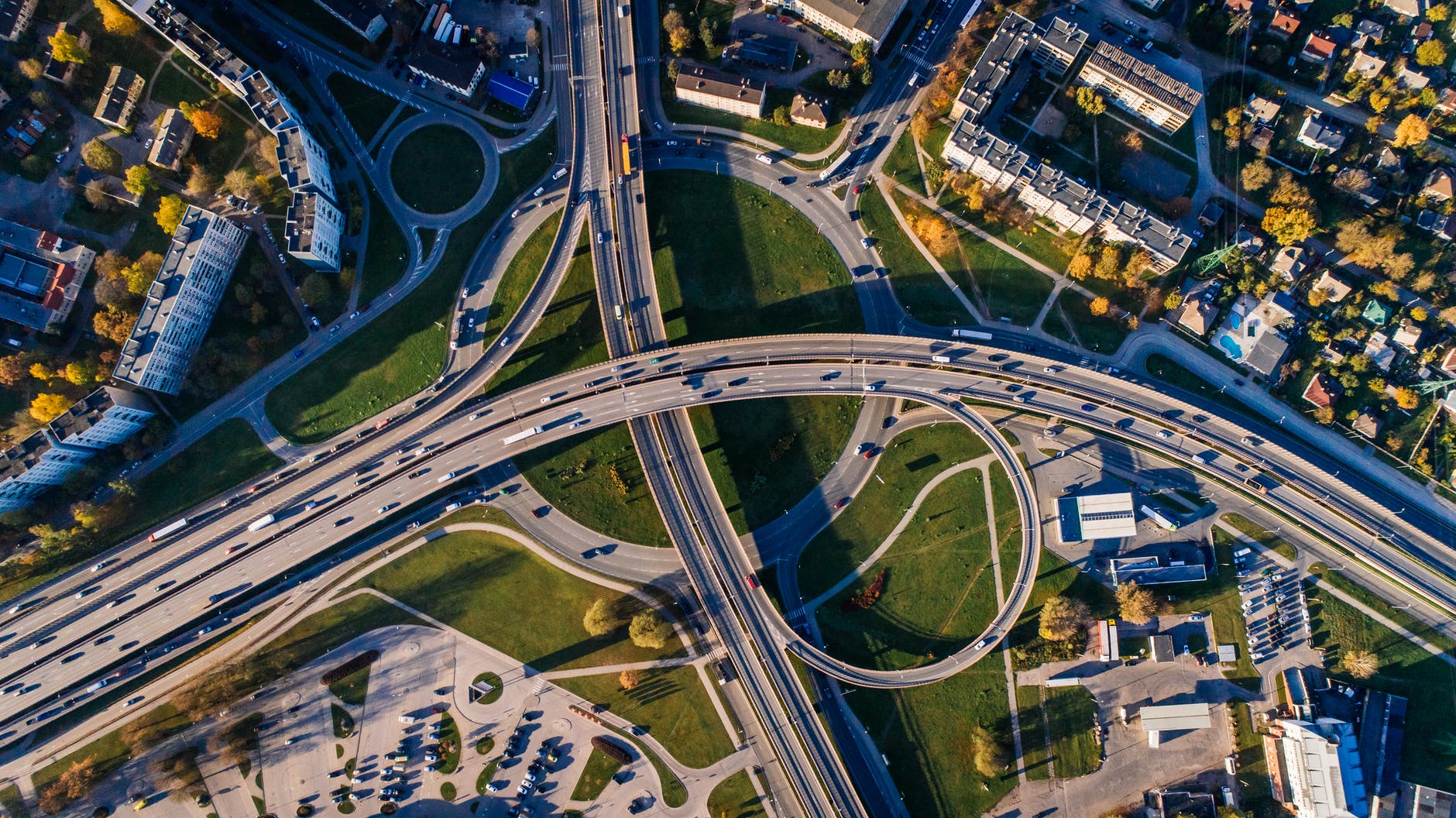
Constructing a New Urbanist movie town outside of Atlanta

Going up around a one-stop movie filming and production facility outside of Atlanta is a New Urbanist community named Trilith.

Google Maps

When the British film studio company Pinewood opened a production facility outside Atlanta in 2014, it framed the venture as a one-stop-shop alternative to the mature but spatially fragmented system in Hollywood. With a high-tech media center, soundstages, offices, prop houses, and set builders all colocated, Pinewood Atlanta was a turnkey space for filming. An early relationship with Marvel Studios led to a steady stream of big-budget superhero movies such as Ant Man and Captain America: Civil War, and Pinewood Atlanta quickly became a contender in the film business.

But some of its local investors wanted it to be more than just a production facility. They wanted the entire business to have a place at the studios, with development of new shows happening where they’d eventually be filmed, and local workers able to easily commute to jobs on the site, about 20 miles south of Atlanta. So they decided to build a town…

Pinewood recently left the project, amiably, and the studio and town are now fully in the hands of local founders, who have accelerated Trilith’s development, which broke ground two years ago. Planned with New Urbanist design principles, Trilith is a dense, pedestrian-oriented, mixed-use village, with a commercial town center, more than half of its area dedicated to green space and forest, and room for an eventual population of 5,000. About 500 people are currently living in the town, which is planned to have a total of 1,400 townhomes, apartments, cohousing units, and 500-square-foot “microhomes.” Housing is available to rent or buy, and Trilith’s developers say it’s luring residents from within the film industry as well as people from other walks of life…

Parker says the town was inspired by Seaside, a New Urbanist community in Florida famous for its use as the setting of The Truman Show. Trilith was designed by the Atlanta-based planning firm Lew Oliver, with homes designed and built by companies such as 1023 Construction and Brightwater Homes. Parker says the design was intended to appeal to young creatives, with an emphasis on wellness and access to the outdoors, but with the kinds of amenities people want in a town. The first of the town’s restaurants recently opened, and 11 more are in the works. A 60,000-square-foot fitness studio was recently completed, and a K-12 school is already open.

Three quick thoughts:

  1. It will be interesting to see how the relationship between the film industry and the town continues. On one hand, it could create a regular level of business and residents. On the other hand, not everyone in the community will be involved and interests could collide. Will this be like other suburbs and communities that rely heavily on one industry or sector (with both the advantages and disadvantages that come with this)?
  2. Later portions of the article discuss the diversity of residents in the community. Seaside looks good on film but has been more of a wealthy community than one that lives up to its New Urbanist principles of having mixed-income housing and residents. Will the desirability of such a community drive up housing costs? Will the connection to the film industry make it more difficult to others to move in?
  3. Does this provide a new model for numerous industries? For example, prior to COVID-19 big tech firms had constructed large, all-encompassing headquarters intended in part to help keep workers close. Or, large office buildings in central areas help consolidate workers and multiple sectors. But, perhaps this New Urbanist vision provides an alternative: more space in the suburbs, film facilities, other opportunities in the town outside of film.

Trying to trace the quote: “There Are Only Three Great Cities in the U.S…All the Rest Are Cleveland”

In the Internet/social media age, it can be difficult to know the origin of quotes. Here is an attempt to investigate the provenance of a quote about archetypal American cities:

Photo by Pixabay on Pexels.com

Quote Investigator: QI has found no substantive evidence that Mark Twain employed this joke; it is not recorded in the large compilation “Mark Twain at Your Fingertips”. 1 Also, it is not listed on Barbara Schmidt’s valuable TwainQuotes.com website. The comedian Russell Brand did improbably attach a version to Twain in his 2014 book “Revolution”. 2

The earliest strong match located by QI appeared in a 1975 issue of a periodical called “Best Sellers” which was composed of book reviews. A reviewer named Edward Gannon printed an instance and attributed the words to an unnamed Frenchman…

The small collection of cities deemed worthy by quipsters has varied; the group has included: New York, San Francisco, New Orleans, Washington, Boston, Atlanta, and Santa Fe. Tennessee Williams died in 1983, and one year afterwards the joke was attributed to him…

In conclusion, this quip was difficult to trace because the phrasing and the list of cities was highly variable. The attributions were anonymous in the two earliest close matches. It was conceivable that Tennessee Williams used the joke, but based on current evidence it was unlikely that he coined it. The linkage to Twain was spurious. Future researchers may discover more.

See an earlier post about this quote. There, I discuss how urban sociology uses cities as models and both the advantages and limitations to doing so.

What is particularly interesting about this investigation is how the cities in the quote can differ. There are two main ways a speaker of the quote can tweak the meaning:

-Playing with the first list of three unique American cities. There are plenty of locations that could claim they fit the bill. Perhaps it has to do with size, history, unusual places to visit, an exemplary cultural scene, geography, and more. Boosters might place their own city in this grouping.

-Deciding which city should go at the end. Cleveland makes some sense in that it can stand in for many Northeastern or Midwestern cities with its location on a major waterway, a central downtown surrounded by sprawling suburbs, and a history of segregation and manufacturing jobs gone away. Yet, does it best represent all cities? For example, numerous scholars and boosters have noted Chicago’s status as the all-American city. Or, in an era of growing Sun Belt populations, perhaps a booming southern city like Dallas might be apropos.

In other words, this quote of unknown origins can be continually updated by different users to reflect their particular take on the state of American cities or society.

Opening a 56-story Chicago office building during COVID-19

The new Bank of America office building, 816 feet tall and 56-stories along the Chicago River, is ready for business. But, COVID-19 is around…

From film at https://110northwacker.com/

The lead tenant, Charlotte, N.C.-based Bank of America, expected to have more than 2,600 people working on its 17 floors of the 56-story tower. But fewer than 200 work there now, according to company spokeswoman Diane Wagner…

By drastically reducing the number of columns that come to the ground, this structural tour de force allows the tower’s caissons to reach bedrock without hitting the remaining caissons of the old Morton Salt building. It also opens up the riverwalk, which would have felt constricted had it been hidden behind a row of columns.

To some, the arrangement may appear unstable. But new section of riverwalk, with its long, curving benches and still-to-be-planted greenery, is among the strongest contributions the tower makes to the public realm. It will not become a windblown cavern, the architects assure…

With COVID-19 still a significant threat, the developers have put several safeguards in place, including walk-through temperature scanning in the lobby, antimicrobial cladding on the building’s entry doors and upgraded air filtration systems. Tenants can swipe their smartphones on high-tech turnstiles that call an elevator. There’s also none of the welcoming seating that animated other downtown office building lobbies before the pandemic struck.

It sounds like the pandemic has effects on two major features of the building:

  1. The interior will not be functioning as it was designed for a while. This building has a lot of office space; will it ever be fully filled after COVID-19 passes and businesses reckon with shifts to working from home? We have not heard much about what it is like to work in such conditions – a relatively empty building – nor do we know how building owners and developers plan to use office space if they cannot attract firms.
  2. The excerpt above describes how the building interacts with the surrounding environment. It sounds good. But, how does it look and/or function when the typical street life of the Loop is not present? Can aesthetics overcome a lack of social interaction? When will the building fully participate in regular urban life?

Since this is not the only large downtown building under construction in Chicago, let alone in large American cities, it will be fascinating to see what comes of these structures. Will they be regarded as the last of the big central office buildings in a decentralized work landscape or will they be brave attempts to do business as normal or do they represent a new wave of exciting buildings that mark a post COVID-19 era?

From quaint suburban neighborhood to sprawl imposed on the land in ten minutes

A recent suburban drive showed me the variety in the built suburban landscape – all within ten minutes. Here is the first residential neighborhood I drove through, right near a downtown:

Tree-lined streets, older homes, walkable, pleasant sidewalks for pedestrians, a two lane road.

But, as I continued down this road, I soon found myself in a different suburban landscape:

Green space on one side, houses on the other side within subdivisions, fewer trees, a wider arterial road with a higher speed limit, power lines on one side.

The local context matters in this case: the first picture is near the downtown of a suburb where the land was first settled in the 1830s and the community was incorporated several decades later. In contrast, the second picture is land more in between suburbs where homes and subdivisions were constructed later. They are good illustrations of the different waves of suburban settlement as discussed by Dolores Hayden in Building Suburbia.

Though these are very different settings, they are now all grouped together as “suburbs.” They may even exist within the same suburban municipality; some suburbs are all sprawl, some are all denser areas, many have a combination of both. The interests of the homeowners in one setting may not match those in the other.

America is #1, self-storage space edition

Americans need extra space for all of their stuff and the self-storage industry has the solution:

Photo by Brett Sayles on Pexels.com

It was in Texas that self-storage originated, in the 1960s. The industry has flourished since then, and the United States now has 2.5 billion rentable square feet, at least 90 percent of such space in the world; over the same period, the average size of an American single-family home nearly doubled, and the average number of occupants fell by a quarter. This suggests that self-storage was not an inevitable convenience but something else, perhaps an indicator of national psychopathology…

Millennials, it is often reported, are uninterested in their boomer parents’ abundant accumulated possessions. Might this hurt the storage industry? They also have the highest storage use of any generation, with one fifth of households. (Millennials, and city dwellers, are also likeliest to choose the inscrutable survey response of having “personally experienced” “living in their units.”) Another idly theorized threat to the storage industry is the success of Marie Kondo’s book The Life-Changing Magic of Tidying Up. The idea seems dubious: consumer storage use recently reached 10 percent of U.S. households, and if anything threatens the business, it would be the pandemic, which appears to have spawned vacancies and depressed rents. It is plausible, however, that a number of Americans attempted a Kondo purge—getting rid of possessions that failed to spark joy, often thanking them for their service before relinquishing them—but wound up storing those things. Since Kondo’s sensibility derives from both Zen’s ideal of nonattachment and Shinto’s respect for the animate dignity of the “inanimate” world, it would be an acute irony for these objects to become imprisoned, like the diverse species of Japanese undead, in a state of irresolution.

Even as Americans have the largest new houses on average in the world and may purchase these homes to store their stuff, many need even more space. There are multiple reasons for this: an emphasis on consumerism; difficulty in parting with objects; lots of land for self-storage as well as relatively low costs for storage; disposable income. Kicking the acquisition cycle can be hard to do.

Two additional thoughts: some argue Americans consume to show off or display their status. But, using self-storage is truly a private act. If items are stored there, they cannot be at your home or in your yard or on hand to use.

Second, if only 10 percent of Americans are using self-storage, there is more money to be made! Imagine a country where tiny houses become more normal but people cannot part with all of their goods and need to store them somewhere. Or, as noted above, Baby Boomers cannot interest their family in all they have accumulated and resale stores and markets are flooded with too many items. Or, some fancy self-storage system where drones find and deliver goods when owners want them.

“Dream Hoarders” in exclusive locations

The 2018 book Dream Hoarders connects the actions of the top 20% in income to where they live and how they control who lives near them. Excerpts from the book:

https://www.brookings.edu/book/dream-hoarders/

The physical segregation of the upper middle class noted in chapter 2 is, for the most part, not the result of the free workings of the housing market. This inverse ghettoization is a product of a complex web of local rules and regulations regarding the use of land. The rise of “exclusionary zoning,” designed to protect the home values, schools, and neighborhoods of the affluent, has badly distorted the American property market. As Lee Anne Fennell points out, these rules have become “a central organizing feature in American metropolitan life.” (102)

Zoning ordinances, which began life as explicitly racist tools, have become important mechanisms for incorporating class divisions into urban physical geographies. This is not a partisan point. If anything, zoning is more exclusionary in liberal cities. (103)

So, those of us with high earnings are able to convert our income into wealth through the housing market, with assistance from the tax code. We then become highly defensive – almost paranoid – about the value of our property and turn to local policies, especially exclusionary zoning ordinances, to fend off any encroachment by lower-income citizens and even the slightest risk to the desirability of our neighborhoods. These exclusionary processes rarely require us to confront public criticism or judgment. They take place quietly and politely in municipal offices and usually simply require us to defend the status quo. (106)

There are numerous connections in this section to earlier posts. Here are a few:

One of the reasons Americans love suburbs is that suburban life allowed for excluding people they do not want to live near.

There is bipartisan white suburban support for homes rather than apartments.

-Housing rarely comes up in national political conversations. It may get a few minutes at debates or occasionally come up in trying to appeal to some voters.

-Tackling this at the state (example of California) or local level is difficult (example of Naperville, Illinois and suburban New Jersey).

In sum, it is hard to understand the life of wealthier Americans without also addressing how this wealth and the opportunities that come with it are closely connected to particular locations.

Population density as a factor in deciding suburban votes

An AP story highlights how “Democrats march deeper into suburbia” and discusses the role of density:

https://apnews.com/article/election-2020-virus-outbreak-phoenix-suburbs-health-care-reform-76dea954e5f5dc13b3ad65fd29ac678c

For decades, an area’s population per square mile has been a reliable indicator of its political tilt. Denser areas vote Democratic, less dense areas vote Republican. The correlation between density and voting has been getting stronger, as people began to sort themselves by ethnicity, education, personality, income and lifestyle.

The pattern is so reliable it can quantified, averaged and applied to most American cities. At around 800 households per square mile, the blue of Democratic areas starts to bleed into red Republican neighborhoods.

A purple ring — call it the flip zone — emerges through the suburbs…

In Dallas, the purple ring through the suburbs was 18.7 miles in 2016 out from city hall, at an average of 714 households per square mile. The border runs close to AT&T Stadium in Arlington, where the Dallas Cowboys play. Arlington is a so-called boomburb that morphed through new construction from a suburb to a city of 400,000.

A few thoughts on the potential role of density. First, an additional graphic (see below) works with the last paragraph cited above to draw concentric circles a city. This, however, suggests density is linear as one moves further out from the city. In general, this may be true but it would be interesting to see how pockets of higher density suburbs at different distances from the city affect these patterns.

https://apnews.com/article/election-2020-virus-outbreak-phoenix-suburbs-health-care-reform-76dea954e5f5dc13b3ad65fd29ac678c

Second, Is it density that predicts these outcomes or factors related to density? A third chart in the story looks at the population demographics at different densities and shows differences. Does the density come first or the population changes? The analysis here suggests a relationship or correlation but it is not clear whether this analysis accounts for other possible factors.

In the larger picture, what do Americans think about having these “flip zones” or middle suburbs be the current political battleground? For example, one current argument about getting rid of the electoral college suggests certain parts of the country should not a disproportionate sway over other more populous parts of the country. Right now, these middle suburbanites, particularly in swing states, have the influence and both parties want their votes. Are the interests of these suburban voters the interests of the entire country?

Houston as the example of what decentralized pluralism and social trust could look like?

When David Brooks looks at the need for social trust in the United States, one example he looks to is the city of Houston:

Photo by Nick Bee on Pexels.com

Can America in the 2020s turn itself around the way the America of the 1890s, or the Britain of the 1830s, did? Can we create a civic renaissance and a legislative revolution? I’m not so sure. If you think we’re going back to the America that used to be—with a single cohesive mainstream culture; with an agile, trusted central government; with a few mainstream media voices that police a coherent national conversation; with an interconnected, respected leadership class; with a set of dominant moral values based on mainline Protestantism or some other single ethic—then you’re not being realistic. I see no scenario in which we return to being the nation we were in 1965, with a cohesive national ethos, a clear national establishment, trusted central institutions, and a pop-culture landscape in which people overwhelmingly watch the same shows and talked about the same things. We’re too beaten up for that. The age of distrust has smashed the converging America and the converging globe—that great dream of the 1990s—and has left us with the reality that our only plausible future is decentralized pluralism.

A model for that can be found in, of all places, Houston, Texas, one of the most diverse cities in America. At least 145 languages are spoken in the metro area. It has no real central downtown district, but, rather, a wide diversity of scattered downtowns and scattered economic and cultural hubs. As you drive across town you feel like you’re successively in Lagos, Hanoi, Mumbai, White Plains, Beverly Hills, Des Moines, and Mexico City. In each of these cultural zones, these islands of trust, there is a sense of vibrant activity and experimentation—and across the whole city there is an atmosphere of openness, and goodwill, and the American tendency to act and organize that Hofstadter discussed in The Age of Reform.

Not every place can or would want to be Houston—its cityscape is ugly, and I’m not a fan of its too-libertarian zoning policies—but in that rambling, scattershot city I see an image of how a hyper-diverse, and more trusting, American future might work.

The key to making decentralized pluralism work still comes down to one question: Do we have the energy to build new organizations that address our problems, the way the Brits did in the 1830s and Americans did in the 1890s? Personal trust can exist informally between two friends who rely on each other, but social trust is built within organizations in which people are bound together to do joint work, in which they struggle together long enough for trust to gradually develop, in which they develop shared understandings of what is expected of each other, in which they are enmeshed in rules and standards of behavior that keep them trustworthy when their commitments might otherwise falter. Social trust is built within the nitty-gritty work of organizational life: going to meetings, driving people places, planning events, sitting with the ailing, rejoicing with the joyous, showing up for the unfortunate. Over the past 60 years, we have given up on the Rotary Club and the American Legion and other civic organizations and replaced them with Twitter and Instagram. Ultimately, our ability to rebuild trust depends on our ability to join and stick to organizations.

Houston is a growing city – now the fourth largest American city – and is a unique city in the United States. Brooks notes three features above: sprawl and a decentralized landscape, a lack of zoning policies, and diverse residents.

A fourth factor could be worth adding that might undercut Brooks’ example. Sociologists Michael Emerson and Kevin Smiley examined people-oriented cities and market-oriented cities. One of their case studies is Houston, a paradigmatic market-oriented city. Heavily influenced by the oil industry, the city has prioritized business over people. Can such a setting foster more social trust? If so, would it primarily be based on economic interdependence and would that be enough to overcome the problems Brooks suggests Americans face? If not, how can places combat the tendencies for current systems to pit interested parties against each other?

Furthermore, it would be worth hearing more how “islands of trust” can cooperate together to pursue projects for the good of the whole city. In a decentralized landscape, wealthier private residents may have what they want – access to a home and yard, for example – but it is less clear what kinds of institutions successfully bring people together over an expansive metropolitan region. A limited number of regions have tried metropolitan wide initiatives – see Minneapolis for sharing revenues, building housing across the region – but these can be difficult to sell and implement (see, for example, trying to promote mass transit in the Nashville region).

The contrast to Houston would be more established cities in the Northeast and Midwest that have long-standing institutions and coherent neighborhoods. Yet, the fault lines in these places may be too entrenched for significant coming together to happen.

Is there a growing smaller sized city that could lead the way in building social trust amid the pressures of pluralism, disagreement, and limited social trust?

Comparing “five myths about the suburbs” in 2011 and 2020

The Washington Post has a new “five myths about the suburbs” that differs from its 2011 piece by the same name (though a different author). From my 2011 post, here is the older list:

Photo by Kelly Lacy on Pexels.com

1. Suburbs are white, middle-class enclaves…

2. Suburbs aren’t cool…

3. Suburbs are a product of the free market…

4. Suburbs are politically conservative…

5. Suburbanites don’t care about the environment…

From the 2020 list:

Suburbs are less dense than cities…

All suburbanites own detached houses…

Suburban workers typically commute to downtown jobs…

Today’s suburbs are racially integrated…

E-commerce killed suburban malls.

There is a lot of overlap between these lists including commentary on class status, who suburban residents are, and what suburban communities are like. There are also differences in the lists: the 2011 list discusses the cool factor and the environmental impact of suburbs while the 2020 list highlights retail.

Even with the overlap, it is notable that myths about suburbia are still viable decades after suburban changes have been in motion. This hints that the image of suburbia is persistent and powerful: the single-family suburban home where a nuclear family pursues the American Dream can still be found in both reality and in cultural productions. But, there is also a another/newer side of suburbia that features new kinds of residents, alternative forms of housing, tougher lives and disillusionment in the supposed land of plenty, and changing everyday life. This sounds like complex suburbia: the suburbs are more varied than the typical image.

Furthermore, there are a number of actors interested in researching and discussing the suburbs of today. From books like Confronting Suburban Poverty to Radical Suburbs to videos, there is still plenty to analyze and learn about in a geographic domain that many think is relatively easy to understand. The suburbs may not appear as exciting as other dynamic locations but with a majority of Americans living in suburban settings, what happens in the suburbs has the potential to shape many lives.

Questions a sociologist asks when seeing changes in the housing stock in their community

I try to pay attention to housing changes in the suburban community in which I live. Here are some questions I ask as I observe both existing and new homes:

  1. What existed here before this current residence?
  2. What motivated the property owners to tear down the existing home and build these homes (and in these particular styles)?
  3. How do existing and new homes interact with their surroundings?
  4. What does the inside of the home look and feel like? The outside provides some clues but interiors can be quite different from house to house.
  5. What happened at the community level (decisions, regulations, proposals, discussions, etc.) for these homes to exist in this form?
  6. In the long run, will these changes be viewed positively in the community or negatively?
  7. Who are the people who live in these homes (who is this housing for)? Are they the same or different kinds of people who are in the community?

We can measure features of old and new homes and look at the aggregate data. For example, we could try to look at the “average” home largely based on standardized traits. These figures are helpful but they also leave out other important traits of homes: what is their character? How are they experienced by the owners and the neighborhood and how do they shape social actors? How do they contribute to community life? What do they say about the priorities of the occupants and the community?

In sum, homes are not just part of the housing stock. Each house has the potential to shape and be shaped by people who interact with its material and symbolic presence. And when the housing changes, it can alter existing understandings.