Stickers on the back windows of cars can signal all sorts of things. The number of family members. A favorite vacation spot. A beloved car brand or sports team.
What would a house sticker in the back window mean?
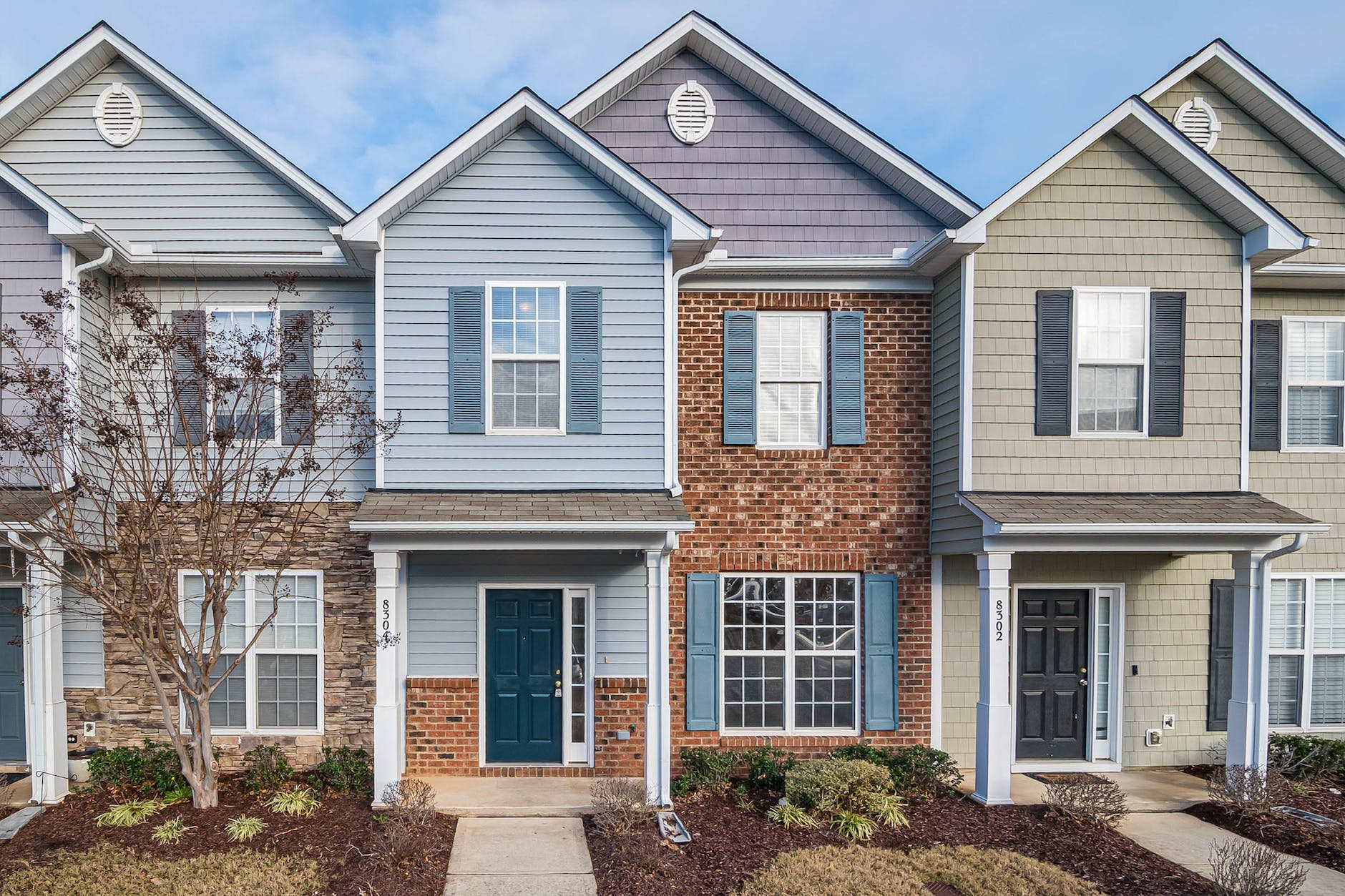
I recently saw a SUV with a two-story house sticker. The sticker looks similar to a drawing a child might make of a house. The picture below has such an image; this sticker had much cleaner lines but had a similar shape.
It’s a “good’ neighborhood now. And the land that Transfiguration once occupied will be turned into about a dozen single-family homes, where, in an area that was zoned for and still is largely home to two- and three-flats, the starting price of a new house is $1.35 million. Talk to me about the zoning on that one.
This week is the one I dreaded: the physical building, Transfiguration of Our Lord, is being torn down. I held out hope that the building that had welcomed and taken care of so many would be preserved. At the very least, I hoped that the land that nourished thousands of families would house a few more of them in the middle of a nationwide affordable housing crisis. But why build homes for two or three families when you can get rich selling a house to just one?
So the fences have gone up, and the building is coming down.
Processing the closing of a long-time religious congregation can be difficult.
But, there is also a suggestion above that these are two very different uses of land. According to this member, the church nourished families and the community. The church welcomed immigrants. Its school educated kids. The church was a gathering place. Churches in the United States do not pay property taxes, but they can provide services for the neighborhood.
In contrast, the buildings that will replace the church will be expensive single-family homes. These will provide private space for households within a desirable neighborhood. There is money to be made in the developing and selling of the buildings.
This could lead to a question: is land better used for organizations that serve the community or for single-family homes? If people care more about money, creating more real estate is the answer. If people want to emphasize community, there might be room for religious congregations and other neighborhood organizations, but they may need to sustain themselves. Americans value single-family homes and like making money. When congregations close, it is a relatively easy step in many communities to redevelop this land or reuse the buildings in ways that generate money and revenue.
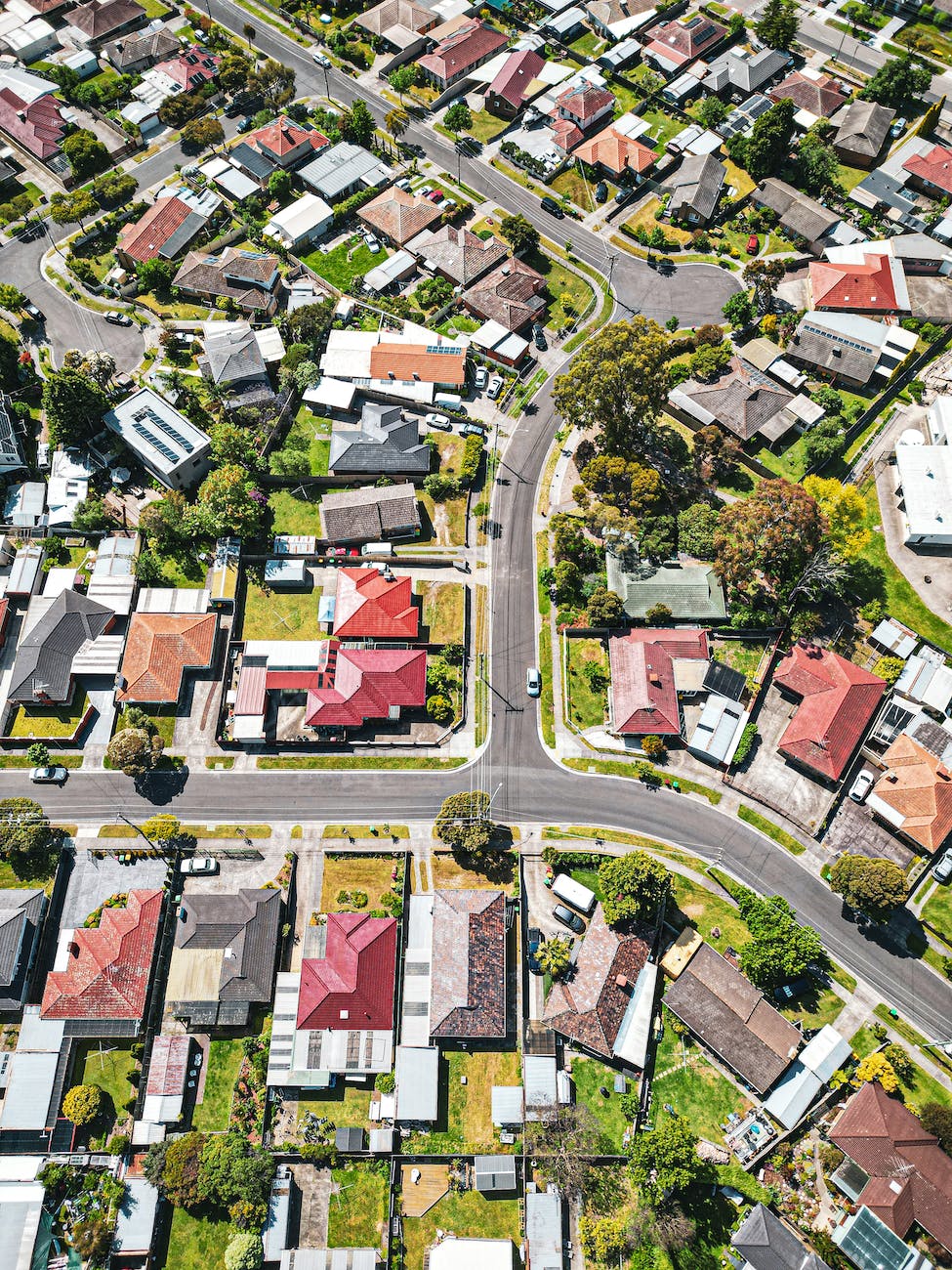
Buying a house in the suburbs isn’t just a little easier on the wallet for city dwellers. In some parts of the country, bedroom communities offer an entirely different real estate market. Over 600 of the 777 suburbs within 30 miles of the country’s 20 most expensive cities are more affordable in terms of price per square foot — up to 65% cheaper in some places.
The East Coast offers the most suburban alternatives to main cities: 95 of the top 100 suburbs with the biggest price differences are near New York, Washington D.C., Boston, and Miami…
These are the top 10 cities with the most relatively affordable suburbs for home buyers, ranked by the percentage of suburbs with a lower cost per square foot compared to the main city.
Salt Lake City, Utah (100%)
New York, New York (98%)
Washington, D.C. (97%)
Boston, Massachusetts (93%)
Honolulu, Hawaii (90%)
Austin, Texas (89%)
Seattle, Washington (83%)
Boise, Idaho (80%)
Denver, Colorado (80%)
Riverside, California (79%)
A few thoughts in response:
Do people always seek out the cheapest housing and move to the suburbs? Some will move to the suburbs because of lower price points. Others might stay in the city or go to the suburbs for other reasons.
Is 30 miles out from an expensive city a large enough radius? It might be for some of these cities and not for others. Additionally, many commutes are suburb to suburb to being 40 miles out and commuting to a suburb 25 miles from the city is a different comparison than city versus suburban settings.
One reason the expensive cities are so pricey is that they are desirable. If more people move to a region, does this then decrease the affordability of suburbs as well?
Is it safe to assume then that there are metro areas where city and suburb prices do not have much difference?
I recently saw on the side of a truck the slogan for a company: “Delivering the American Dream.” Before I say which firm uses this, some thoughts on what kinds of companies this could fit:
-Take the first part of the slogan: “delivering.” Could this fit a major delivery company? Imagine this as the slogan of UPS or FedEx; would it fit as they delivery so many different items to people?
-The second part of the slogan references “the American Dream.” This could refer to housing and the suburbs. (And I did spot this slogan in the suburbs.) Could a house be delivered or could it refer to some essential parts of homes (furniture, appliances, etc.)?
-The whole phrase suggests the American Dream can be delivered. This is a big promise. As noted above, the Dream can be symbolized by tangible objects but it is also an important ideology encompassing multiple factors.
Founded in 1956 and headquartered in Eighty Four, Pennsylvania, 84 Lumber Company is the nation’s largest privately held supplier of building materials, manufactured components, and industry-leading services for single- and multi-family residences and commercial buildings.
The company operates 310 facilities which includes stores, component manufacturing plants, custom door shops and engineered wood product centers in 35 states. 84 Lumber also offers turnkey installation services for a variety of products, including framing, insulation, siding, windows, roofing, decking and drywall.
In the early days, founder Joe Hardy, in conjunction with his two brothers, Norman and Bob Hardy, and family friends Ed Ryan and Jack Kunkle, pooled together $84,000 in funds to purchase land and buildings for a new “cash and carry” lumberyard. The idea was that customers would pay by cash or check and if merchandise was unable to be “carried” out, an additional charge was implemented to have the item personally delivered…
Since then, 84 Lumber experienced exceptional growth, powered by Maggie’s vision to expand, and evolve the business. With tenacious leadership, and the 84 Lumber team’s true passion for their company, a new 84 Lumber emerged from tough economic times to become the powerhouse it is today. Now, 84 Lumber is a certified national women’s business enterprise and has held a spot on the Inc. 5000 list of America’s fastest growing companies for several years in a row. The company hit $7.9B in sales in 2021, and increased to $8.78B in 2022.
The slogan does indeed refer to the single-family home and other buildings. They deliver some of the essential components of structures that many Americans use without any knowledge of where the materials came from.
If any company could live up to this slogan, this seems to be a good fit. While other companies could make a good claim with other goods and services, a close connection to single-family home construction connects closely to the American Dream.
Twenty-one percent of U.S. adults believe it is a good time to buy a house, down nine percentage points from the prior low recorded last year. The 2022 and 2023 readings are the only times that less than half of Americans have perceived the housing market as being good for buyers in Gallup’s trend since 1978…
Gallup first asked Americans about their perceptions of the housing market in 1978, when 53% thought it was a good time to buy a house. Thirteen years later, when the question was asked again, 67% held that view. The record high of 81% was recorded in 2003, at a time of growing homeownership rates and housing prices…
Opinions of the housing market are bleak and generally similar among all major subgroups, including by region, urbanicity, homeownership status, income, education and party identification. Subgroups in these categories range from 18% to 24% thinking it is a good time to buy a house.
Americans tend to like homeownership. Thus, this data could be interest if it goes toward the direction toward less interest in buying homes and less support for policies that privilege homeownership. If enough Americans are this pessimistic, perhaps they do not think they can pursue owning a home. Perhaps they want policies that provide help for renting or other housing options. Perhaps their inability to purchase a home at younger ages means they will not be able to catch up later.
However, I suspect the pessimism of 2022 and 2023 is tied to current conditions more than it signals a large shift in how Americans think about homeownership. The Gallup data suggests support went down a bit in the mid-2010s and then dropped off in the last two years. It might take another year or two to see if (1) housing conditions improve and (2) support rises. Of course, housing conditions may not improve much and a longer-term run of pessimism could lead to bigger changes.
The bigger question might be this: how many years of negative perceptions about owning a home will it take for patterns to change long-term?
From reading the chart, the rise in average prices is over 500% from roughly $90,000 in late 1983 to over $500,000 in early 2023. This, presumably, can be seen in communities across the country.
Now there is a lot of money tied up in homes and real estate plus homes have become an even more important marker of wealth. As the article asked, will the transfer of wealth in these homes simply reproduce existing disparities in housing? Or, might there be ways that the increased value of housing help promote access and opportunities for others?
For eight years now, as millennials have entered their thirties and forties, also known as “homebuying age,” Bank of America has surveyed over 1,000 members of the generation once a year for its Home Work series. And for 2023’s edition, it finds a “suburban nation” alive and well. Older millennials (age 31–41) are almost three times as likely to move into a house than an apartment, the survey found, and they’ve got a hunger for the Costco dog, so to speak.
Migration patterns during the pandemic have clearly established that most homebuyers have wanted to flee big cities, with some “zoomtowns” such as Boise benefiting in particular. But the survey reveals something even more drastic. In a section called “suburban nation,” BofA reveals that 43% to 45% of millennials—of every age—expect to buy a house in the suburbs…
The interest is pervasive across the generation, and maybe means that the suburb is in for a new and better revival. And a 2021 study from Pew Research Center found that one in five adults preferred city life, compared to one quarter of adults in 2018, those who favored the suburbs increased post COVID-19 as well. One of suburbia’s worst qualities or stereotypes was its pervasive whiteness, now with the surge in interest the suburbs are starting to grow to reflect the diversity of the country at large. Big suburbs are actually now more racially diverse than the nation, according to a Brookings analysis.
I take this less of millennials now really want to go to the suburbs and more of millennials are following the patterns of previous generations of Americans. What exactly the suburbs are today is different – they are more complex – but they are still structured around single-family homes, family life, and attaining the American Dream.
All places go through some fluctuations in conditions and appeal. It will take longer than just a few years to doom the suburbs as Americans have now devoted decades to celebrating and pursuing them.
Perhaps the opponents are beginning to accept that their community is not, has never been, exclusively their own domain.
Who owns a neighborhood? In many American communities, the people who live there might feel this way. They expect to provide input and exercise some oversight of what happens in their neighborhood. They want to exercise control over their own properties and those around them.
But, they do not do this on their own. They interact with other property owners and also engage with local governments. These local governments typically represent a broader community and have regulations about what can and cannot be done in neighborhoods.
Or, here is another way to address the same questions: if every neighborhood will change over time, who gets to street this change and/or benefit from this change? Those with means and vested interests will have their own perspective and goals while a broader community might have another point of view.
Their large five bedroom property with a sprawling 200 metre-long drive is located in The Ponds area in west Sydney, where hundreds of new homes have popped up in recent years…
The home looks bizarrely out-of-place wedged between identical chock-a-block newbuilds, where its 1.99 hectare garden could fit over 50 of the matching new homes inside.
However, when their neighbours upped and left – choosing to sell to the developers – the Zammits made a last hold out.
They refused to sell, despite being offered millions, and prevented the developers snatching up the last plot of land.
“The fact that most people sold out years and years ago, these guys have held on. All credit to them,” local agent Taylor Bredin told 7News…
In short, the land could be worth over £25million, especially after ten years of their private rebellion.
The valiant resident holds on to their land despite possible riches; all they have to do is move. Such a story fits the image of the sacrosanct property owner. A home is their castle. No one can tell them what to do. If they want to stay, they can stay. The government or private actors should not be able to move them.
At the same time, we believe growth is good. If even just a few property owners hold out, they can interrupt larger plans for new buildings and activity. Imagine an important highway project or mass transi line or new tall building that need several properties to make it better for others but those owners will not sell. Are there limits to whether a property owner can hold on?
In the Seattle story referenced by Up and in this Australian suburban story, developers could not force the issue but they could build right around them. Edith Macefield’s Seattle home was boxed in on three sides. The suburban property above is surrounded on all four sides by dense single-family homes. The property owner has stayed but the surrounding area has been radically transformed.
I recently saw a house near me that was for sale. Checking the online property history, I found that the home is now worth roughly 5 times more than what it sold for in the early 1980s. By just being there for the last four decades, the home has quintupled in value.
This is not a phenomena restricted to our suburban area. Recently following an Internet rabbit trail, I was looking up property values in Levittowns on the East Coast. I remember seeing that their values had at least tripled or quadrupled over a similar span. What were once cheap and simple suburban homes became homes with values significantly above the median value for owner-occupied homes.
Homeowners would likely say that the values have increased because of the maintenance and upgrades in the homes and properties. There has been change; the homes near us have been updated and added to over the last fifty years while the Levittown houses have been transformed in numerous ways over the decades.