The role of disasters – such as the Great Chicago Fire – in pushing people to leave cities for suburbs

A thought experiment considering what would happen if the Chicago Fire of 1871 never happened includes this tidbit about suburban growth:

But then, after that second big fire in 1874, Chicago officials extended the restriction on wooden buildings to cover the whole city.

Elaine Lewinnek, author of the new book The Working Man’s Reward: Chicago’s Early Suburbs and the Roots of American Sprawl, says the aldermen contributed to suburban sprawl by making it cheaper to build outside the city. After they changed the law, a real estate booster reported “a brisk demand for building just outside the city limits.” (Some of those areas outside the city limits in the 1870s later became part of the city through annexations.)…

“Things were already changing, as railroad lines and industry were crowding out housing,” Keating says. “The fire made this happen more quickly but it would have happened anyways. People moved more quickly south to Prairie Avenue or out to new suburban towns like Riverside.”

“The fire pushed 27,000 humble homes out of the central city and the North Side, leading to fewer residences downtown,” Lewinnek says. “Yet suburbanization was already happening before the fire, in elite suburbs like Riverside and more humble suburbs too.”

I have not heard this argument before. At the time of the fire of 1871, suburban populations were very modest. Railroad lines had only been in present in the region for a few decades. For example, the suburb of Naperville, which had just lost out on being the county seat to Wheaton, had just over 1,700 residents in 1870 while Wheaton had 998 residents and Aurora had over 11,000 residents.

As noted by numerous scholars, by the late 1800s fewer areas surrounding Chicago were willing to be annexed into the city (unlike communities like Hyde Park). This is usually attributed to the declining status of city life compared to suburban life alongside the declining price of public infrastructure that made it possible for suburbs to have electricity and their own water supplies. But, the scholars above hint at another factor that would become a long-running feature of suburban life: cheaper housing. If Chicago required less flammable materials for homes, people would move to suburbs that did not have such regulations.

More broadly, it would be worth examining whether major disasters in urban areas push people to move to surrounding areas or even other regions. Do earthquakes in the LA area influence population patterns? How about hurricanes in the southeast? Do people leave population centers after terrorist attacks? It would take some work to separate out the effects of disasters on movement compared to other factors.

SimCity, Jane Jacobs, and real estate values near the High Line

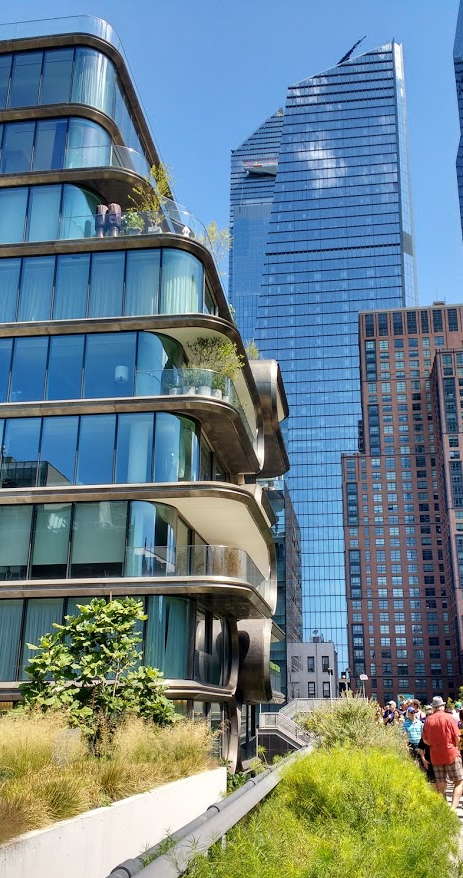
In a recent walk along New York’s High Line, I was reminded of two competing claims about how parks enhance nearby land uses.

In SimCity’s take on urban planning, building a park was a good way to help adjacent properties. If nearby residential and commercial properties suffered from low property values – perhaps due to higher crime rates or locations near industry – building a park could help enhance their values. This seems to make intuitive sense: people like being near greenery and this land use can distract or suppress less desirable land uses.

Jane Jacobs, in contrast, suggests parks are not the automatic panacea some planners suggest. More important than simply having green or recreational space is having a steady mix of people flowing through and around the park. It is human activity that makes the park, not just green space. Indeed, negative activity can thrive and recreational space can easily become part of a dull or blighted area.

HighLineAug19

In a simplistic take, the High Line seems to support both of these views. The conversion of an unused railroad line to a thriving park has enhanced nearby property values. The park is regularly filled with people – from tourists to local walkers to vendors – during much of the day. This is a success story for both the SimCity and Jane Jacobs school of urban planning.

Yet, how exactly such an urban space came about and has both positive (new development!) and negative (those same values limiting who can live nearby!) consequences is more than just plopping a park into an area that could use more development. If it worked this way, every city would have such a successful project.

HighLine2Aug19

In a complex environment like Manhattan where land is highly prized and regulated, putting together such a project takes collective efforts spanning activists, residents, local officials, developers, and others who have an interest in this land and who may have competing interests. Property values may indeed be high and the park full but the long-term effects of this on the neighborhood and the city are harder to assess.

Rethink Rezoning, Save Main responses share similar concerns – Part Two

Yesterday, I summarized the redevelopment plans for the East Roosevelt Road Corridor in Wheaton and the Giesche Shoe project in Glen Ellyn. Based on online sources, I will summarize the concerns of residents. There is a common theme: they perceive the character of the community is at stake.

In Wheaton, here are some of the stated concerns:

“We are a residential city, and our city planning should reflect that,” she said. “A forward-thinking city understands that pedestrian-friendly sidewalks and bike lanes are what attract new homebuyers, keep residents, increases equity for current homeowners and subsequently increases city revenue based on increased home value and an increased tax base.”

Nancy Flannery, the chairwoman of the city’s historic preservation commission, worries about the possible demolition of another Jarvis Hunt-designed house, now converted into offices at 534 Roosevelt. Built in 1896, the house was one of the first summer cottages constructed for members of the private Chicago Golf Club.

And a few more representative comments from the same May 28, 2019 meeting:

expressed concern that the proposed changes would build up retail, contribute to congestion and be detrimental to neighboring residents. He stated there are already vacancies and the report is not clear on what types of businesses would be interested in Roosevelt Road…

stated he thinks the plan as presented harms the neighborhood in terms of traffic, safety, noise, light and visual aesthetics, and he doesn’t think there is a problem on Roosevelt Road that needs fixing…

stated she does not want developers to be able to build commercial businesses on lots behind Roosevelt Road. She stated she does not want to see 4- or 5-story buildings being constructed right near residential areas.

In Glen Ellyn, some representative comments from an online petition:

Local congestion, size out of proportion (too large and bulky), traffic pattern near local churches & private school, etc…

It’s going to ruin the quant village that we choose to live in. We want to live in a village not a city with large structures – we would have chosen to live in Wheaton Or Naperville ( village is the key word – we are not a city Or town. We are the Village of Glen ellyn )…

a number of villages used to have charms that brought shoppers and new residents (e.g. elmhurst, arlington heights, mt prospect). their boards allowed developers to build in violation of existing codes and these charms were lost. don’t let that happen here…

My husband and I moved here because the town was still lovely, quiet, and mostly unmarred by the huge, unsightly, commercial behemoths scarring most of the surrounding suburbs. Glen Ellyn still has charm and an organic feeling of development. This development does not fit in at all with the feeling and aesthetic of the town. Say no!

In both cases, the concerns residents voiced are consistent across hundreds of development and redevelopment projects in suburbs across the United States. Having studied this in multiple ways (several of my projects address similar issues including “Not All Suburbs are the Same” and “‘Would Prefer a Trailer Park to a Large [Religious] Structure’“, residents generally bring up the same concerns: increased traffic, lights, and noise; a change in scale (particularly when it comes to height); and threats to residences (usually single-family homes) and the character of a suburb.

In Wheaton, the character issue is not stated as clearly but it is present. This major road is one of the primary ways people see the suburb. How should it look compared to the stretch of Roosevelt on Glen Ellyn which is more like the strip mall approach and Winfield to the west which is more green and residential (and not coincidentally they are fought their own battles over taking advantage of possible business opportunities on such a busy road)? This is not just about a busy roadway or the homes that back up to this stretch; this is about signalling what kind of place Wheaton is. One that values businesses or homeowners, one that prioritizes vehicles or pedestrians, one that celebrates its history or is looking to simply make money?

Interestingly, Wheaton comes up in the Glen Ellyn comments as a place that some Glen Ellyn residents do not want to become. Since the late 1990s, Wheaton has pursued downtown condos and office buildings. Other suburbs come up in the comments including more lively downtowns like Naperville and Arlington Heights. These Glen Ellyn residents have some similar concerns that most redevelopment projects engender – traffic, noise – but this particular project seems to be a step too big for their downtown. Can five stories “fit” with the existing downtown? This is not just about seeing the building from a distance: it is about a sense of scale for pedestrians, how the building might tower over nearby businesses and residences, and what this portends for the future of the downtown. Let this big development in and Glen Ellyn will become just another suburban downtown chasing after tall buildings and money to the detriment of residents who liked to feel they live in a small town.

Perhaps the big question here is this: are these concerns from residents valid? Are these just NIMBY responses? Who should control what kind of development occurs in a suburban community? Americans like suburbs in part because they feel like they have access to local leaders and can influence local decisions. From my own research on suburban communities, I am fairly convinced there are some suburban residents who move into a neighborhood and community and desire to freeze the place in that exact configuration. Indeed, they moved to the suburb for particular reasons. On the other hand, cities and suburbs are encouraged to grow (stagnation or population loss is failure) and development or redevelopment opportunities do not always come along easily or in forms that local officials or residents will like. If these communities do not act now, will they lose economic opportunities to other suburbs and in the long run shoot themselves in the foot by not upgrading when they can?

If local residents are vocal enough, they can likely slow down or nix these redevelopment projects. How many residents have to voice displeasure is not clear; few suburbanites are invested in local politics even if they count on the opportunities to voice this displeasure to protect their own investments. Local officials do listen and will encounter difficulty down the road if they just ram through projects.

Here is what I suspect will happen in the long-term in these two cases (and in suburban disagreements over development and redevelopment generally): few communities are so anti-development that they keep out all changes. Suburbs generally hope to keep growing and this becomes more difficult in more mature suburbs like these two which cannot add new subdivisions. There are only so many ways Wheaton and Glen Ellyn can add businesses and residents. If these changes do not happen now, they will probably happen eventually as the opportunity costs are too steep: local leaders will have a hard time turning down these chances when the possible consequences are lost money, vacant properties, and eyesores. Some local residents will dislike the changes and some might move away. But, the very conception of suburbs may be evolving as well: outside of moving to exurban areas, many suburbs are pursuing more density and vibrant downtowns. This may make suburbs all the more complex in how they are understood and experienced and in how residents think of their community’s character.

 

Rethink Rezoning, Save Main responses share similar concerns – Part One

The suburb in which I live and the neighboring suburb both have proposed redevelopment ideas and each has attracted opposition from residents. Both sets of opposition have yard signs to voice their displeasure and residents have spoken at public meetings.

Part One of this analysis involves the basics of the proposed projects and how this fits into what suburbs generally try to do.

The Rethink Rezoning group is responding to a study commissioned by the city of Wheaton to improve development along the busy Roosevelt Road corridor that runs east-west through the center of the suburb. From the Daily Herald:

Wheaton’s East Roosevelt Road corridor has a hodgepodge of businesses and housing, obsolete office space and no consistent sidewalk network that encourages pedestrians to walk from one end of the nearly 2-mile stretch to the other…

Consultants propose a “Horizontal Mixed-Use Zone” from Carlton Avenue to West Street/Warrenville Road, currently a mix of low-intensity offices, houses and residential structures adapted into offices. In that subdistrict, the city should expand the palette of permitted land uses, including limited retail and “personal service establishments,” the report states.

Farther east, a “Commercial Core Zone” between West and President streets could concentrate new development of significant size — greater than anywhere else along the corridor — taking advantaging of proximity to the downtown and the Mariano’s grocery store. The Mariano’s intersection has traffic congestion when cars queuing up in the west turn-lane from Naperville Road to Roosevelt.

A “Mixed-Use Flexible Zone” from President to Lorraine Road “should encourage a broad range of uses, including retail, service, office and multifamily residential,” according to the report.

See a more complete draft report from earlier this year.

The Save Main group is opposed to a mixed-use five-story building to be built on the southern edge of Glen Ellyn’s downtown. Here is a 2018 description from the Daily Herald:

A new redevelopment plan for an old shoe store in downtown Glen Ellyn would replace the long-vacant building with an apartment complex that would rise above neighboring restaurants and shops…

Larry Debb and John Kosich are the two principals for the project that would demolish the Giesche store to make room for a five-story apartment building with about 5,360 square feet of first-floor commercial space. The footprint would include what is now the village-owned Main Street parking lot…

But in a letter to village planners, Kosich and Debb said they’re proposing a “condo quality” building with 107 rental units. A two-level parking garage would provide 147 public parking stalls on the first floor, with access off Main Street, Hillside Avenue and Glenwood Avenue. The garage’s second floor — reserved for apartment residents — would contain 142 stalls…

Such a mixed-use development with parking would align with the village’s 2001 comprehensive plan and 2009 downtown strategic plan, Hulseberg said. The latter recommends the village add at least 450 new residential units downtown.

Neither of these projects are unusual for suburban communities. Indeed, they both attempt to take advantage of unique traits already in the suburb.

In Wheaton, the Roosevelt Road corridor has been an area of interest for the city for decades. With tens of thousands of cars passing through each day, it presents an opportunity, particularly since it is just south of the downtown (and traffic does not necessarily turn off Roosevelt to go downtown) and north of the other major shopping area at Danada (along the busy Butterfield Road corridor). But, Wheaton has generally been conservative about what development they allow along this stretch. Compared to Glen Ellyn to the east or the Ogden Avenue corridor in northwest Naperville, the Roosevelt Road stretch in Wheaton is relatively void of strip malls, fast food restaurants, car repair places, and rundown facilities. Again: this has been an intentional effort to maintain a certain level of quality.

The proposed changes would build on this by updating some uses (most suburbs utilize single-use zoning but this can be restrictive in certain areas) and try to encourage some cohesiveness across stretches. What is now a hodgepodge of offices, some older houses, some more recent office buildings, could have a more uniform character and present a more pleasing aesthetic. I don’t know how many people will walk along such a busy road but it certainly does not lend itself to that now. All of this could help improve aesthetics and bring in more revenue from taxes in a revitalized district. Having a more uniform plan could help bring in more money for the city which then helps relieve local tax burdens.

In Glen Ellyn, such a project both fits with the village’s own goals and echoes what numerous suburbs in the Chicago region have tried to do: encourage mixed-use buildings in downtown areas near train stations and existing restaurants and shops. This new project would add to a fairly lively restaurant and retail scene while also adding more residents (and probably wealthier ones – this is not about suburban “affordable housing”) to a suburb that has little greenfield or infill development available. The new residents would patronize local businesses, utilize the train, and contribute to a density that could make the downtown even livelier. Again, one of the benefits would be increased tax revenues: the vacant property would have a more profitable use, the first-floor businesses would add sales tax monies, and the new residents who probably have limited numbers of children would bring in tax dollars.

If these projects are in line with suburban plans – let alone the long-term plans for each community – what are the residents objecting to? More on that in Part Two tomorrow.

Chicago’s beautiful Riverwalk…what took so long to put it together?

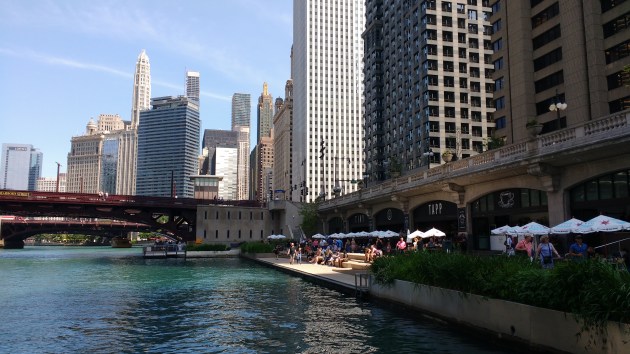
On a recent beautiful summer afternoon, I had my first chance to walk the full Chicago Riverwalk.

ChicagoRiverwalk1ChicagoRiverwalk2

The city’s website suggests the plans for the Riverwalk started in the late 1990s. Why did it take so long for the idea to come together? For a city that has so much pride in its lakefront parks and protected areas, the river was overlooked for decades. In much earlier decades, economic activity was centered on the riverbanks: rail lines brought goods from throughout the region to ships and counting houses. But, it has been a long time since this activity ended and important buildings have lined this stretch for decades. If a Riverwalk can do much for places like San Antonio and Naperville, what took so long for Chicago to enhance this stretch?

Three thoughts on the finding that 7.5% of housing in Naperville is affordable

Naperville is a large – over 140,000 residents – and wealth – a median household income of just over $114,000 – suburb. It also does not have much affordable housing:

A state agency recently faulted Naperville as the only Illinois community of 50,000 or more lacking affordable housing, which, according to the federal government, means housing costs make up no more than 30% of a household’s income. In a report last year, the Illinois Housing Development Authority found just 7.5% of Naperville homes are considered affordable based on the regional median income, among the lowest percentages in the state.

Some elected officials fear Naperville’s high housing costs could drive out seniors and push away recent college graduates and middle-class professionals. As those city leaders consider a slew of new developments, they and housing advocates are debating how and whether to include affordable units that could bring in new residents and help people such as Melekhova stay…

Efforts to include affordable housing in Naperville developments have been met with some resistance. Residents have questioned the effects affordable units would have on their neighborhood and whether the look of buildings with affordable units would fit the character of the area.

One question submitted on a note card during a panel on affordable housing in May was more pointed: “What steps can landlords utilize to minimize the potential negative impacts of the associated tenants utilizing affordable housing?”

Based on my research on suburbs and Naperville, three quick thoughts:

  1. Naperville enjoys being a wealthy suburb. It has a really low poverty rate for a city its size. It has lots of white-collar jobs. While this tends to be put in terms of having a high quality of life, nice amenities, and good schools, there is clearly wealth.
  2. There is not a lot of affordable housing because that is not the kind of housing Naperville prioritized for the last fifty years. As the suburb really started to grow in land area and population in the 1960s, there were public discussions about building apartments. This is not what won out in the long run and the community approved subdivision after subdivision of nicer single-family homes. (See my 2013 article that details some of this.)
  3. More recent discussions and the comments highlighted in the article are common ones in suburban debates over affordable housing. When suburbs discuss affordable housing, they often are thinking of people that would desire in the community such as younger adults and retirees. They are not explicitly seeking out poorer residents. Such concerns can be put in different terms – privileging “quality” development or protecting the “character” of neighborhoods – but they often do not address housing for the many Americans working in lower-paying jobs. And there may be some support for affordable housing units but it is harder to find the suburban homeowners who want to live near those units.

All that said, truly addressing the issue of affordable housing requires more effort than adding a few units spread throughout the large suburb. A larger discussion about what kind of housing the community desires and what kind of residents it wants would have to take place before the number of affordable housing units would truly jump.

Freeway revolts had a point: evidence from Chicago regarding the problems with highways

Two economists at the Federal Reserve Bank of Philadelphia looked at the effects of building highways and found a number of negative effects for Chicago neighborhoods near the highways :

FreewayRevoltsWorkingPaper

The literature criticizing urban renewal and highway construction in major cities after World War II has made a similar point: the construction of highways broke up established neighborhoods and encouraged urban residents to leave for the suburbs since they could easily access the city via highway.

At the same time, it sounds like this working paper suggests highways themselves are not necessarily the issue. The bigger problem may be that the highway is located on the surface and creating negative local effects including acting as barriers. Sometimes, this may be intentional such as when the Dan Ryan Expressway on Chicago’s South Side had the intended side effect of separating black and white neighborhoods. Other times, the highway could bisect what was a connected neighborhood and sever it. But, if the highway was underground, perhaps everyone could win: there would not be a 6-12 lane barrier, local neighborhoods would not see or hear the highway in the same way, and suburbanites could still access the city center. While it is hard to imagine, picture the Eisenhower headed into Chicago underground with parks, surface level streets, social and business activity, and a CTA line above it. Local residents could still have access to the highway without having to live right next to it.

This solution would likely not satisfy everyone. If the goal of countering highways is not just to protect neighborhoods but also to limit driving and promote mass transit, burying the highway is not enough. The eyesore may be gone but the larger problem still looms: Americans like driving and the associated lifestyle and too many cities are subservient to cars rather than to pedestrians and community life.

Processes, events, and decisions add up to significant consequences from Chicago’s 1919 riots

With the 100 year anniversary of the 1919 violence and riots in Chicago approaching, the Chicago Tribune considers some of the long-lasting consequences of a violence-filled summer:

The riots ended after seven days, brought about by the intervention of the Illinois militia — which critics said came too late. The riots changed Chicago in ways it continues to grapple with. Days after the riot, the City Council, for example, proposed formalized segregation on the South Side that remains in place informally today…

Consequently, the trauma of the white assault on the black community left another lasting legacy: the black street gang. “To be sure, the 1919 riot contributed directly to Black gang formation in Chicago as Black males united to confront hostile White gangs who were terrorizing the Black community,” author James C. Howell wrote in his book “The History of Street Gangs in the United States: Their Origins and Transformations.”…

The end of the riots brought swift condemnation, expert groups to examine the cause and criminal charges — though primarily against alleged black rioters — but no real consensus on what to do. On the latter point, in the days after the riot, Cook County State’s Attorney Maclay Hoyne initially charged only black citizens with rioting, leading to a walkout by members of the grand jury hearing the cases…

“In the aftermath, you call it an interracial consensus that the best way to prevent something like this from happening again was to keep the races separate. That was the lesson that was mislearned from the riot,” he said.

This is a reminder that a long legacy of residential segregation, inequality, and racism in the city of Chicago does not just happen: it is the result of specific social processes (some under the control of Chicago leaders and residents and others not), particular events, and reactions to those processes and events. Similarly, it is not easy to simply “turn the page” from past events or reverse the consequences; the same processes, events, and decisions have to be countered with different options.

And if this latter statement is true, Chicago and many other American places have a long way to go regarding countering these legacies. Remembering the past processes, events, and decisions is very important. As the Tribune article notes, how many Chicagoans think the 1919 riots are an important part of the city’s legacy? But, then more work needs to be done. And at this point, it is hard to say that Chicago has done much to reverse these patterns started in the early 1900s.

Take a road trip to (downtown) Naperville

I found a suggested road trip to the suburb of Naperville, Illinois in a recent AAA magazine:

NapervilleRoadTrip

Several things strike me about this list:

1. All but one of the listed items to do is in downtown Naperville (with that other location almost out of the suburbs on the northwest side). This is a testament to the vibrancy and uniqueness of downtown Naperville.

2. Related to #1, all but one of the locations is walkable from the others. This is probably pretty unique in many American suburbs which are automobile dependent (as is the majority of Naperville).

3. What is missing from this list: Naper Settlement, the downtown shopping options, the rest of Naperville (see #5).

4. There is no mention here of proximity to Chicago. Naperville stands on its own with over 140,000 residents even though Chicago is accessible by car or train within roughly an hour. Would a road trip to a smaller and (perceived to be) safer location – a suburb – be more appealing to many Americans than a global city?

5. Does this accurately represent what Naperville is? On one hand, yes. The downtown features of Naperville represent a unique collection of recreational and consumer options within a suburban downtown. On the other hand, no. Naperville is a sprawling suburb marked by numerous subdivisions, strip malls, and lots of driving. Naperville is unusual both because of its downtown and its size and wealth with the latter two features perhaps not providing much appeal for a road trip.

1859 Chicago gas pipe finally out of service

Infrastructure in American cities can go back a ways. See this recent case in Chicago involving a gas pipe:

A small crowd gathered as a flatbed truck carefully backed into position next to a cavernous hole in the ground that revealed the retiree: a 17-foot-long piece of cast-iron pipe, believed to be the oldest natural gas pipe in the city of Chicago.

The pipe was in operation from 1859 until just last week, when the last customer relying on it officially switched over to a modernized polyethylene natural gas main, said Andy Hesselbach, Peoples Gas vice president of construction.

When the retiree began its work, the streets were paved with dirt and frequented by horse-drawn carriages. The Great Fire of Chicago wouldn’t occur for 12 years…

Replacements are prioritized based on risk, he said. In the last 30 years, the pipe excavated on Friday experienced 30 leaks, making it a prime candidate. Not every pipe that is retired is excavated, he said. Some are left in place while a new main is installed nearby.

Building good infrastructure to support all sorts of positive social and economic activity requires regular attention and maintenance. The cost to replace infrastructure can often seem prohibitive but upgrades are needed for systems that can be improved upon and/or consistently need repairs. Of course, it would be best to build for the long-haul at an efficient price from the beginning but this is not always possible as technology and places change.