In the consternation over Caterpillar moving from Illinois to Texas, a reminder that the company moved from Peoria to a Chicago suburb in 2017

Caterpillar Inc. recently announced plans to move from Deerfield, Illinois to Texas. This prompted concerns about another big company (following the announced exit of Boeing’s headquarters) leaving the Chicago area and Illinois.

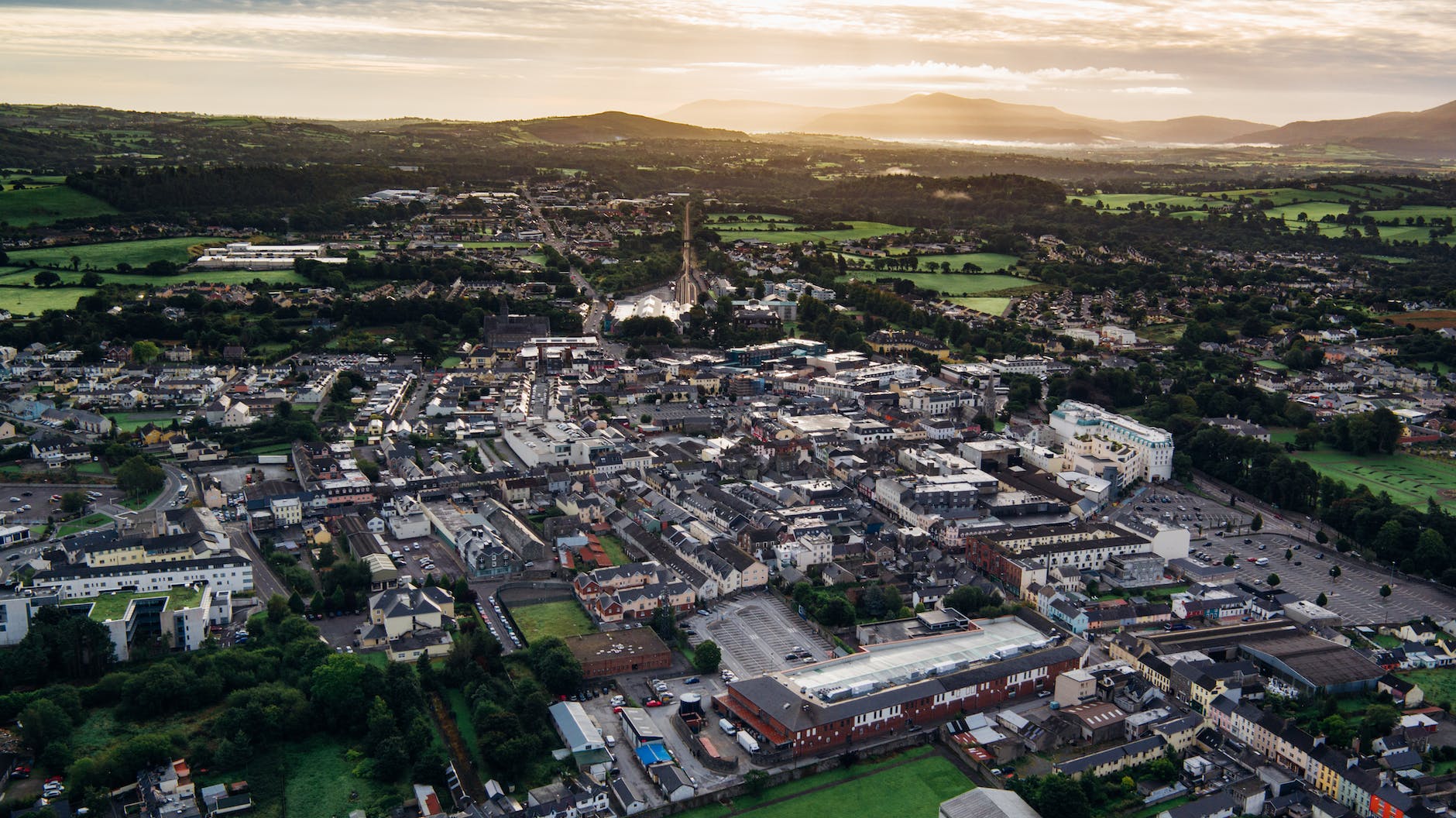
Photo by The Vien on Pexels.com

While this fits one narrative of Chicago, the region, and Illinois losing residents and companies to places with growing populations and more conservative business climates, this is not the only move Caterpillar has made in recent years. The company started in 1910 in Peoria and stayed there for a long time before relocating to Deerfield in 2017. Here is how the Chicago Tribune described that move:

Caterpillar will take over the former headquarters of premium spirits maker Beam Suntory, which announced plans last year to move its 450 employees and global headquarters to Chicago’s Merchandise Mart, joining corporations including McDonald’s, Motorola Solutions, Kraft Heinz, Wilson Sporting Goods and Conagra Brands that have recently moved or made plans to relocate downtown. Beam Suntory’s move will be completed by the end of June.”

“Following a thorough site selection process, we chose this location because it is approximately a 20-minute drive to O’Hare airport and convenient to the city of Chicago via commuter train, achieving our goal to be more accessible to our global customers, dealers and employees,” Caterpillar CEO Jim Umpleby said in a news release Wednesday. “This site gives our employees many options to live in either an urban or suburban environment. We know we have to compete for the best talent to grow our company, and this location will appeal to our diverse, global team, today and in the future.”…

In 2011, Caterpillar’s then-CEO Doug Oberhelman talked of moving jobs out of Illinois because of the state’s tax and spending policies. But in 2015, the company said it would stay in Peoria and build a new corporate headquarters, reassuring employees worried about a move. That changed again in January, when the company said it was abandoning plans for the new downstate headquarters.

So is this a story about Chicagoland and Illinois losing important companies or a broader example of companies responding to global markets and leaving behind long roots? Caterpillar is a company started and based in a smaller Rust Belt city for decades and now will move to two of the biggest metropolitan areas in less than a decade. How long will it be in Irving, Texas before again seeking greener pastures and business advantages?

A freight train through the center of town

At-grade railroad crossings present dangers. But, what if the freight line runs right down the middle of a road through the center of town? This is LaGrange, Kentucky:

More images here and here.

This is an unusual situation but it hints at the intertwining of trains and communities. This would be a strong reminder of the goods moving across the landscape and how it intersects with traffic, pedestrians, buildings, and residents. Many might prefer that freight just shows up where it needs to – usually at the point of use or access by consumers – but it has to come from and to somewhere first.

Now I wonder how many American communities have this particular situation. This might be more common in big cities or in cities in other countries where mass transit lines run on roadways. Or, this could encourage remembrances of the extensive streetcar systems in many American communities that utilized local roadways.

Primary suburban voter turnout in Illinois under 20%

Experts suggest the turnout for Illinois’ primary earlier this week will be under 20% in the Chicago suburbs:

Photo by Tara Winstead on Pexels.com

When the votes are certified by the Illinois State Board of Elections late next month, officials believe fewer than 20% of the state’s registered voters will have cast ballots…

In the suburbs, only DuPage County reported more than 20% voter turnout, according to unofficial results on the county clerk’s website.

Cook County Clerk Karen Yarbrough is still reporting one uncounted precinct late Wednesday, but just 19.1% of suburban Cook County voters cast ballots, according to her website.

Unofficial results show voter turnout in McHenry County at 19.4%, 18.2% in Kane County and 18.7% in Will County.

The suburbs are where the political action in the United States is today, yet Chicago suburbanites did not vote in large numbers for the primaries ahead of the 2022 midterm elections. Given the congressional redistricting in Illinois and an impending gubernatorial race, where the stakes not high enough for suburban voters?

The article goes on to discuss reasons why voters may not have felt very motivated to vote in this primary. How many of these reasons – summer voting, lack of interesting races, limited midterm turnout – explicitly affect suburbanites? Summer vacations are a marker of middle-class and above suburban lives but how many of them overlap with the late June 28 voting day? Do suburbanites need more contested races than other voters? Do suburbanites not feel the pressure of midterms or only pay attention in the presidential cycles when there is more at stake amid their busy day-to-day suburban life?

Those candidates and actors that can inspire suburbanites to get to the polls and vote may just get the winning edge.

Recent quote on doing agendaless science

Vaclav Smil’s How The World Really Works offers an analysis of foundational materials and processes behind life in 2022 and what these portend for the near future. It also includes this as the second to last paragraph of the book:

Is it possible to have no agenda in carrying out analysis and writing such an overview?

Much of what Smil describes and then extrapolates from could be viewed as having an agenda. This agenda could be scientism. On one hand, he reveals some of the key forces at work in our world and on the other hand he provides interpretation of what these mean now and at other times. The writing suggests he knows this; he makes similar points to that quoted above throughout the book to address the issue.

I feel this tension when teaching Research Methods in Sociology. Sociology has a stream of positivism and scientific analysis from its early days, wanting to apply a more dispassionate method to the social world. It has also has early strands of a different approach less beholden to the scientific method and allowing for additional forms of social analysis. These strands continue today and make for an interesting challenge and opportunity in teaching a plurality of methods within a single discipline.

I learned multiple things from the book. I also will need time to ponder the implications and the approach.

My comments on college students and social media in Wheaton alumni magazine

How does social media matter for college students? Here are some of my thoughts in a recently published piece:

Photo by fauxels on Pexels.com

It’s notable that “when we get a break in class, the first thing that almost all of the students do is pull out their phone and engage through the deice,” said Professor of Sociology Dr. Brian Miller ’04, who studies emerging adults and social media.

But these students aren’t the first Christians to embrace new media.

Miller says American evangelicals in the twentieth century were quick to take up new technology forms and adapt them to Christian uses. Miller points to the National Association of Evangelicals and its concern that evangelicals had a radio presence. As other media forms were introduced – television, Internet, and social media – Americans evangelicals have adopted and used them.

“My sense as a sociologist is that we’ve often innovated and adapted [to new technology] and hten asked questions later,” he said.

Right now, for instance, Miller said more Christians might consider asking some questions, such as, “Is what we’re doing on social media as Christians good or useful?”…

Miller is encouraged about ways Wheaton students, staff, and faculty might be able to address some of these questions related to using social media responsibly. How could we build some best practices, consider the worth of social media fasts, or figure out how to gauge social media addiction?”

Now that social media is maturing – it has been around on a mass scale for almost two decades now – I would hope we in college settings could be effective in providing information and options for students and ourselves regarding how we engage with social media. When the interaction with social media is almost always on an individual-by-individual basis, it can feel chaotic and difficult to change patterns. Why not encourage more positive community-based practices with social media?

Particularly in faith-based settings, why not more direct conversation and instruction about social media and its effects? The majorities of congregations and people of faith are engaging social media throughout their days, yet my sense is that religious institutions provide limited guidance on how much to engage, what it is useful for and what it is not so useful for, and how social media shapes our perceptions of the world and life. Sociologist Felicia Wu Song’s book Restless Devices is a good resource for this.

A shopping mall with protected wetlands

I recently shopped at a mall with protected wetlands:

The first thought I had upon seeing this was of “nature band-aids” that can often be found in suburbia as described by James Howard Kunstler. Shopping malls are known for many things but nature is not one of them.

Or, perhaps these are real wetlands that make contributions to the local ecosystem? This outlet mall has a location similar to many other malls: in the suburbs along a major roadway. I could imagine a need for land for animals and water amid development in the recent decades.

It would be interesting to know how these areas came about. Was part of the development of the land contingent on setting land aside for wetlands? Was a discovery made later about local nature? Is there some precedent among shopping malls for this?

The US county with the longest life expectancy – and a big error margin

A recent ranking of US counties by life expectancy at birth now found Aleutians East Borough at the top of the list:

This is one of three counties with a life expectancy of “100+.” Out of these three, it is also the one with the largest error margin. If I am interpreting this correctly, the list compilers are 95% confident that the life expectancy of this county is between 67.9 and 100+.

This is most likely due to the relatively small number of people in the county. This is not uncommon in these rankings: of the top 16 counties in life expectancy, the highest population is over 55,000 and several counties have fewer people than the one ranking #1. When there are fewer cases (residents, for this analysis) to consider, it is harder to be confident in the calculated life expectancy. My guess is that this county had the highest expected life expectancy in the statistical model so even with the large confidence interval it ended up at the top of the list.

With fewer people in a number of these counties, the year-to-year predictions could shift more given conditions. Does this mean the rankings should be disregarded? Not necessarily but the confidence interval does provide insight into how the life spans of a small number of residents can change these rankings.

Housing for the unhoused with church-provided tiny houses

The idea of tiny homes to address homelessness has been around for a little while and some churches are making it a reality:

Photo by Elle Hughes on Pexels.com

On vacant plots near their parking lots and steepled sanctuaries, congregations are building everything from fixed and fully contained micro homes to petite, moveable cabins, and several other styles of small-footprint dwellings in between.

Church leaders are not just trying to be more neighborly. The drive to provide shelter is rooted in their beliefs — they must care for the vulnerable, especially those without homes…

Some churches’ projects are already up and running, while others are still working toward move-in day, like the Church of the Nazarene congregation in St. Paul, Minnesota, which is assembling a tiny house community for chronically homeless people with local nonprofit Settled…

Houses of worship not only have land to spare, Medcalf said, but are positioned to “provide community in a way that really is humanizing and is a part of anybody’s basic healing and recovery.”

I like this idea for the reasons cited above: congregations have a mission to serve, have land, and are often established and respected organizations in communities.

As noted elsewhere in the article, churches might not feel equipped to tackle all of the issues involved with housing – so they can work with organizations in this sector – and neighbors can register complaints – as they often do about any new housing in an area.

Thinking more broadly, given all of the housing needs in the United States, does this hint at a growing willingness of religious congregations to consider addressing this issue?

Kanye West does not like McMansions

I missed this information from two years ago; here is what Kanye West thinks about McMansions.

Photo by Thirdman on Pexels.com

The “YZY SHLRS” are not West’s first try at real estate development. Together with his wife Kim Kardashian West, the rapper transformed a McMansion in suburban Los Angeles into a cavernous, eclectic abode that has since unfolded on the covers of several esteemed magazines.

Earlier this year, Architectural Digest described the Wests’ residence as “one of the most fascinating, otherworldly, and, yes, strange pieces of domestic architecture on the planet.”

Characterized by clear, geometrical lines and white open spaces, filled with equally futuristic furniture, the home resembles a modern-day spin on a Belgian monastery, as West told AD.

The standout nature of the home, a reflection of West’s highly individualistic style, is not a surprise given the rapper’s annoyance with luxury properties that, despite their own embellishments, more often than not come off as the products of the same mold.

“The relationships that I have with architects, my understanding of sacred proportions, this new vibe, this new energy,” is what is driving West, the real estate developer. “I am tired of McMansions,” he told Charlamagne tha God. “That is wack. Everybody’s house is wack.”

His critique of McMansions and large homes is a common one: they are produced with similar features and styles. West hints that this is even the case at the level of home above McMansions where more resources does not necessarily translate into unique or quality homes. You can purchase a very expensive property and it may not be interesting or suit the particular needs of the residents.

At the same time, with his wealth and connections, West operates at a level beyond the typical McMansion owner. He has the resources to transform a large home based on a new vision. Mansion as monastery, as it were. He can pursue a particular plan and mold the home in ways that many McMansion owners cannot.

Now, if someone with fame and resources could help find a way to transform McMansions or relatively large houses (think 3,000-6,000 square feet) in the ways that West wants, this could help change the image of such homes. I imagine many McMansions owners would be interested in the idea of “sacred proportions” in their homes or differentiating their residences in significant ways from neighbors.

Higher housing prices mean suburbs are less affordable, Houston edition

New data suggests residents in the Houston region have fewer cheaper housing options in the suburbs:

Photo by Trace Hudson on Pexels.com

The Kinder Institute and Harvard University’s Joint Center for Housing Studies released Tuesday morning their annual reports on the state of housing in the Houston area and the nation. Together, they painted a picture of a deepening divide between the prospects of current homeowners, whose equity has been buoyed by record-breaking home price appreciation, and renters, who have seen the monthly costs of buying a home rise far more quickly than wages.

The median-priced home in the suburbs of Clear Lake and Jersey Village, for example, were priced between $162,000 and $175,000 in 2011, according to the Houston Association of Realtors. They now go for $300,000 to $317,000.

“You have to go farther and farther out until you find a home that’s affordable,” explained Stephen Sherman, a researcher at the Kinder Institute. “The whole saying is drive until you qualify. We’re finding that people will have to drive even more” — a development which will have rippling implications on traffic and the way floodwaters drain…

“Suburban Houston — and new homes in suburban Houston — used to be extremely affordable,” said Lawrence Dean, the Houston regional director for Zonda, which does market research related to new home construction. Since then, the costs of land, materials and labor have all shot up. These days, it’s near impossible to build a home for less than $200,000, he explained.

This gets at three long-standing questions about suburban life:

  1. How far will people be willing to drive from the big city or other population centers in order to get a cheaper, bigger home? In some metro areas, this extends past 40 miles and multiple ring highways. If more people can work from home, more suburbanites might be willing to be further out.
  2. Even as suburbanites protect and celebrate rising housing prices, this also limits what others can purchase. Suburbanites have a long history of moving in and pulling up the gates behind them. But, even as suburban homeowners watch their personal wealth grow, others will not necessarily get the same opportunities.
  3. Is the primary plan for affordable housing in American metro regions to just keep the sprawl going? At some point, this may not be possible due to conditions – see the price jumps in construction cited above – or changing ideologies about where to live.

It would be interesting to compare this to other metropolitan areas across regions and price points.