The health costs of initial urbanization and industrialization

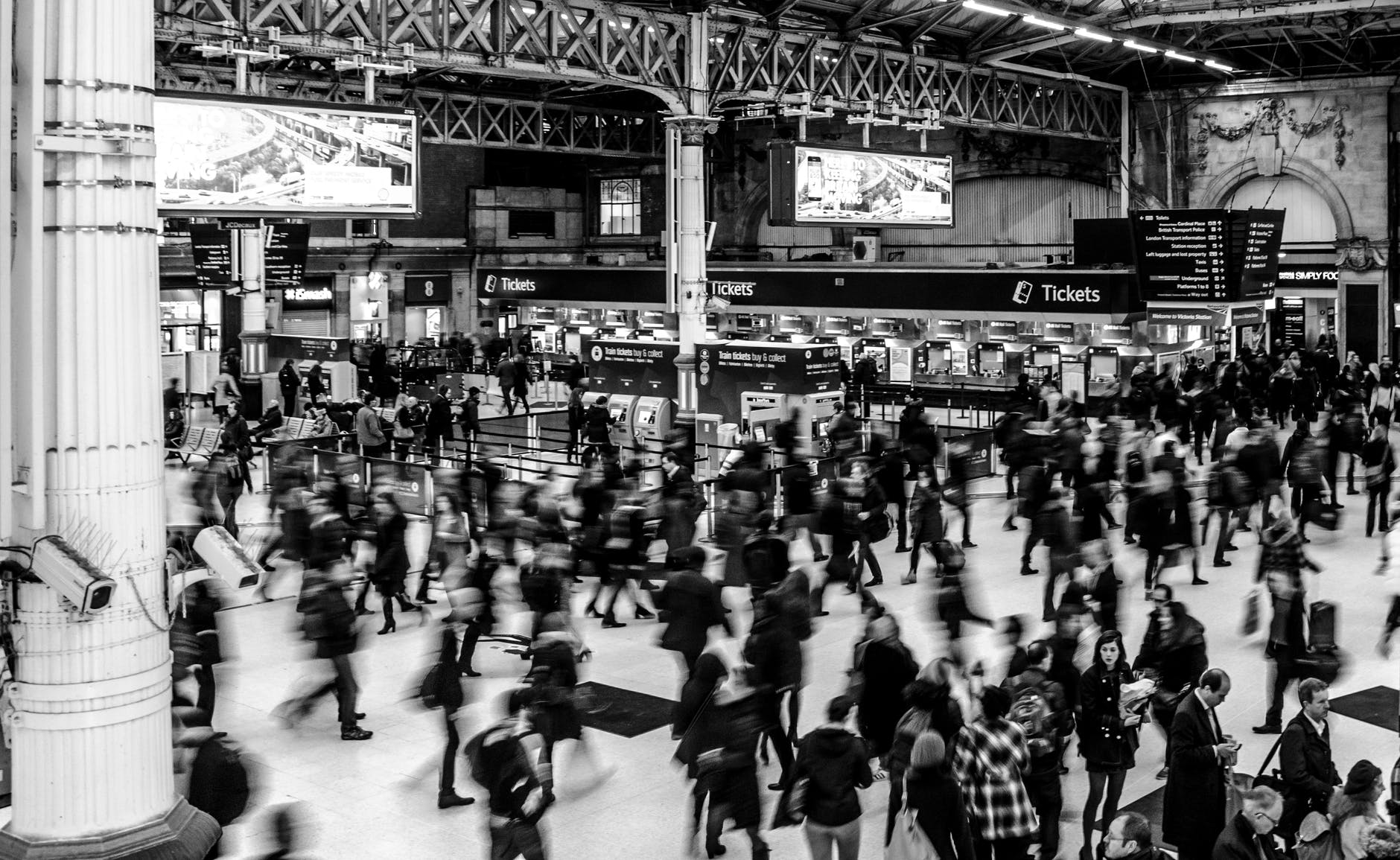
In Extra Life: A Short History of Living Longer, Steven Johnson briefly summarizes how the development of big cities around the world in roughly the last two centuries often came at a high cost regarding health. After discussing the first life tables developed in England:

Photo by Pixabay on Pexels.com

How could any economy that was creating more wealth than any other place on earth produce such devastating health outcomes? The answer that Farr proposed with epidemiological data was similar to the one Marx and Engels were forming at the same time using political science: the mortality rates were plunging because the defining characteristic of being “Advanced” at that moment in history was industrialization, and industrialization seems to come with an unusually high body count in its initial decades, wherever it happens to arrive. The twentieth century would go on to show the same trends happening around the world whenever people left their agrarian lifestyle and crowded into factories and urban slums, even in economies where communist planners were driving the shift to an industrial economy…

The data told an incontrovertible story: industrial cities were killing people at an unprecedented rate. (73-74)

As Johnson goes on to note, this trend did not necessarily last as many cities and the millions living there became healthier over time. But, that transition period in Liverpool and other industrializing cities, whether in the 1800s or in more recent decades with the development of megacities around the globe, comes at a significant cost.

Even though I have not emphasized the health aspects of this in the past, this is part of the reason that I link the beginnings of sociology, urbanization, and industrialization in my courses. The population shift to big cities plus a new economic and production structure are noteworthy enough. But, these are connected to seismic shifts in societal structures and relations. People had lived in relatively small communities for thousands of years and this was shifting to significantly different kinds of communities, governments, and interaction. Sociology as a discipline emerges at this time to help explain and understand these changes. As noted above, Marx was seeing all of this happen and expressedt his concerns of what it all meant.

And all of this affected the human body in significant ways. This shift required poor health and death for many. We may look now and think it turned out okay – and life expectancy around the globe has increased dramatically – but it influenced bodies and social structures in profound ways.

In a society devoted to driving and business, what alternatives are there to rental cars?

The rental car industry has had a difficult year, customers are unhappy, and some companies are still making money. In a country that likes driving, has planned around driving, and has oodles of cars plus encourages business activity, what could be done to not depend on rental cars? A few options:

Photo by Tim Samuel on Pexels.com
  1. Car sharing services. There are more of these around today. Cut out the middle-man business and just deal with a private car owner for your transportation.
  2. Taxis and/or ride share companies. These are more available in some places than others and do not allow the same freedom as being able to drive a rental car wherever and whenever you would like.
  3. Public transportation. Even less available outside of denser urban areas. And even in places where mass transit is plentiful, many people still opt for private vehicles.
  4. Walking or bicycling. Very difficult and possibly dangerous in many locations.
  5. Borrowing a car from family or friends or doing without it for a time. It could be done but the location and time frame is very important.

Thinking back, I can recall multiple trips where a rental car was a necessity in order to get where we wanted to go. At the same time, some work trips did not require a vehicle because the location of the meeting was in a large city with public transit options. And if you are in a suburban or more rural setting and your car is in the shop for more than a day, a car rental may be very necessary.

Does this mean Americans must put up with rental cars forever? Perhaps someday there will be fleets of electric vehicles for all to access. Until then, renting a car may be a necessary evil.

Rebuilding suburban homes months after experiencing a tornado

The damage from tornadoes can last for months. Here is some of the aftermath in Naperville roughly six months later:

Photo by Kelly L on Pexels.com

There may never be a full recovery for dozens of Naperville residents continuing to struggle in the wake of a devastating tornado that tore through sleepy neighborhoods shortly after 11 p.m. June 20, leaving one house destroyed and more than 200 damaged in an area just south of 75th Street…

Six months later, they and so many others continue to deal with slow-responding insurance companies, negligent contractors, supply-chain issues and a city government that’s never grappled with the long-term effects of devastation on this scale…

Some homeowners are simply choosing to sell for the value of the land. Others are dedicated to rebuilding no matter how long it takes…

City officials say they understand the frustration in the neighborhoods and acknowledge the difficulty in assessing resident needs. They’ve tried to expedite the permitting process — waiving fees is being considered if it directly benefits homeowners and not the insurance companies — and they suspended charging residents for utilities.

The feat of building suburban subdivisions can be impressive in its own right. When the mass construction of neighborhoods occurred regularly after World War Two, it represented a change to how housing was built.

Reconstructing suburban subdivisions might be a more difficult task. Rebuilding numerous homes and reconstructing daily lives amid normal suburban life is not easy. The advantage of building a whole subdivision at once is that all of the equipment, materials, and labor can be in place at the same time. When some homes are destroyed and damaged, it sounds like efforts are more scattered or focused on particular properties.

Since suburbs do experience tornadoes at least semi-regularly in the United States, is there a set of best practices communities and residents can follow? Putting homes and life back together after a calamity is never easy but perhaps there are clearer paths to resiliency.

Learning to see sociological patterns in Intro to Sociology

An Introduction to Sociology course could be renamed “Introduction to Seeing Structural Patterns in Society.” For those not used to looking at the world with this particular lens, such a class can be an education. I recall being in this position as an undergraduate and feeling the challenge; how can you see and understand the world from a structural perspective?

Photo by Pixabay on Pexels.com

After concluding another semester teaching Intro to Soc, I realize I approach structural patterns in this class in at least three ways:

  1. Read and discuss sociological research deploying this perspective. The readings we do in this class range from early work to recent monographs that examine particular social forces. The readings tackle big issues in society that are far beyond the influence or experience of a single individual. The methods the sociologists employ, including surveys, interviews, ethnographic observations, and historical analysis, examine broader patterns and not just individual cases or single case studies. From DuBois highlighting “the veil” and “double consciousness” in his own life and in American society to Rendón discussing the difficulty of young Mexican men in Los Angeles obtaining the American Dream,
  2. Continually contrast structural perspective to a more individualistic view. As we discuss different topics, I often compare the ways we might individually experience life and particular social phenomena and the collective experience. Additionally, a common American individualistic approach – my decisions explain my circumstances – provides a foil to a sociological perspective. Even as we enact our own agency, we do so within conditions not entirely of our own making (as Marx suggested).
  3. Provide multiple opportunities for students to practice deploying structural perspectives. Some of the assignments I have throughout the semester ask students to connect their own experiences to sociological analysis. To do this, they need to step outside of themselves to see the bigger picture. Is their experience typical, different, and how might a sociological theory or concept explain it? As Mills suggested, history and biography come together in “the sociological imagination.”

By the end of all of this, I hope students will be able to use this sociological lens in different situations. Even as many will not be sociology majors, their work in different disciplines and a variety of careers could be enhanced by thinking sociologically with an emphasis on large-scale patterns and forces.

Some hints about the effectiveness of relocation incentives offered by American communities

A number of American communities are offering monetary incentives to bring in residents and workers. Do the incentives work? Here are some recent clues:

Photo by Alexander Mils on Pexels.com

Fifty-three communities in 24 states and Puerto Rico are trying to lure new residents by offering cash, covering moving costs or providing other incentives, according to makemymove.com, an online directory of such programs. They largely seek remote workers from expensive coastal areas. Though the idea started before the pandemic, COVID-19 fed the movement by quintupling the number of remote workers and dampening some of the conviviality millennials sought in big cities.

So far, many areas have failed to bring in significant numbers of remote workers despite offering incentives. Most don’t have the staff and money backing the Tulsa Remote program, which is funded by the George Kaiser Family Foundation.

Even so, smaller areas have found advantages in remote worker programs. Natchez, Mississippi, a river town north of New Orleans where the population has been declining for decades, saw home sales double to 700 in the past year, even though only 12 people have used a $6,000 incentive for remote workers, said Chandler Russ, executive director of Natchez, Inc. Economic Development, which operates the Shift South remote worker incentive plan…

Tulsa’s program is often cited as a rare success story. It moved 100 people in its first year, 2019, and despite the pandemic it projects another 950 moves this year. Along with cash incentives up to $10,000 for living in Tulsa at least a year, the program offers a free trip to check out the area and intensive social networking in person and online…

A new study by the Economic Innovation Group, a Washington, D.C.-based research organization, found the new workers created almost $14 in new local labor income — a measure of earnings by employees and business owners — for every dollar spent on relocating workers, adding $62 million in earnings by the workers themselves and the jobs created to support them in 2021.

It sounds like more data and time is needed to figure out whether the incentives lead to increased populations and, if they do, how and/or at what cost or benefit.

But, I could imagine many communities and their leaders would be interested in offering such incentives even if the data suggests they do not do much. Why? It is an actionable step that sounds like it should work. The community can lead with the incentive in their marketing. If people or businesses are looking to move, wouldn’t an incentive help encourage a particular decision? At the least, such an effort would get the name of the community out in front of the public or other interested parties.

Some of the other tidbits from the article cited above are interesting. Incentives could target particular kinds of residents or businesses. Increased housing costs could make an incentive worth very little. Could we imagine a future where potential residents negotiate with several communities in order to get a better deal? Just as businesses negotiate for tax breaks and communities compete with each other, why not residents?

Sears in decline leads to another large available suburban office campus

Sears recently closed its last department store in Illinois and just announced that their large suburban campus will soon be up for sale:

Photo by Hugo Magalhaes on Pexels.com

The Hoffman Estates campus features a 2.3 million-square-foot corporate office and 273 acres, including 100 acres of undeveloped land. It was home to more than 4,000 Sears employees as recently as 2017, according to company filings…

When Sears Tower opened in 1973, it was the world’s tallest building, a fitting corporate home for the nation’s largest retailer. Sears left its namesake home in 1992, moving its corporate headquarters to Hoffman Estates and selling the tower two years later. In 2009, the name of the building was changed to Willis Tower as part of the deal for the London-based insurance firm to lease office space there.

Sears is not the only corporate mainstay to pull up stakes recently and put its suburban campus on the market.

Last month, insurance giant Allstate reached an agreement to sell its longtime headquarters in unincorporated Northbrook for $232 million to an industrial developer that plans to turn the 232-acre corporate campus into a massive logistics facility.

And what will happen to these properties? There are multiple options including:

  1. Staying as office or corporate space. Could there be another company or organization who would want this property? A suburb can spend a long time looking for a comparable replacement.
  2. Redevelop the land as a mixed-use development. See “The Metroburb” not too far way created from a former Bell Labs facility. This is a trendy approach that mixes commercial or office uses with residences.
  3. Convert the property to housing. There is demand for new housing in attractive suburbs and large tracts of land do not come open often.

Making this choice will require negotiation and conversation between the parent company of Sears, potential buyers, municipal leaders, residents, and others (which could include regional officials and actors in the real estate world). The whole process could take years and the outcome might retain some hint of the Sears headquarters or it might not.

Choices: lose out to Walmart and Amazon or adopt partnerships with tech companies to stay alive

The many corner stores around the world may be facing a choice about how to survive in the coming years:

Photo by Idriss Meliani on Pexels.com

One risk is that the infusion of tech money winds up making these independent businesses look and feel a lot more like chains. “The more you become digital, the more connected you are to the internet,” Lehr said. “The more connected you are to global trends, the more pressure you feel to do certain things.” The Indian start-up Jumbotail allows shopkeepers the opportunity to open one of the company’s branded J24 convenience stores, and S. Karthik Venkateswaran, Jumbotail’s co-founder and CEO, told me he envisions a world where consumers pass four different J24 stores throughout the course of their day. “Ubiquity is extremely important to us,” he said, but added that owners can still customize many aspects of their operations. “Every single store is different.”

But the other possibility is that by partnering with tech companies, these mom-and-pop shops might avoid the fate of getting squashed by giants like Walmart and Amazon, which can afford to sell the same goods at lower prices. To a certain degree, that’s already happened in the U.S., where Americans have been lured away from small businesses by the conveniences of Amazon Prime. “We would love to have Morocco and developing countries have a different fate,” Belkhayat said.

In the global South, millions of these beloved stores could one day end up part of a new digital economy that looks distinctly different from that of the West. Instead of transitioning to big-box retailers, communities will continue relying on the same shops they have for generations, but they’ll have evolved into futuristic outposts that double as tiny warehouses, banks, and grocery-delivery hubs. At least for now, the global tech industry has landed on the oldest trick in the book: If you can’t beat ’em, join ’em.

This choice – either partner with the big retailers or with the tech, finance, and other industries – is an interesting one. It certainly speaks to globalization in multiple ways. In terms of goods, these corner stores sell numerous important items and can provide key hubs for goods or services within a community. As those on the global scene look for ways to invest and make money, the corner store might be a goldmine. And the reach of products and finance and tech around the globe speaks to the numerous connections between people, organizations, businesses, and more. Then, each individual store might have the opportunity to stand out within its particular setting and because of the proprietor even as it slots into a global system.

I would also be interested to hear more about corner stores as local community institutions. In a private society like the United States, there are limited public spaces and shops are not always local or inviting. While a store involves private business transactions, it may also be a regular place for people to interact or utilize important services. If it provides local banking functions, this might involve might private individuals and communal activity.

Americans love driving and this impacted the work of police

A country built around driving leads to profound effects on what police do:

Photo by Rosemary Ketchum on Pexels.com

It is not an exaggeration to say that police power in the United States is built around the unique conditions created by car culture, in which virtually everyone is breaking the law all the time—with occasionally severe consequences. In her book Policing the Open Road, the legal scholar Sarah Seo points out that mass car ownership prompted a wholesale reinterpretation of the Fourth Amendment, which protects us against search and seizure. Or it did, until we all started driving everywhere.

Police often abuse this authority to perform “pretextual stops” hoping to find guns or drugs, knowing that trivial traffic violations give them the power to search citizens at will. Officers have at times undertaken this constitutional sleight of hand with explicit federal endorsement, deputized as foot soldiers in the war on drugs. In one of the most notorious examples, police in Arizona used traffic stops to enforce federal immigration law.

For Black drivers, pretextual traffic stops—per Jay-Z, “doing 55 in a 54”—are a routine occurrence and the foremost symbol of racial profiling in this country. For many police departments, these violations are used to fill government coffers and prompt devastating cycles of fines, debt, suspended driver’s licenses, and jail time. Black drivers are 20 percent more likely to be stopped, according to a study last year, and almost twice as likely to be searched.

While the article is about speeding, there are numerous additional areas where police work intersects with driving: stops for all sorts of reasons (as noted above), dealing with crashes or road conditions, escorting important people, and police driving the same roads as everyone else in order to address an issue at a particular location.

In many parts of the United States, it would be hard to imagine police without a vehicle or not interacting with vehicles regularly. Even the community policing idea where police spend lots of time in the same community and at the pedestrian level may still require using a vehicle to travel back and forth or to address particular issues they encounter. The sight of police on foot, horse, or bicycle in certain settings may be unusual to many who are used to the cars and flashing lights.

The same kind of methods proposed to limit traffic fatalities (also discussed in this article) or to promote the use of other modes of transportation could also have the effect of reducing the need for police to patrol or drive on roadways. But, reducing the American dependence on or love for driving is a sizable task.

The role of religious buildings in the decline in religiosity in the US during COVID-19

New data from Pew Research suggests religiosity declined during COVID-19:

Photo by Nikko Tan on Pexels.com

The percentage of Americans who identify as Christians now stands at 63%, down from 65% in 2019 and from 78% in 2007. Meanwhile, 29% of Americans now identify as having no religion, up from 26% in 2019 and 16% in 2007, when Pew began tracking religious identity.

Many places of worship closed during the pandemic—some voluntarily, others as a result of state and local social-distancing rules—and in-person church attendance is roughly 30% to 50% lower than it was before the pandemic, estimates Barna Group, a research firm that studies faith in the U.S. Millions of Americans moved to worshiping online, and questions linger about how many will come back in person.

A previous Pew survey, in January, found that a third of Americans said their faith had grown stronger during the pandemic—the highest share of any developed country. But overall, religious engagement trended downward at roughly the same rate as before the pandemic, according to the new Pew survey.

These findings are likely part of a longer trend away from religion that was already underway before COVID-19 hit. Sociologists and others have noted the rise of “religious nones,” particularly among younger Americans. Religion in the United States can often be individualistic and anchored less in religious traditions or denominations.

Yet, I wonder if COVID-19 presented a unique disruption to religiosity as it limited interaction with religious buildings. Sociologist Robert Brenneman and I discuss the impact of religious buildings on worship and community in Building Faith. We argue that the religious building and the ways that exterior and interior features are designed influence people who interact with them. The buildings do not just reflect religious values or doctrine; they help shape religious experiences.

When COVID-19 stopped people from being in buildings that influenced their faith, did this register as a loss and/or lead to a decline in religious engagement? With today’s technology and the ways that many congregations pivoted to online options, people can still engage with faith communities. Yet, that experience through Zoom or other video options is not the same as being in a physical structure that reinforces faith experiences. Even in congregations that tend to downplay the role of space, they still try to shape the religious building space in ways that encourages particular emotions and experiences.

Can religious faith in the United States survive as an enterprise free from the confines of a religious building? I have my doubts. While buildings themselves are unlikely to reverse the decline in religiosity in the last decade or so, they have a role in shaping communal and individual faith.

Discovering the “unaccounted” time at work and then designing work spaces around that

I have considered the design of offices and work places before (here and here as two examples) but have not seen this particular issue described: when researchers found that workers had “unaccounted” time in the office, this led to changing the workplace and new problems.

Photo by Cadeau Maestro on Pexels.com

Wilkinson, who designed Google’s 500,000-square-foot Googleplex campus in Mountain View, California, says he had his first epiphany about the office in 1995. While reviewing old studies and surveys about worker habits, he came upon a study that measured how office workers spent their time between 9 am and 5 pm. He was immediately struck by just how much “unaccounted” time workers were spending away from their desks—that is, not in meetings or any other explicit work function. But Wilkinson found it hard to believe that all of these workers were taking multi-hour bathroom breaks or simply leaving the office together. They were still in the office; they were just hanging out in hallways, chatting in foyers, clustering around someone else’s desk as the occupant tells a story.

“It blew my mind,” he told us. “And it made our team realize that the planning of the office was fundamentally flawed.” His realization was straightforward: Office design had long revolved around the placement of desks and offices, with the spaces in between those areas treated as corridors and aisles. But that “overemphasis on the desk,” as Wilkinson recalled, “had worked to the detriment of working life, trapping us in this rigid formality.”

And so he set out to liberate it, shifting the focus of his designs to work that took place away from the desk. In practice, this meant designing bleachers and nooks in places that were once poorly lit corridors, and spacing out desk clusters to incentivize more movement among teams. A kinetic office environment, the idea went, could increase spontaneous encounters, which would then spark creativity. The design also allowed for private areas—many with comfy couches and plush ottomans to replicate a family room feel—to do deep work, away from the noisy bullpen of desks.

This led to tech campuses like that of Facebook, Apple, and Google. What could go wrong?

The danger Wilkinson is describing is, of course, exactly what happened. The new campus design had a profound impact on company culture. Some of that impact was undeniably positive: He created work spaces where people genuinely want to be. But that desire becomes a gravitational pull, tethering the worker to the office for longer and longer, and warping previous perceptions of social norms.

Two thoughts strike me from reading this book excerpt:

  1. The idea of “unaccounted” time. How much of human daily activity is not directly related to productivity or a particular task? How much of that unaccounted time has long-term benefits such as stronger relationships and closer community? Part of the full human experience is having unaccounted time. On the other hand, it is not a surprise that if that unaccounted time occurred on company time, corporations and organizations would want to maximize it. (See this recent post about time, space, and calendars pushed into predictable patterns.)
  2. Humans have the ability to shape buildings and other physical settings to encourage particular behaviors. Offices are not just empty receptacles into which workers are placed willy-nilly. Religious buildings shape worship and communal experiences. Land use policies encourage more private spaces or more public spaces and these choices have consequences. This is simply part of our daily lives where we shape and are shaped by the spaces we are in.