Five forces behind the American affordable housing problem

Affordable housing is not an easy issue to address and one overview provides five factors at play:

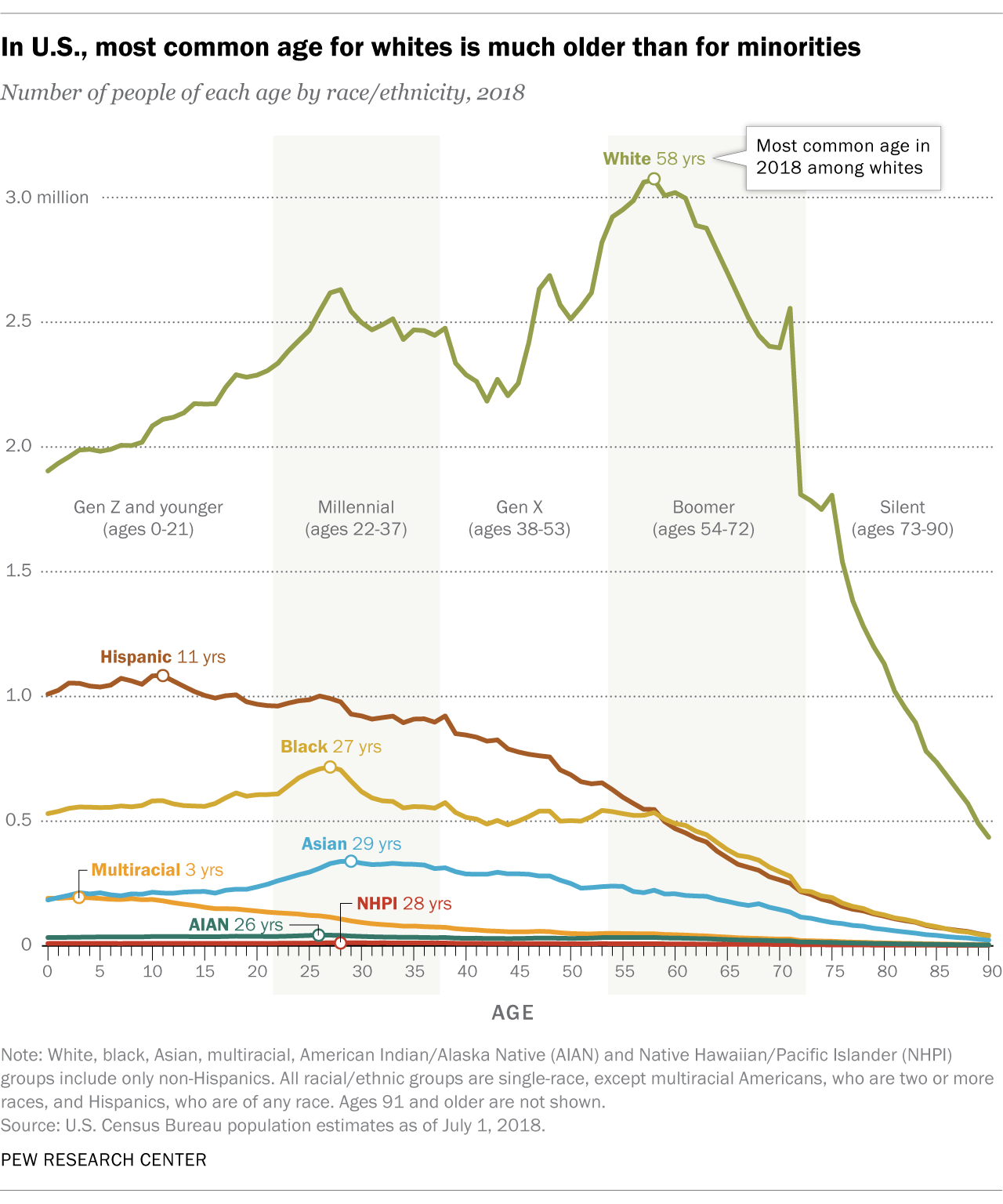
Baby boomers—those aged 55 or older—are living longer and more independently than previous generations. They’re also more likely than previous generations to be divorced and living alone. This means less housing stock has been freed up by elderly people dying or moving into assisted-living facilities. In some cases, boomer homeowners are looking to trade down and compete for entry-level homes with other generations, putting upward pressure on prices on homes in the lowest price tier…

While subsequent administrations have swung the agency’s priorities between promoting homeownership programs and assisting poor renters by offering housing subsidies, the federal government consistently subsidizes middle- and upper-middle-class homeowners rather than low-income renters, seniors, and the disabled…

Restrictive zoning codes are often an effective tool in the fight against new construction and, frequently, densification, helping to suppress housing supply even as demand rises. Whether by limiting the height of new buildings or deciding that large apartment buildings need a minimum number of parking spots, these restrictions make construction more difficult and more expensive. California cities like Los Angeles and San Francisco are known for impeding new construction through these methods, which has led to the state’s severe housing shortage

The “affordability” of housing isn’t all about the housing itself: As rising rents and home prices push low- and middle-income households farther from major urban centers—where the greatest number of jobs and the most robust public transit systems tend to be—lower housing costs in suburbs and exurbs get offset by increased spending on transportation.

Three quick thoughts:

  1. As an academic, I am sympathetic with arguments such as this that try to explain a social problem with more complexity and nuance. Short answer for a typical academic answer to a social issue: it’s complicated. As a person who wants affordable housing to be addressed, I want solutions sooner rather than later.
  2. One advantage of the complexity/nuanced argument is to highlight that whole systems are at play. Making serious headway with one or two factor may not move the needle. All the issues need to be addressed and everyone needs to keep in mind their connected nature. To put it differently, this requires large-scale societal change, not just piece-meal approaches. There are a variety of social levels and actors involved and they should aim to work toward common goals. It is often hard to think in this structural or system way but necessary when tackling large problems.
  3. I wonder how helpful it would be to cite successful models or places, even if they are relatively small communities. Even if systems need to be addressed, it can be hard to tackle everything at once without some hope that the goal can be reached. Are there cities/municipalities/states/regions that have some answers that can be adopted elsewhere

Two data points in transportation change: NYC subway ridership peaks in 1946, US non-commuter rail traffic drops after 1945

That the automobile came to dominate American social life and physical spaces after World War II is clear in multiple ways but two recent points of data I saw helped drive this point home.

Start in an obvious place: New York City. On one hand, the use of mass transit in New York City is unparalleled in the biggest American cities. On the other hand, subway ridership peaked in 1946:

1946: Subway ridership peaks

Subway ridership has never been as high as it was in 1946, and a precipitous decline began in the late 1940s as automobiles became widely available. The busiest station in the system, Times Square, saw its ridership drop from 102,511,841 riders in 1946 to 66,447,227 riders in 1953. Subway expansion would become increasingly difficult to justify as New Yorkers were abandoning the existing system—even though outward expansion was just what was needed to keep the subway as the region’s primary mode of transportation.

To a less obvious place: Toledo, Ohio. In the late 1940s, the city proudly constructs a new train station amid a growing population and optimism about the future. And then train traffic fell off dramatically across the country:

In the 20 years following Toledo Tomorrow, non-commuter rail travel in the U.S. collapsed, falling 84 percent nationwide, thanks in large part to the airports and the ribbons of limited-access high-speed roads Bel Geddes had foretold. Five years after the new railroad station opened in Toledo, the New York Central put it up for sale. Eight years later, the Beaux-Arts Pennsylvania Station in New York City would be demolished; five years after that, the New York Central and Pennsylvania railroads combined to form Penn Central, then the largest merger in American history. It would become the largest bankruptcy in American history two years later.

There is little doubt that the car is a nearly essential part of American culture today but it was not always this way nor is it guaranteed to be in the future. Reversing or countering a major trend is always difficult, particularly when its tentacles are everywhere and embedded in infrastructure and culture. To truly move to other forms of transportation would require not just fewer cars and vehicles on roads but a massive reconfiguring of American society.

Downsizing, Marie Kondo, and all the stuff Americans own

Many older Americans want to downsize (and cash out on their homes), Marie Kondo’s approach is popular, but where will all that stuff owned by older homeowners go?

Auctioneers and appraisers, junk haulers and moving companies all seem to be echoing the same thing: The market is flooded with baby boomer rejects. And they cite a number of reasons our kids are turning down the possessions we so generously offer to them. They rent rather than own, live in smaller spaces, collect more digital than physical items and tend to put their money toward experiences rather than things…

Her kids also rejected three sets of formal dinnerware, including Haviland China; vast collections of Lladro figurines and Department 56 Christmas villages; as well as 3,000 Beanie Babies and boxes of soccer awards she and her husband, who both coached for many years, earned with their children.

The only offer she got on any of her treasures? One son wants her Hallmark Frosty Friends ornaments she’s collected over 37 years “because he knows how much they are worth.”

Two scenarios could develop:

1. There will be a growing market in stuff that older Americans no longer want. Perhaps many millennials or Gen Z do not want stuff from their parents but some other American will want it. It does not just have to go to resale shops; enterprising individuals and firms could shop all these items online to find buyers interested in particular niches. Perhaps this could even expand to international markets and be shipped in bulk around the globe.

2. Much of the stuff will simply be thrown away, particularly items that are more sentimental in nature. Some lucky owners will find people to take or buy their unneeded items but much of the rest will simply find its way into landfills. Decades of consumption will end in the garbage can.

I have not seen any estimates either way of how much money all of these goods could generate or how much waste could be involved (or a combination of both).

Also, consider the implications of such a change: younger generations do not take material objects from their parents and grandparents, creating a bit of a gap in a material timeline. Perhaps the shifting of wealth from generation to generation more often takes the form of helping to pay for housing or student loans rather than tangible goods. How does this change memories and collective understandings of the past?


Now is the time to see who really cares about their lawn (and social appearances)

This is the time of year in our area to see which residents really care about maintaining their lawn. There are three main features of the lawn to look at to make this determination:

1. Is the lawn regularly cut to keep up with the rapid growth? At this time of year, the grass grows quite quickly with plenty of rain and warmer temperatures. This likely requires mowing more than once a week in order to keep the grass at a pleasing-to-the-eyes height.

2. Are there no dandelions visible? This hints as the groundkeeper’s efforts regarding weeds. Green grass is all that should be seen as people pass by. The shame of an uneven lawn might be outweighed by having a yard full of dandelions surrounded by perfectly green (and yellow-free) yards.

3. Is the grass uniform and lush? Even with all of the rain and sunshine, different kinds of grass (and other kinds of ground cover) plus patchy spots in the yard could indicate the homeowner is less invested in the lawn.

Two bonus features about the landscaping (often connected to lawn maintenance) to look at during this time of year:

1. If the residence has blooming flowers. This requires either foresight – planting perennial flowers – or time each year to put in new flowers.

2. If fresh mulch has been applied to beds on the property. This may be accompanied by a particular smell or a visible pile (or dirt mark) on the driveway or side yard.

As I have argued before, all of these markers are signs of both residential social norms and class-related behavior.

Seeing kitchens of the future on TV and in movies

A look at the evolution of modern kitchens in the middle of the 20th century includes one paragraph on how the new kitchens ended up in the media:

Midcentury movies, TV shows, and cartoons are loaded with examples of Rube Goldberg–like futuristic kitchens that automated cooking and cleaning tasks, sometimes to an absurd degree. The Hanna-Barbera cartoon The Jetsons debuted on ABC in 1962, portraying a nuclear family living in mid-twenty-first-century Orbit City. The Jetson family—husband and wife George and Jane, son and daughter Elroy and Judy—lived as a typical early 1960s family would have. Jane was a housewife, and George worked (just a few hours per week, it’s noted) for a company called Spacely Space Sprockets. The Jetsons had a robot maid named Rosey, who wore an old-fashioned black-and-white maid’s uniform, and zipped around the Jetson household on a set of wheels. The Jetsons’ kitchen was like a futuristic version of the Horn and Hardart Automat, where customers could select meals and desserts from behind little glass doors. A device called the Food-a-Rac-a-Cycle offered tried and true dishes like Irish stew, beef Stroganoff, prime rib, pizza, and fried chicken on demand.

Perhaps the book says more about the mass media depictions of kitchens around this time – there is certainly no shortage of scholarly work on the TV shows and films of the postwar era, the time when more and more Americans moved to the suburbs and encountered new kitchens as well as new ideals about how kitchens should look and be used.

But, this paragraph does not give us the full picture of what kitchens looked like on television and in movies. Instead, we hear about lots of examples and one specific example from The Jetsons. Just how many depicted kitchens at the time actually had “futuristic kitchens”? And were these futuristic kitchens popular (part of popular television shows and movies) or influential (tastes changed because of the depictions)? This is less clear.

Indeed, as I suspect this book would argue, how exactly the modern kitchen evolved is a complex tale. This is true for many social phenomena as rarely can one firm or design or product upend everything. And accounting for changing tastes is quite difficult.

Another use for vacant retail buildings: schools

The Chicagoland suburb of Palatine is considering converting vacant retail space into a school:

Under the proposal, a shuttered Whole Foods Market and other adjacent space totaling about 80,000 square feet would be renovated for a maximum of 32 classrooms for kindergarten through sixth grade. The school would be in the Park Place shopping center opposite a Walmart, southeast of Dundee and Rand.

Stuckey Construction Co. Inc. of Waukegan would buy the space for about $4.1 million and spend another $13.8 million renovating it, Thompson said. He said District 15 would lease the building with an option to buy it within seven years if the idea receives school board approval…

As part of the plan, Park Place’s owner would build four retail buildings closest to Rand. The former T.J. Maxx/Home Goods portion of the plaza would be demolished to make room for the new retail section and a playground and sports fields covering 2 acres for the school.

District 15’s school at the mall would serve 750 to 800 children in the northeast area, where about 22 percent of the students live but don’t have a neighborhood school. Thompson said he projects the new school would have 74 percent Hispanic students and an overall low-income population of 70 percent.

As retail locations struggle, many communities are looking for answers as to how to use the vacant structures. There a number of possible options but rarely have I seen the idea of schools. I suspect converting these spaces to schools has several distinct advantages:

  1. It could reduce the amount of money needed to provide school buildings. Referendums or tax levies to build new structures often face opposition in suburban communities because of the cost. Additionally, the new school buildings might be in response to a relatively new need in the community tied to new growth but the building may not necessarily be needed in the long term. Converting an existing building could save money.
  2. Retailers often locate in key locations near major intersections. This could make accessing a school easier for a broader range of residents.

Yet, there would also be disadvantages to pursuing this strategy:

  1. Converting the retail structures into schools takes possible land off the tax rolls. Many communities hope vacant structures will be filled by land uses that will contribute property taxes and sales taxes. Schools provide neither.
  2. The location may be central or at a key point but residents often have images of what neighborhood schools should be: located in or very close to residential neighborhoods. Several concerned residents are quoted in this story and they raise safety concerns of being located near major roads and higher-crime areas.

I wonder if a school could also be viewed as a community anchor for a larger mixed-use plan in a redevelopment setting like this. Having some new residences alongside some retail space plus new community (school plus parks, plazas, etc.) could create a new neighborhood setting.

Possible limits even as more Americans seek housing that accommodates multiple generations

If more Americans want to live in multigenerational households, can they find homes that make room for this arrangement?

But for complex reasons that still puzzle researchers, multigenerational households are now on the rise once more. As many as 41% of Americans buying a home are considering accommodating an elderly parent or an adult child, according to a survey conducted by John Burns Real Estate Consulting. Living with your parents (or your adult children) has plenty of potential benefits–everyone tends to save money, it can potentially benefit health outcomes, and you get to spend more time together.

Just one problem: American housing stock, dominated by single-family homes and connected by cars, isn’t really designed for it…

The advent of commercial air travel and the rapid expansion of American suburbia made inexpensive, single-family housing–and cross-country travel–attainable for more and more people. By 1950, just 21% of American households contained two or more generations. New funding for nursing homes from the Federal Housing Administration led to a boom in private nursing homes in 1950s and ’60s, and over time it became more and more normal to self-select into senior housing rather than living with your children. By 1980, the number of multigenerational homes had dropped to just 12%, according to Pew

But in any case, homes designed specifically for multigenerational living are still a small segment of the housing market. Far more common are families that have renovated their homes to suit aging parents or adult children, like the architect Cini, whose firm Mosaic Design specializes in senior design, particularly assisted living centers. Her personal experience with multigenerational life eventually led to a book, Hive, a practical how-to for other families who, either by necessity or choice, are moving in together. In large part, Hive addresses the unspoken taboos and tensions of living with your parents and grandparents.

No doubt there are complex social and cultural shifts behind this. The 20th century of mass American suburbanization may be an outlier in human history with the significant move to private single-family homes.

The larger issue that is reflected in this housing crunch may be that of increasing individualism and autonomy in recent centuries. Even the discussions of possible solutions to this housing issue betray this. The nursing home frees the family from obligations to care for elderly or infirm family members. Cohousing provides more community but residents still retreat to private units. Making alterations to a single-family home to accommodate family members can often lead to in-law suites or separate entrances.

Put another way, economic conditions and/or changing relationships between generations mean that more families want to live together but there are limits on how much autonomy or privacy family members are willing to give up. How a family arranges the space in its home could take many different forms. I don’t think anyone is recommending family members all sleep in just one or a few rooms, something common to much of human history. But, living together also does not necessarily mean that family members sharing an address actually see each other that much. A converted single-family home could be more like a duplex than a tight multigenerational setup. Family may be good to have close but perhaps not too close?

Or, to put it a third way, how many Americans would choose these multifamily or cohousing setups if the price of housing was not too high? The social benefits of a multigenerational family home could be high but Americans also value their autonomy.


Rahm Emanuel on what divides people and how art can bring people together

Toward the end of an interview about the arts during his tenure as Chicago mayor, Rahm Emanuel briefly discussed factors that divide people and bring them together:

I think Lori and Amy know that the arts are the soul of a great city. Martin Luther King used to say the most segregated day in America is Sunday. The arts can make the other six days more integrated. Technology is balkanizing and dis-aggregating people. Only a government working with artists can create equity across shared experience.

According to this short quote, two factors work against community:

  1. Religion. Watch MLK make his 1960 statement about the most segregated hour in Christian America. So if religion in the US has tended to divide people by race (see Divided By Faith) and Chicago is one of the most segregated cities in America, Emanuel may have a point about this in Chicago.
  2. Technology. Emanuel could join a chorus of pundits and scholars who argue technology has detrimental effects on community life.

On the other hand, Emanuel cites two forces that encourage community:

  1. Art/the arts.
  2. Government helping to facilitate the work of artists.

There is little doubt that major cities in recent decades have used the arts and cultural experiences alongside public art to try to drive growth. Whether this truly enhances community in the long run, particularly when other forces at work – with Emanuel’s reference to equity, I can’t help but think of uneven development and capital investment in cities like Chicago – work against community, remains to be seen. In other words, can shared experiences overcome persistent social inequalities?

Publication in Soc Quarterly: “Would Prefer a Trailer Park to a Large [Religious] Building”

The quote in the title for my newest article just published in The Sociological Quarterly comes from a comment made at a 2011 public hearing in the Chicago suburbs involving a proposal from a Muslim group to buy land. At face value, the claim is preposterous: what suburbanite living in a well-off suburb would want to live next to a trailer park?

My study titled ““Would Prefer a Trailer Park to a Large [Religious] Building”: Suburban Responses to Proposals for Religious Buildings” looks at what factors lead to more opposition from neighbors and local leaders when religious groups look to buy land, construct a building, or renovate/use an existing building. Is it related to the size of proposed building, the setting for the building, or the group making the request (thinking of multiple cases of Muslim groups facing opposition in the Chicago suburbs – see examples here, here, here, and here)?

The abstract to the study:

To worship in the suburbs, religious congregations often have to apply to local  governments for zoning and building approval. Examining 40 proposals from religious groups in three Chicago suburbs between January 2010 and December 2014 shows that local governments approved the majority of requests. For the proposals that received more negative attention or “no” votes from government bodies, opposition was related to locations adjacent to residences, experiences with one local government, and requests from Muslim groups. These findings have implications for how suburbs address pluralism and new development as the application of zoning guidelines can make it more difficult for religious groups, particularly ones involving immigrants or racial/ethnic minorities, to find and establish a permanent presence in suburban communities.

In sum, religious groups in the United States can theoretically worship in many places – until a local government suggests otherwise, often due to zoning concerns. Religious groups can counter with the Religious Land Use and Institutionalized Persons Act (RLUIPA) but lawsuits require time and effort and can hinder positive community relations.

With opposition to Google’s Toronto smart neighborhood, larger questions about powerful corporations, tax breaks, and public-private partnerships

Plans in Toronto for Google’s major development have hit multiple stumbling blocks:

As in New York, where fierce opposition to Amazon led the online retail giant to cancel plans to build a second headquarters in Long Island City, a local movement here is growing to send Sidewalk Labs packing. Their concerns: money, privacy, and whether Toronto is handing too much power over civic life to a for-profit American tech giant.

The #BlockSidewalk campaign formed in February after the Toronto Star reported on leaked documents indicating that Sidewalk Labs was considering paying for transit and infrastructure on a larger portion of the waterfront. In return, it would seek a cut of the property taxes, development fees and the increased value of the land resulting from the development — an estimated $6 billion over 30 years…

Separately, the Canadian Civil Liberties Association is suing the city, provincial and federal governments to shut down the project over privacy concerns. Michael Bryant, the head of the group, said Trudeau had been “seduced by the honey pot of Google’s sparkling brand and promises of political and economic glory.”…

Micah Lasher, the head of policy and communications for Sidewalk Labs, said providing more details about the business model for Quayside and plans for data governance earlier would have helped allay many concerns. But he also said the business model remains uncertain.

Any major development or redevelopment project in a major city can run into issues. But, there seem to be at least three larger concerns at play here:

  1. Google and the role of tech companies. The public may be more suspicious of these corporations today compared to ten years ago when all the technology seemed rather magical. Issues of privacy and power matter more today.
  2. Tax breaks may not be the answer they once were in cities and metropolitan areas in order to attract corporations and developers. Residents and local leaders may ask why Google, a very wealthy corporation, needs any tax breaks. And, if the tax breaks are not provided, will Google take its smart city development elsewhere?
  3. This might signal larger issues with public-private partnerships. For at least a ten years or so now, these have been hailed as a way to move forward in many cities: both the local government and the developers chip in to get things done with benefits to both sides. But, do such deals turn over too much control or too many of the benefits to the private side rather than spreading the benefits to the residents and the community?

It will be interesting to see how local political and business leaders handle this: can they afford to let the project die or go elsewhere?

Perhaps the long-term answer for companies like Google is to follow the lead of Disney and Celebration, Florida and create whole communities rather than entering in messy situations in already-existing communities.