Dominic Dutra, author of “Closing Costs,” a new book about how church property can be repurposed, says there are thousands of churches around the country that have closed or will likely close in the years to come. And too often, he said, leaders of those churches put off any discussion about what to do with their building until it’s too late.
“I’ve had situations where buildings are empty and they have no plan at all,” he said.
A 2021 study from Lifeway Research, based on data from three-dozen denominations, found that 4,500 churches closed in 2019, while only 3,000 were started. The 2021 Faith Communities Today study found that the median worship attendance for churches in the U.S. dropped from 137 people to 65 people over the past two decades.
Dutra argues that billions of dollars in church property could be put to work for ministry — if church leaders become proactive about the future. He has worked with a number of religious groups to do just that.
The numbers cited above are interesting: prior to COVID-19, more churches closed than opened. Additionally, the data from the survey is consistent with the National Congregations Study run over the last two decades regarding the median size of churches.
This is one area that my co-author Robert Brenneman and I did not address as much as we could have in our 2020 book Building Faith: A Sociology of Religious Structures. One of the later chapters looks at the fate of church buildings in the Chicago area. We found big differences across four denominations and a number of church buildings put to other uses. Church building are used in a variety of ways, including used by new congregations, converted into housing or commercial space, razed, and preserved.
Based on the description of the book in the article above, my guess is the recommendation is that church buildings no longer housing congregations can be put to other faith uses. There is certainly opportunity, ranging from serving new congregations to housing non-profits or parachurch organizations to being home to community centers.
Skokie lawmakers during their Feb. 7 village board meeting voted 7 to 1 to make the mall a “business district,” under Illinois’ Business District Development and Redevelopment Sales Tax provision, allowing businesses there to charge an extra 1% sales tax. The board will take a final vote on the proposal in March.
The $5 million generated annually by the additional 1% sales tax will be used by Westfield to do about $120 million in upgrades and rehabs in the mall, which is the largest tax generator in the village.
Mayor George Van Dusen said the new tax and upgrades are essential if the mall is going to remain viable…
Creating a “business district” includes designating the area as “blighted” to facilitate development and redevelopment by imposing an additional tax, Village Manager John Lockerby told the board.
“The viability of the mall is critical to the community, applicable school districts as well as other units of government,” he said, adding that the initiative will set the mall up for long-term success.
But, this is an interesting choice. Here is a few reasons why:
It takes money from private consumers to fund private development through and to ensure local tax monies. The profits go to the mall developers and the community benefits from ongoing tax revenues, jobs, and shopping opportunities. Would this be appropriately termed a “public-private partnership” or a “taxpayer subsidized” project?
As the article notes elsewhere, other communities could use similar tactics to establish “business districts” and keep their own shopping centers alive. Does this just keep the competition going?
The goal is to keep the mall going because it is already there. Is it a sunk cost? What other good might be done in the community with $5 million annually?
In recent weeks, the Bolger family, which owns the Gladstone Ridge horse farm on Leask Lane in Wheaton, asked area homebuilders for bids to develop the property. And on Tuesday, the Forest Preserve District’s board voted unanimously to authorize district staff to pursue negotiations with the Bolger family to buy the horse farm.
While no purchase price has yet been determined, some recently developed subdivisions in the immediate vicinity have sold for between $275,000 and close to $500,000 an acre, suggesting that the Bolger family could expect to reap between about $10 million and $17 million for the land from a developer…
“We have not expressed an interest in selling the property to the Forest Preserve (District) and hope you are not of a mind to condemn our property,” she told commissioners. “Please value the rights of our private property and practice open communication.” Forest preserve districts use condemnation to purchase land through eminent domain…
Forest Preserve District officials haven’t yet said publicly if they would consider using condemnation powers to acquire the farm now if they are unable to reach an agreement with the Bolger family. And Wheaton officials said that they have not yet been approached by a developer seeking to develop the Bolgers’ land.
This is different than noting decades ago that the last farms were disappearing from DuPage County. At that point, the farms disappeared to new subdivisions that continued the process of mass suburbanization. Redeveloping a horse farm or an office park or another large property now is different: it does not occur under conditions of mass construction, there are neighbors to the property who likely have concerns, and municipalities and other government agencies think carefully about what the next use for a property could be. The character of the nearby neighborhoods and communities are already established yet a sizable redevelopment could alter future experiences. In other words, when larger parcels of land are infrequent, the stakes for getting this right may be even higher.
“The redevelopment of a vacant enclosed mall is one of the most difficult undertakings in real estate development,” he said. “The Wall Street Journal ran an article a few weeks ago describing how none of the options for a mall makeover are easy. Conversions to other uses are complex and capital intensive. Unless there is a great shortage of land in an area, most developers would much prefer to buy land and avoid the expense, time and complexity of tearing down an old mall.”…
He said the challenge is to figure out how to redevelop the mall in an economically feasible way that pays for an estimated $35 million in redevelopment costs while maintaining the existing commercial uses during reconstruction and satisfying the city’s desires for something that will serve the needs of the residents of St. Charles.
The developers plan to initially foot the bill for those redevelopment costs. But to make the project financially feasible, he said a tax increment financing district will have to be put in place…
“A tax increment financing district must be established to pay over time for the estimated $35 million cost of demolition and reconstruction of site improvements that are necessary to accommodate many uses for the property,” he said. “This is exactly the purpose for which TIFs were created. Without a TIF, the redevelopment of the mall is not financially possible.”
In addition, he said a revenue stream must be created to pay for the project’s costs. After analyzing the situation, the developers said the revenue stream must come primarily from real estate taxes generated from at least 500 residential units.
The American shopping mall is in bad shape. Redevelopment ideas have been circulating for years and malls have added restaurants, entertainment options, and housing. But, as the above suggests, this is not necessarily an easy task. Shopping malls were supposed to be good for communities, providing shopping, a place to gather, and tax revenue. Redevelopment offers the possibility of a brighter future but it requires work.
It is not surprising to hear that a developer wants help in redeveloping the property. This will help them make money. It is common practice in many communities to offer such help, particularly for important properties. At the same time, this property has some value. Malls are typically located on valuable land, often at the confluence of major roads and adjacent to other shopping and restaurants but also possibly near housing. Would a TIF and other incentives make sure the developer sees a profit or has a bigger profit?
Considering this proposal is part of a long process. See earlier posts about the troubled Charlestowne Mall here and here. Trying to revive a mall, finding a developer to significantly alter the property, and then seeing how it all works can take years. This particular mall may only be in the relatively early stages of this with years to come before residents and visitors see a transformed location.
The Hoffman Estates campus features a 2.3 million-square-foot corporate office and 273 acres, including 100 acres of undeveloped land. It was home to more than 4,000 Sears employees as recently as 2017, according to company filings…
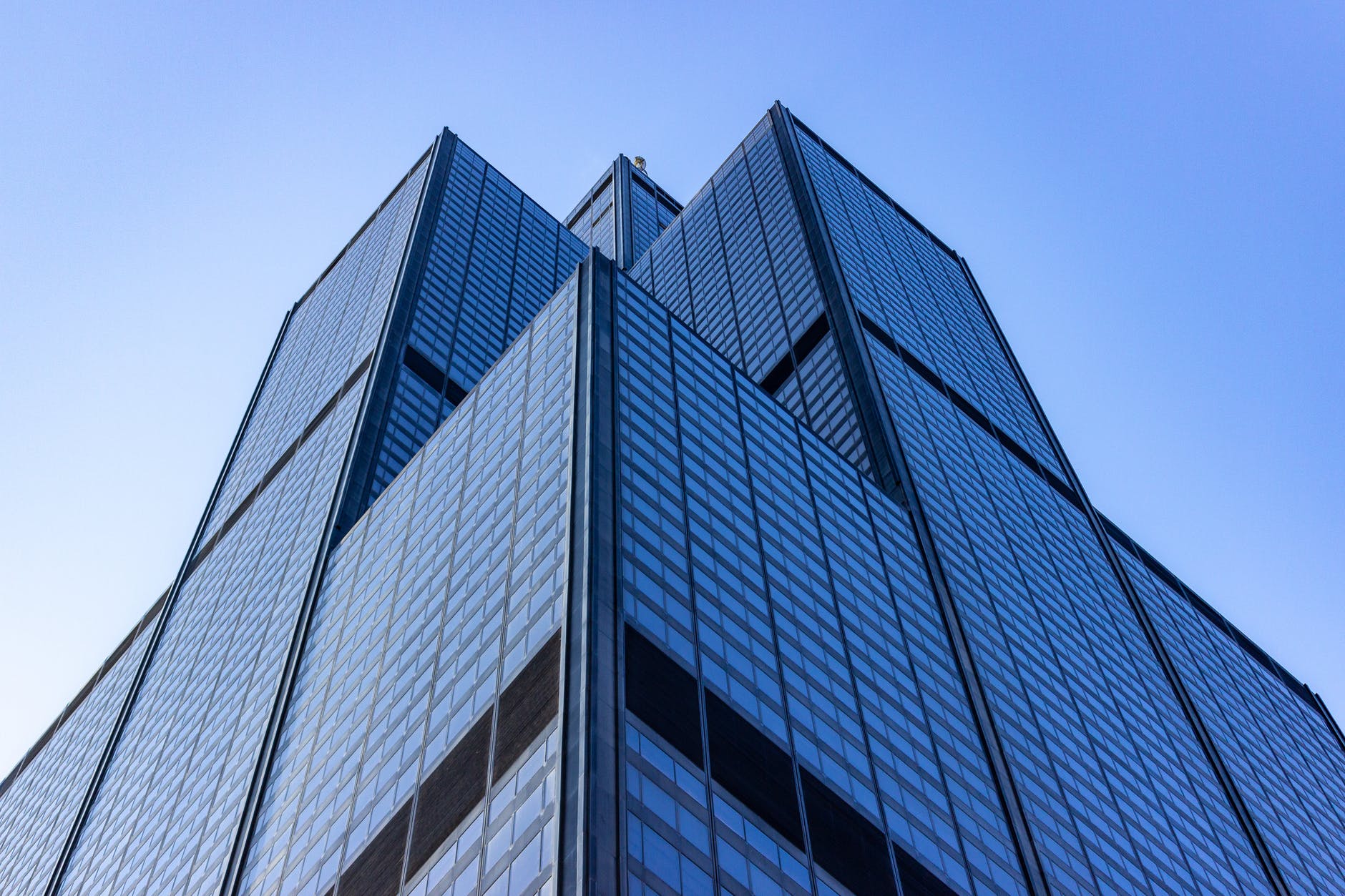
When Sears Tower opened in 1973, it was the world’s tallest building, a fitting corporate home for the nation’s largest retailer. Sears left its namesake home in 1992, moving its corporate headquarters to Hoffman Estates and selling the tower two years later. In 2009, the name of the building was changed to Willis Tower as part of the deal for the London-based insurance firm to lease office space there.
Sears is not the only corporate mainstay to pull up stakes recently and put its suburban campus on the market.
Last month, insurance giant Allstate reached an agreement to sell its longtime headquarters in unincorporated Northbrook for $232 million to an industrial developer that plans to turn the 232-acre corporate campus into a massive logistics facility.
And what will happen to these properties? There are multiple options including:
Convert the property to housing. There is demand for new housing in attractive suburbs and large tracts of land do not come open often.
Making this choice will require negotiation and conversation between the parent company of Sears, potential buyers, municipal leaders, residents, and others (which could include regional officials and actors in the real estate world). The whole process could take years and the outcome might retain some hint of the Sears headquarters or it might not.
The Villages at West Neck was also Foster’s baby. He developed the community of 934 homes for ages 55 and older to complement the golf course. Its serene streets are lined with neatly manicured lawns and ranch houses…
About six months after the golf course closed, in the spring of 2020, W.C. Capital bought it in foreclosure. The company was organized in New Mexico, but it’s unknown who owns it. The sole member is a citizen of Florida, according to Attorney John McIntyre of Norfolk, the company’s registered agent. McIntyre declined to identify the owner.In the beginning, W.C. Capital sporadically mowed the golf course grounds, but it wasn’t as frequent as when the golf course was operating, Luckman said…
Residents rallied to try to save the golf course and formed an advisory committee. They reached out to a local, prominent developer to see if he would consider buying it. They tossed around the idea of the homeowners association stepping up, Luckman said. It would require millions of dollars just to restore it, let alone buy it.
Over the summer, the City of Virginia Beach sued W.C. Capital for not maintaining the golf course property. A bench trial is scheduled for April 2022, according to Deputy City Attorney Christopher Boynton.
In July, W.C. Capital met with Virginia Beach’s planning staff to propose developing senior living apartments on the golf course land. It would require a change in zoning; the land is zoned for preservation. At the urging of the staff, the company has held meetings with residents to garner feedback.
This is a classic issue that residents might face: they move to a neighborhood or community and then that same place changes. Here, a golf course is a sizable feature as it offers green space, relatively undeveloped land, higher property values, and opportunities to play golf for those interested. Filling the space left by a golf course is not necessarily easy for communities.
To some degree, all places change over time. People move in and out, outside conditions change, leaders make decisions. Few places can remain frozen in time.
And regardless of the change, it can be a difficult process for the property in transition and neighbors. The place is changing, developing a new character. Some people will leave in response, some will stay, others will fight the changes.
If indeed the property ends up becoming senior living apartments, in a decade or two the golf course may be a distant memory. The neighbors will move on. The new residents may only hear word of the former land use. The community will go on. But, the memories and experiences of that golf course may still linger among residents and the community even if its physical forms are long gone.
More than 150 years ago, the 19th-century farming community’s prosperity was inextricably tied to its proximity to the railroad line, which served as a trading hub bolstering the town’s agrarian economy. By the 1920s, the community would become home to professionals boarding commuter trains headed to and from the city.
Despite many of those residents working at home these days as a result of the pandemic, the Union Pacific Northwest line dissecting the village of 77,000 residents is still viewed as an economic engine. But Arlington Heights is no longer beholden to the fortunes of Chicago, making the prospect of a Bears stadium in town interesting, yet not essential…
Embracing change has been a recipe for success for the revitalization of downtown Arlington Heights, which like central business districts across the U.S., was languishing in the 1970s and ’80s after mom and pop businesses were devastated by shopping malls and big-box stores, said Charles Witherington-Perkins, the village’s director of planning and community development…
To build the Arlington Heights of today, crafting a new downtown master plan was only the first step. In order to execute the vision, officials needed to loosen building height and density restrictions — stringent regulations that were making it impossible to create an economically and aesthetically vibrant downtown, Witherington-Perkins said…
The contingent of new residents arriving in Arlington Heights — many of whom were commuters attracted to the complex’s proximity to the Metra station — ushered in a surge of downtown residential and retail development that has served as a model for neighboring communities along the Metra line.
Take out the name of Arlington Heights and a few other regional details, and this story might be told for dozens of suburbs in the Chicago region as well as dozens more outside of older American big cities. Here are a few of the common features:
A founding before mass suburbanization. Communities were small, farming was a primary industry, and the railroad was very important for the initial mass of people at that spot.
Mass suburbanization of the twentieth century brought many residents and changes.
Revitalizing suburban downtowns became a priority in the last four decades as competition from shopping malls and strip malls moved business activity away.
This revitalization included adding residential units in denser structures.
As noted elsewhere in this article, these choices about downtown redevelopment often involved choosing more expensive housing units rather than affordable housing. Even when cases went to court (as one did in Arlington Heights), relatively few affordable housing units were created in these denser suburban areas. This leaves Arlington Heights as wealthy and whiter.
This theoretically means the community is more independent from Chicago with its own ecosystem of residential and commercial life downtown and in the suburb.
Does all of this add up to a new state-of-the-art stadium with a multi-billion dollar price tag being constructed in the suburb? That may be a separate issue given how few stadiums are in even large metropolitan areas and the sizable available property at play here.
Is Arlington Heights now truly independent of Chicago and self-sufficient? I would prefer to consider metropolitan regions as a whole as the fate of particular suburbs are connected both to the health of the big city and the suburbs. While a Bears stadium in Arlington Heights will be discussed as a win for the suburb (mostly – as the article notes, some residents oppose it) and a loss for the city of Chicago, the team and the benefits that come with it are still in the region.
Yet, it is worth noting that how the changing suburb understands itself is important. No longer a small farming community, Arlington Heights likely views itself as ambitious and making choices today to help secure its future success. A denser downtown provides a different experience than a bedroom suburb strictly made up of single-family homes. A Bears stadium would put them on the map in a way that few other nearby suburbs could equal. What Arlington Heights is and will be depends on choices made and responses from all of the actors involved.
In June, as Ms. Coats told me about the house and the neighborhood from the doorstep of her bungalow, she gazed toward a fresh foundation that had entombed the back half of Lot 118 in concrete. Over the next few weeks, a construction crew erected a two-story building that filled in a green rectangle from the Clairemont Villas brochure. A few feet away, the original four-bedroom house was loudly gut-renovated into a pair of apartments.
When the workers head to their next job this month, they will leave what amounts to a triplex rental complex on the type of lot that in the seven decades since Ms. Coats’s family moved in had been reserved for single-family houses. It’s part of a push across California and the nation to encourage density in suburban neighborhoods by allowing people to subdivide single-family houses and build new units in their backyards…
In the vast zone between those poles lie existing single-family neighborhoods like Clairemont, which account for most of the urban landscape yet remain conspicuously untouched. The omission is the product of a political bargain that says sprawl can sprawl and downtowns can rise but single-family neighborhoods are sealed off from growth by the cudgel of zoning rules that dictate what can be built where. The deal is almost never stated so plainly, but it is the foundation of local politics in virtually every U.S. city and cuts to the core of the country’s deepest class and racial conflicts…
“It doesn’t fit.” “It’s adding people.” “We don’t want that here.” “There’s other places for that.” “We just want to keep our neighborhood like it is.” “They want to push us out and tear our houses down.” “Parking.” “Parking.” “Parking.”
Several quick thoughts on these changes in many suburban communities:
Where exactly this density will happen will be fascinating to watch. Will it happen in wealthier suburban communities or will they be able to keep it at bay? Inner-ring suburbs are often already more familiar with such density but this is less common in suburbs further from the big city.
The housing pressure is acute in California but is not so clear or as well publicized in many other locations. If this works in California, where else does it show up?
The NIMBY concerns cited above will be vocally shared again and again. The appeal for many single-family home owners is the space between neighbors, relatively lots of room for parking, and not feeling like the neighborhood is crowded.
How much are #1-3 above linked to another long-term pattern in suburbia: race and exclusion? Homeowners will say it is about protecting their properties – particularly their property values, which single-family home zoning is intended to do – but it is also about who is able to live in the neighborhood and community.
The addition of units and people to existing single-family home neighborhoods is a different approach to denser suburbia than creating larger-scale “surban” projects that some would find desirable near suburban downtowns or in large-scale redevelopment.
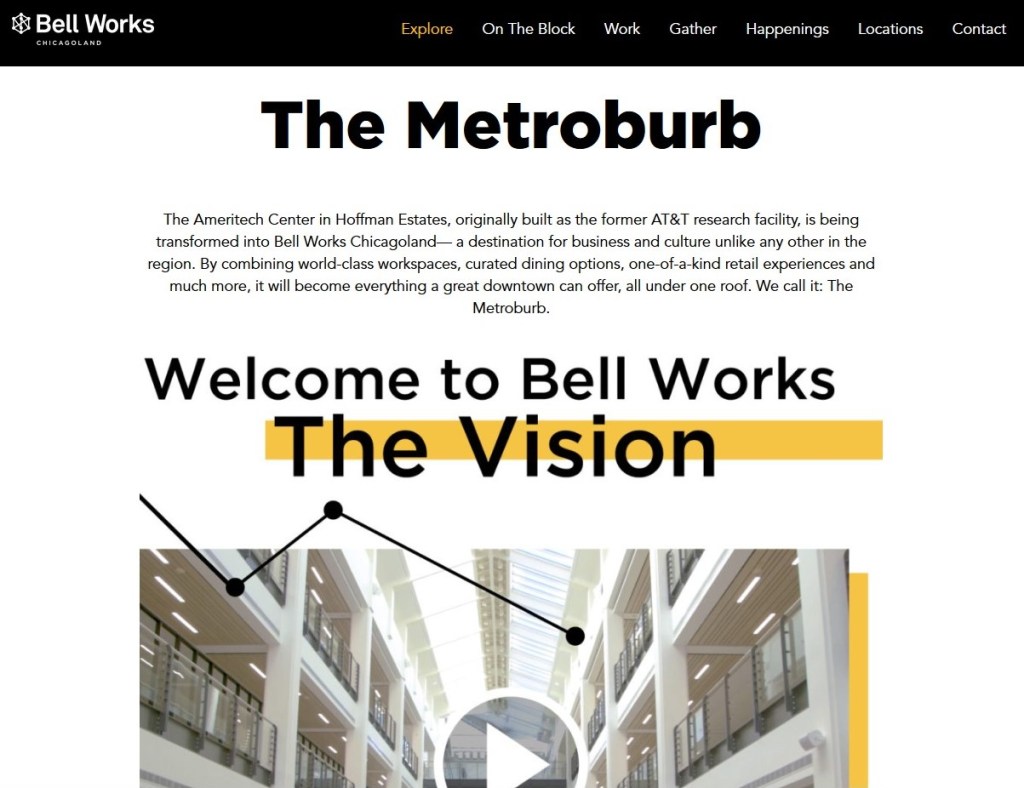
Chicago area suburbs advertising their communities is not unusual; see examples here and here. Far less common are new suburban developments making broad appeals in mass media. This project has been in the works for a while now – see an earlier post – and it is on an intriguing site as Bell Labs was important for the Chicago region (read more about the effects on local development of their Naperville facility) and the country as a whole.
Itasca’s plan commission on Wednesday unanimously agreed to recommend the village board deny Haymarket’s proposal. The Chicago-based nonprofit group is seeking permission to convert a former hotel along Irving Park Road into a 240-bed facility for adult patients with drug and alcohol use disorders.
The final decision rests with the village board. But trustees don’t want to rush their decision.
On Thursday, Mayor Jeff Pruyn said the village board plans to have at least two special meetings beginning in the middle of October. The first would allow public comment about the proposal. Haymarket representatives would make their case before the village board during the second.
As a result, the village board will not vote on the proposal until late October or early November.
Making a hasty decision may be in no one’s best interest. Particularly given the controversy surrounding the proposal, making sure everyone has a chance to voice their opinion and the board has all the time to make up their mind seems reasonable.
At the same time, what would change between now and then that would have a big effect on how the board members are viewing the situation? The proposal has been under discussion from some time and community members have made their voices heard.
This is not an easy decision for a smaller community to make. There could be consequences for life in the community and future development. Either way, some people will be upset. The village board decision will either agree with the plan commission or go the other direction (and the board is able to choose either option).
Yet, a decision needs to be made. I will be interested to see what happens: how will Itasca respond? Will Haymarket look for another suburban location? More broadly, what suburban communities might welcome land uses like these that are needed in metropolitan regions?