“Americans demand more bedrooms, baths”

I argued a few days ago that the American system is set up to encourage people to purchase bigger homes. Look, the system is working! Americans continue to build and buy bigger homes.

The latest numbers from the U.S. Census Bureau show newly-constructed homes in 2017 are 4 percent larger on average than a decade ago. And they come with a larger price tag — the average price of a new home jumped 23 percent from $313,600 in 2007 to $384,900 last year. Meanwhile, the average family size in the U.S. continues to shrink, from 3.33 persons in 1960, to 2.54 in 2017…

Below are some takeaways from the Survey of Construction data released in June. Based on the most common features, the most popular home built in 2017 was a two-story, two-garage home with more than four bedrooms and three bathrooms.

Several graphs highlight the proliferation of bedrooms and bathrooms in recent years:

Chart: Number of bedrooms in new single-family houses completed

Chart: Number of bathrooms in new single-family houses completed

Even with plenty of critics, American builders and buyers still seem to want larger homes. Perhaps the market is primarily open these days to wealthier buyers and builders may not be interested in constructing starter homes but this is not an isolated blip in the data: for decades, Americans have sought larger homes.


Census income figures misreported based on gender norms

The Census measures numerous important features of American life. Yet, accurate measurement is difficult. A new report suggests reported income can not be the most truthful when women make more money than their husbands:

Researchers found that when wives are the bigger breadwinners, husbands report making an average of 2.9 percent more than what’s in their tax filings. Meanwhile, women who make more than their husbands report earning 1.5 percent less than their actual income…

So why does this phenomenon happen? Researchers say they suspect societal expectations about the roles each person plays in a marriage could be a main factor.

“When married couples . . . violate the norm that husbands outearn their wives, the survey respondents reporting the couples’ earnings appear to minimize the violation by inflating the earnings of the lower-earning husbands and deflating the earnings of the higher-earning wives,” researchers wrote in their findings.

If the misreporting is due to gender norms, might we expect this to go away as more women earn more money? Already, “In about one out of four couples surveyed, wives made more money than their husbands.” Give this a few decades and this misreporting might disappear.

On the other hand, social norms can be last a long time even after society has changed quite a bit from when the social norm arose. If the misreporting continues or even increases, it would be interesting to see how the Census and other surveyors adjust their figures.

If one survey option receives the most votes (18%), can the item with the least votes (2%) be declared the least favorite?

The media can have difficulty interpreting survey results. Here is one recent example involving a YouGov survey that asked about the most attractive regional accents in the United States:

Internet-based data analytics and market research firm YouGov released a study earlier this month that asked 1,216 Americans over the age of 18 about their accent preferences. The firm provided nine options, ranging from regions to well-known dialects in cities. Among other questions, YouGov asked, “Which American region/city do you think has the most attractive accent?”

The winner was clear. The Southeastern accent, bless its heart, took the winning spot, with the dialect receiving 18 percent of the vote from the study’s participants. Texas wasn’t too far behind, nabbing the second-most attractive accent at 12 percent of the vote…

The least attractive? Chicago rolls in dead last, with just 2 percent of “da” vote.

John Kass did not like the results and consulted a linguist:

I called on an expert: the eminent theoretical linguist Jerry Sadock, professor emeritus of linguistics from the University of Chicago…

“The YouGov survey that CBS based this slander on does not support the conclusion. The survey asked only what the most attractive dialect was, the winner being — get this — Texan,” Sadock wrote in an email.

“Louie Gohmert? Really? The fact that very few respondents found the Chicago accent the most attractive, does not mean that it is the least attractive,” said Sadock. “I prefer to think that would have been rated as the second most attractive accent, if the survey had asked for rankings.”

In the original YouGov survey, respondents were asked: “Which American region/city do you think has the most attractive accent?” Respondents could select one option. The Chicago accent did receive the least number of selections.

However, Sadock has a point. Respondents could only select one option. If they had the opportunity to rank them, would the Chicago accent move up as a non-favorite but still-liked accent? It could happen.

Additionally, the responses were fairly diverse across the respondents. The original “winner” Southeastern accent was only selected by 18% of those surveyed. This means that over 80% of the respondents did not select the leading response. Is it fair to call this the favorite accent of Americans when fewer than one-fifth of respondents selected it?

Communicating the nuances of survey results can be difficult. Yet, journalists and other should resist the urge to immediately identify “favorites” and “losers” in such situations where the data does not show an overwhelming favorite respondents did not have the opportunity to rate all of the possible responses.

Americans are conditioned and enabled to buy large homes

Findings regarding how Americans use the space in their homes may show they do not use all the space equally but evidence may not matter much. Americans want larger homes and the society and system is set up to push them towards this. Some of the factors involved:

-A consumption heavy culture where people enjoy shopping and buying items to signal their worth and for their own enjoyment. People want bigger homes like McMansions to impress others. Owners want a bigger home for all their stuff (and not necessarily for larger families).

-A lending industry that often requires relatively small down payments and repayments of a mortgage over three decades. Even if borrowers pay more in interest over time, they can afford a bigger home up front. Mortgages are socialized.

-A building industry that can make more money per house on selling a larger house. Building starter homes – a smaller house a couple might start with – or smaller single-family homes is a minor part of the industry.

-An emphasis on private family space as opposed to thriving public life on streets, urban public spaces, or third spaces. Additionally, Americans like their personal space.

An emphasis on suburban culture and spread-out settlement.

With these conditions, making a choice to have a smaller home is going against the grain. Perhaps this is why the tiny house movement is small.


The missing microwaves and countertop kitchen appliances on HGTV

In watching a recent episode of something or other on HGTV, I realized something: very few of the renovated homes featured on the channel have visible microwaves or other kitchen appliances on surfaces.

I suspect this is similar to the clean, open concept kitchen that has no mess: the aesthetic is modern and minimalist. Appliances beyond the stove, refrigerator, and dishwasher (which are often emphasized in discussions and visual shots because of their size and finishes) should be out of sight and avoid cluttering the beautiful surfaces. To some degree, this is common when showing houses that are for sale: the thinking is that people do not want to see the clutter of everyday life.

Yet, I would guess that most American kitchens have plenty of countertop appliances that they regularly use. How many home cooks can survive without a toaster or toaster oven, blender, food processor, mixer, coffee makers, crockpot, and so on? And that does not even include the microwave, an indispensable tool for decades.

I suspect that clearing the countertops for the final reveal of homes is akin to the sketchy before and after shots provided by weight loss products. The difference might look substantial but the image is misleading. Is a clear surface that few people can actually live with really desirable versus a kitchen that displays where people can keep some of the stuff they regularly use? The countertops should not be full of junk but a well-placed appliance can both recognize the realities of most American kitchens and hint to the viewer what is possible in the kitchen.

Chicago suburb to sponsor college bowl game

The competition between suburbs can be intense and Elk Grove Village has a new way to stand out: sponsor a college bowl game to be played in the Bahamas.

The village and ESPN announced Tuesday that Elk Grove will be the title sponsor of the Makers Wanted Bahamas Bowl, to be played Dec. 21 in Nassau, Bahamas, using the village’s business marketing tag line. The village is spending $300,000 to sponsor the game, which will air on ESPN. The game had previously been sponsored by Popeyes.

It marks the first time a non-tourist municipality has sponsored a bowl game, the village and ESPN say…

Johnson wanted a way to expand the reach of the village’s “Makers Wanted” campaign, which launched in 2015 to promote the village industrial park — at 6 square miles, the largest contiguous one in the country. The campaign has included a website, billboards, TV and radio commercials, and print ads…

The fee to sponsor the bowl game is part of a $400,000 increase the board approved in its contract with Lombard-based Red Caffeine, the marketing company that developed the Makers Wanted campaign. The other funds will pay for new Elk Grove TV commercials set to air regionally on cable news channels this fall.

It is not uncommon for states to mount such campaigns. For example, see efforts by Texas, Indiana, Florida, and isconsin to draw residents and businesses from Illinois. It is more rare for a single suburb to mount such a campaign on a national scale.

However, conspicuously missing from this article is any evidence that such campaigns work. Can the village conclusively show that the campaign started in 2015 has (1) increased the number of businesses in the community and (2) revenues have increased because of the moves?

This could also be about the status of the suburb. The Chicago area has scores of suburbs and communities often want to stand out. This is why they might seek to change a motto, a logo, or run campaigns to distinguish themselves from others. Such a marketing campaign can make a suburb feel better about itself and local leaders can show they are being proactive regarding growing their community (and growth is good).

It will be very interesting to see whether the football audience helps advance the goals of the suburb and if they are willing to renew their sponsorship for another year past the first. The mayor is claiming the news about the campaign has already helped the suburb (suggesting 95% of the value has already been realized) but the long-term prognosis will take some time to sort out.

American land uses in a number of interesting maps

Bloomberg put together a set of graphics to illustrate how Americans use land. Here are a few of the maps interspersed with information. First, the general patterns of land use:

AmericanLandUseGeneral

The U.S. is becoming more urban—at an average rate of about 1 million additional acres a year. That’s the equivalent of adding new urban area the size of Los Angeles, Houston and Phoenix combined. U.S. urban areas have more than quadrupled since 1945…

AmericanLandUseComparative

More than one-third of U.S. land is used for pasture—by far the largest land-use type in the contiguous 48 states. And nearly 25 percent of that land is administered by the federal government, with most occurring in the West. That land is open to grazing for a fee.

There is some data here that could be viewed as conflicting: urban areas are the fastest growing land use – watch out for sprawl! – but the biggest land use overall is pasture and range – open land yet given over to creatures that are land and resource intensive!

One nice feature of these maps is that they are helpful for making comparisons between land uses. Given the size of the country plus the limited day-to-day experiences of many in different parts of the country, it can be hard to get a handle on all the land uses.

After looking this all over, I wonder what Americans and policymakers would say an ideal land use mix is for the entire country. This is a difficult question to answer, particularly since many people would not necessarily regularly encounter all the uses. If people want more protected land, what other land uses should be reduced and how would this affect individual lives as well as the American way of life?


McMansion owners as against preserving green space

A letter to the editor connects Mcmansion owners with an unwillingness to look toward the public good:

It seems that more often than not folks who live in huge McMansions on private estates, drawing big government pensions and other income streams, are the ones making the biggest noise about keeping things the same in the county (Letter to the Editor, “Snapshot of Rappahannock’s Future,” Demaris Miller, July 19).

Of course they would! They don’t need to worry about finding decent paying jobs or affordable housing without having to move out of the county as so many people here do. They’ve got plenty of fine space to take walks and entertain their grandkids.

The county has many choices for where to go — we could allow factories and warehouses, or suburban sprawl, or tourism with a NASCAR track, an amusement park, skate boarding and all. Or we could stick to a plan for growth that preserves our scenic rural character while encouraging people to visit and share that beauty and spend a little money here. A safe bike and walking path with gorgeous views of the Blue Ridge certainly fits in that category.

The McMansions cited here must have larger properties where owners can enjoy the outdoors. This would contrast with one possible trait of McMansions where they are the result of teardowns.

On the other hand, McMansions are linked here to sprawl. This is a common argument as McMansions are often part of an expanding suburbia where homes, roads, and development gobbles up open land, green space, and public space. Additionally, these are wealthy sprawling suburbanites who can take care of their own financial interests.

More broadly, this letter gets at broader issues involving McMansions and suburbs: just how much growth is desirable? How does a community weigh the construction of housing versus protecting natural space that residents and visitors can enjoy? Growth is generally good in suburban areas and even if certain spaces are protected, the general tenor of development can overwhelmingly change the character of a place from a more rural or open area to a denser one.


The social norm of calling the authorities regarding the mothering of others

Mothering is not an activity just left to individuals or families; it is a communal activity that occasionally veers into differences of opinions and the actions of authorities:

I was beginning to understand that it didn’t matter if what I’d done was dangerous; it only mattered if other parents felt it was dangerous. When it comes to kids’ safety, feelings are facts…

This has actually been confirmed by researchers. Barbara W. Sarnecka, a cognitive scientist at the University of California, Irvine, and her colleagues presented subjects with vignettes in which a parent left a child unattended, and participants estimated how much danger the child was in. Sometimes the subjects were told the child was left unintentionally (for example, the parent was hit by a car). In other instances, they were told the child was left unsupervised so the parent could work, volunteer, relax or meet a lover. The researchers found that the participants’ assessment of the child’s risk of harm varied depending on how morally offensive they found the parent’s reason for leaving…

It’s not about safety,” Dr. Sarnecka told me. “It’s about enforcing a social norm.”…

These women’s critics insist that it’s not mothers they hate; it’s just that kind of mother, the one who, because of affluence or poverty, education or ignorance, ambition or unemployment, allows her own needs to compromise (or appear to compromise) the needs of her child. We’re contemptuous of “lazy” poor mothers. We’re contemptuous of “distracted” working mothers. We’re contemptuous of “selfish” rich mothers. We’re contemptuous of mothers who have no choice but to work, but also of mothers who don’t need to work and still fail to fulfill an impossible ideal of selfless motherhood. You don’t have to look very hard to see the common denominator.

Social norms and expectations about roles are powerful parts of social life. Everyone has social guidelines to follow but the expectations can differ dramatically across groups. As the piece goes on to note, what individuals and society expect from fathers in similar situations differs.

This leads me to a few other thoughts:

  1. The appeal to third-party authorities rather than talking to the mother or just keeping an eye on the kids for a few minutes without alerting anyone reminds me of Baumgartner’s The Moral Order of a Suburb. She argues suburbanites help keep the peace by not interacting with each other. When they have problems, they may call the police or the city or some other party who can mediate in the situation. The same seems to be happening here.
  2. Part of the issue here is that these laws were enacted because there are situations where children can be helped. So, how exactly can the public be shaped to react when it is truly needed and ignore the situation when children are not really in danger? This is a big task and goes beyond the ability of laws and regulations to shape society. At the same time, I would not say that there is some zeitgeist that will just change. How people view mothering and the safety of children is dependent on numerous concrete actions and values.

Why Americans love suburbs #7: closer to nature

A consistent appeal of suburbia for many Americans is to be closer to nature and green space. While suburbanites appreciate their proximity to urban amenities without having to actually live in the big city, they also often appreciate more open space and closeness to nature. American suburbanites may be out of touch with nature and children may be exposed to less nature these days but the suburbs are viewed as offering access to nature just outside the single-family home.

As cities grew in the nineteenth century, they became dirty places. While this is an ongoing issue in many large cities still (think smog in Paris or air quality in Beijing), these growing cities had particular problems including how to construct sewers (Chicago’s efforts in battling excrement helped it grow), dealing with waste from all the horses, and soot (see pictures of Pittsburgh turned dark in the middle of the day). The suburbs offered some distance from the grime of the city and more proximity to pristine nature.

Exactly what kind of nature suburbanites experience is up for debate. As one critic of suburbia suggests, the suburbs often involve “nature band-aids.” Suburbanites may be interested in farms or “agrihoods” but the average suburban dweller has a small plot of land around their home. I am reminded of one situation I discovered in my research on suburban development where residents of a newer subdivision complained vociferously when the adjacent cornfield turned into a new development. This common process of suburban development – more agricultural or rural land or open space is turned into sprawl – can frustrate many residents.

One consistent experience involves using and caring for the lawns that surround many single-family homes. The green lawn is an important symbol of the owner’s social class as well as a space for outside recreation. Caring for the lawn is vitally important. Neighborhoods and communities exert pressure. Residents make sure their lawns are green in a variety of conditions ranging from watering during droughts, painting their lawns, and searching out the best seeds. They often have plenty of trees, prized by suburbanites for their foliage, functioning as key symbols of nature, and ability to define edges of properties and hide views of others.

Beyond lawns, suburbanites are often interested in parks, forest preserves, and green spaces. Theoretically, these uses limit the possibility that the green space can be turned into other uses. Even somewhat protected green space like a golf course can provoke concerns if it is turned into something else. Additionally, these spaces enhance property values of single-family homes, allow space for children to play, and can become sites of local social activity. Some of these places can offer more authentic nature (less controlled by humans) though many of these sites are carefully kept. Furthermore, even in these preserved spaces, it is difficult to truly escape the suburban noise and evidence of civilization.

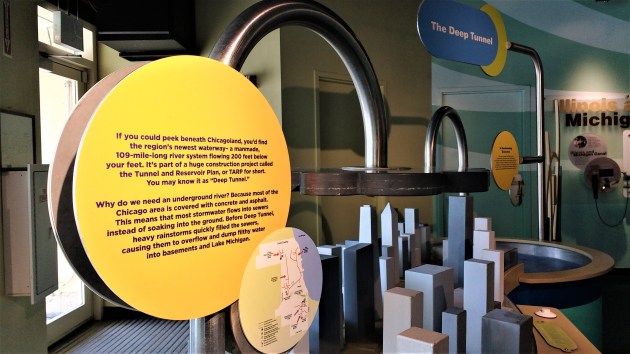
Sometimes, nature can be perceived as the enemy of suburbanization. A great example is dealing with water. Flooding is a persistent issue. More housing alongside roadways and parking lots do not allow water to soak into the ground. Think the Houston area after a hurricane. In spaces with less human activity, flooding and waterways changing course do not have the devastating or annoying effects that they can in suburbia. Turning land into suburbia can have the effect of bulldozing over natural ways of dealing with water and instead trying to channel it or eliminate it around homes and other uses. This is not always successful and much money can be spent on the issue. For example, the Deep Tunnel project in the Chicago region is a massive civil engineering project born out of urban and suburban development.

Of course, the opposite can be true as well: suburbanization can be the enemy of nature. Rachel Carson’s influential work emerged by suburban settings. At the same time, nature itself can also adapt to suburbanization. The wildland-urban interface can move as creatures like coyotes, deer, baboons, and birds adapt to human activity.

While critics of suburbs may not understand why suburbanites cannot see the ugliness of sprawl, many Americans believe the suburbs offer a little more natural space in which to move and breathe.