Enron, McMansions, and unlikeable villains

The Enron scandal broke in late 2001. And it involved McMansions?

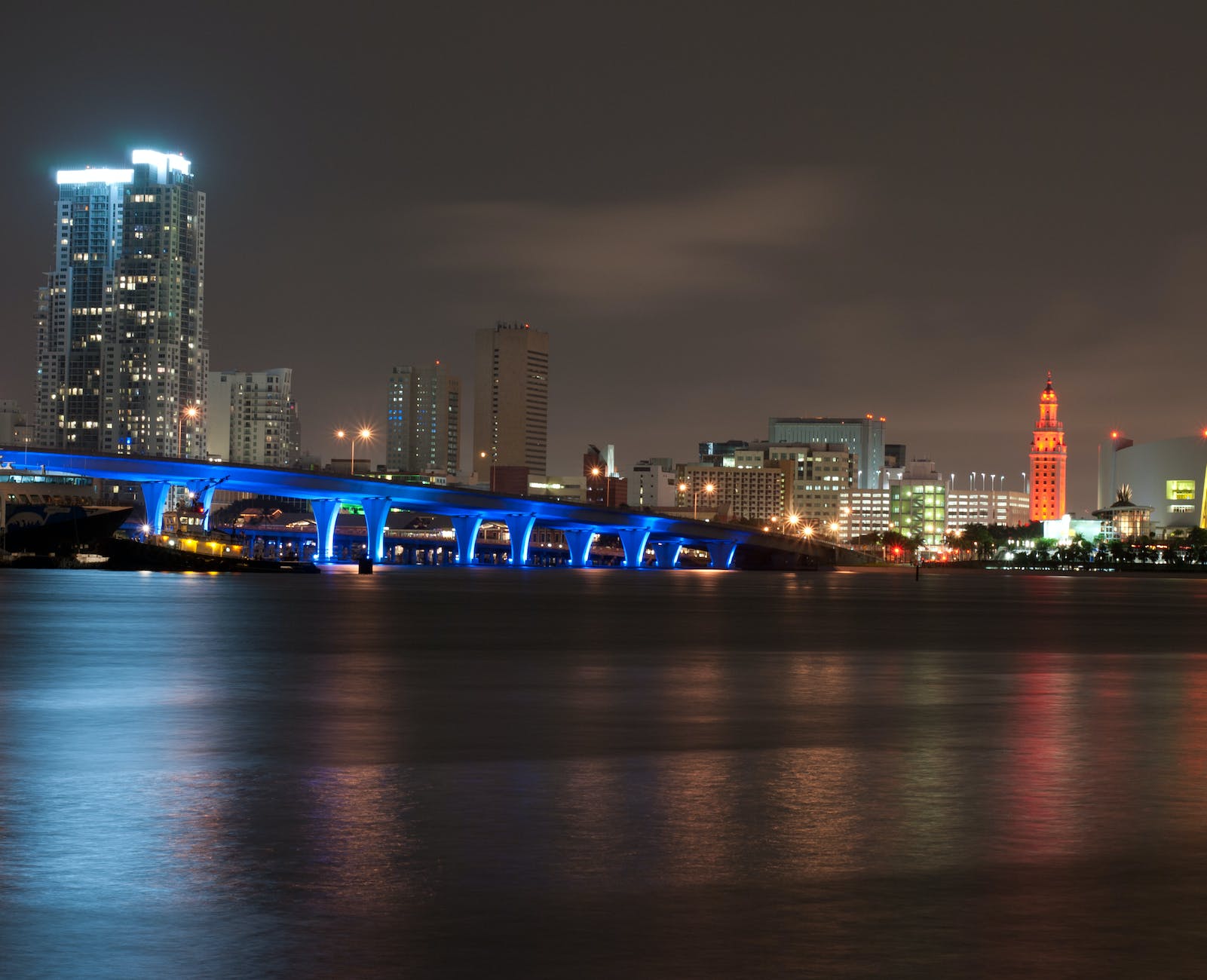
Photo by Bob Price on Pexels.com

The characters in this drama were larger than life in the Texas vein, but they lacked the roguish charm of the wildcatters of old, that quality that could make you forgive all. Yes, there were motorcycle races in the desert and Porsche Carreras and River Oaks McMansions, along with ill-advised love affairs and stiletto-in-the-back corporate intrigue. But in the end the Enron villains weren’t that much fun. They were just rich. And arrogant.

According to another story, Enron executives upgraded their residences in the years prior to the scandal:

Only a few years ago, Skilling, Fastow, and Michael Kopper — Fastow’s lieutenant in the Enron scandal, according to conclusions drawn in the Powers report — all lived within walking distance of one another in the quiet upper-class neighborhood called Southampton Place, which borders Rice University. It is a nice neighborhood, with houses that go for around a half-million dollars, but all on small lots, with alley parking in the back. Skilling lived in a simple, square brick house with his wife and three children. Kopper lived a few blocks away in a cottage he eventually remodeled to have an almost Japanese-style look, the house taupe in color, with a gray roof…

And before all three men — Skilling, Fastow and Kopper — bought new properties, tore down the existing structures, and started building their dream houses. Once again, all in the same neighborhood. The neighborhood where the rich live in Houston. The neighborhood where Lay lives. River Oaks.

So now Skilling resides in a mammoth Mediterranean-style home with a tile roof, and he’s engaged to Rebecca Carter (the one known as Va Voom), who under Skilling was promoted to executive secretary to Enron’s board of directors at a salary of $600,000. Fastow is building something that looks like a country manor, almost Tudor-ish. And Kopper and his partner William Dodson opted for a postmodern abode — boxy, all white and beige and glass and hard angles. A house so close to the Lays’ luxe apartment building that the shadow practically falls across Kopper’s lawn…

Skilling’s house is decorated in a sleek, black-and-white theme, in homage to Enron’s corporate colors. But he hired the Houston-based design team of Michael Galbreth and Jack Massing — who are known as the “Art Guys” — to do his guest quarters.

Several thoughts upon reflecting on this story from the past:

  1. Texas does like its houses bigger and I found in a 2012 published article that McMansions were not treated the same way in the Dallas Morning News compared to the New York Times.
  2. Did Skilling live in a McMansion or a mansion, a home with more square feet and not a mass-produced home within a subdivision?
  3. Does calling his home a McMansion fit better with an image of a corporate villain? The term McMansion is not usually used positively and could hint at the ill-gotten rise of Skilling. Does a more garish McMansion make it easier to dislike a figure?
  4. On a “Lives of the Rich and Infamous Tour B” in the Houston area, you may see “Homes of the leaders of Enron:  Kenneth Lay (1942 – 2006) and Jeffrey Skilling.”

The (long) time it takes to develop academic arguments

One feature of summer and breaks for college faculty is the possibility of more time for writing and working on projects. While this writing time does not always happen given other responsibilities in life, time is needed to develop academic projects. And we may need numerous summers, breaks, and semesters to fully put together works. What do we need this time for?

Photo by SevenStorm JUHASZIMRUS on Pexels.com

-Writing and submitting proposals and grants.

-Developing ideas and precise research questions.

-Becoming familiar with the already-existing literature.

-Collecting data and evidence.

-Analysis.

-Crafting narratives that align with the research question, existing scholarly conversations, and the evidence we have.

-Writing and rewriting.

-Conversations with others.

-Presentations, whether to the public, academic groups, students, or others.

-Responding to reviewers and editors.

-Thinking (all throughout the process)

While the activities above are in a rough order from a beginning of a project to the end, it does not always work this way. These are also not necessarily discrete stages; they can blend together and are often recursive and connected as working on one part leads to going back to an earlier step or portion.

All of this means that a single writing project can easily take years. Some projects take longer than others. It can be hard to predict how long a project can take. What does this all add up to? Hopefully a coherent and compelling project.

If we added to publications and presentations a clock for the time involved, this could help reveal the time spent. Without letting such figures turn into a competition or a quest for efficiency, it could open conversations about processes and resources.

Can popular TV shows lure new residents to a city?

Fort Worth, Texas is growing. Is this partly because TV viewers can see it on a set of popular shows?

Photo by Bryan Dickerson on Pexels.com

Mattie Parker, the mayor of Fort Worth, Texas, says a focus on crime, homelessness, parks and reliable infrastructure has positioned the city of 950,000 as an attractive alternative to Chicago, San Francisco and New York, which have struggled with perceptions of deteriorating safety in the aftermath of Covid-19.

The 39-year-old Republican, broadly considered to be a moderate in deep-red Texas, says that Fort Worth’s pitch to lure businesses highlights its roots (the city’s slogan is “Where the West Begins”) and small-town vibes, even if its stockyards are now more of a tourist draw than a genuine agricultural enterprise. The nostalgia for cattle ranching and cowboys generated by the hit television series Yellowstone and 1923 — created by Taylor Sheridan, who partly grew up in Fort Worth — are only adding to its allure.

“Fort Worth continues to be an incredibly unique city that is very proud of our Western heritage,” Parker said in an interview at City Hall, where a display case held shovels from groundbreaking ceremonies over the years. “And the timing couldn’t be better because of this fanfare and frenzy over Yellowstone and 1923.”

In Fort Worth, it’s common to see cowboy hats and boots paired with a tailored suit. Unlike nearby Dallas, which mostly feels like any other major metropolis, Fort Worth embraces its sense of place. There’s plenty of live country music, two-step dancing and Tex-Mex cuisine.

This is a long list of reasons for growth. Additionally, Fort Worth is part of the growing Sun Belt.

How much can depictions on a TV show contribute to this growth? Here is how Wikipedia describes the connections to Fort Worth that start with the TV show 1883, the earliest prequel for Yellowstone: “The series follows the post-Civil war generation of the Dutton family as they leave Tennessee, journey to Fort Worth, Texas, and join a wagon train undertaking the arduous journey west to Oregon (the Duttons are never on the actual Oregon Trail itself), before settling in Montana to establish what would eventually become the Yellowstone Ranch.”

I would be very interested in seeing some data regarding the connection between a popular television universe and population growth in a particular city. Are these shows also causing population growth in Montana? It makes sense for a local leader to make the connection to a show people like as it is always helpful to have good press.

Humans walk, Americans drive

One feature of human beings is that they move on two legs. This bipedalism provides a primary means of locomotion. It may have given rise to rhythm and music.

“Walking Man II” by Alberto Giacometti at the Art Institute of Chicago

Many spaces in the United States privilege driving rather than walking. Driving is often faster. In the same amount of time, a driver can likely go farther than a pedestrian.

But, driving is not what humans have done throughout most of history. Driving is much faster. It requires technology to make and maintain vehicles. There needs to a lot of infrastructure to support driving. The scale changes as a vehicle is moving much faster and needs more room.

Even to see the statue above, many visitors will take a vehicle on a roadway. This enables millions to visit the museum and take in this image. Yet, they will contemplate a depiction of a human walking while primarily traveling via other modes.

Asking Americans to not drive as much or at all is a tall order. Cars are an integral part of the American way of life. Maybe reflecting on “Walking Man II” can help people remember a past and envision a different future.

Who benefits from preserving open space in the suburbs?

I was reading through some newspaper articles from the 1990s about development in my suburban county. In an article on a $75 million bond proposal for county voters to preserve 2,300 acres of open space (which voters did approve), here is one explanation why county voters should increase their property taxes for this purpose:

Photo by David Boozer on Pexels.com

Bond issue proponents have stressed that preserving open land will help everyone by making DuPage County an even more desirable place to live. Saving open space will improve wildlife habitats, help control flooding, improve stream water quality, avoid added congestion and protect property values, Oldfield said. (Lynn Van Matre, “DuPage voters to decide on open space,” Chicago Tribune, November 2, 1997)

The reasons listed for voting in favor of spending this money appear to split into two areas: (1) environmental concerns (wildlife, flooding, water) and (2) a particular quality of life marked by property values and limited traffic.

But, I wonder if the first category is a subset of the second set of concerns. Suburbanites in Chicagoland care about property values and have concerns about drug treatment centers, waste transfer facilities, religious buildings, apartments, and anything else they think threatens their financial investment.

Do suburban residents care more about environmental concerns or about what development might go into these open spaces? From the perspective of some (and this was also expressed in the article above), such land could be used for affordable housing or for community amenities. To keep it as open space means it could not be other uses that people could benefit from.

If preserving property values is the top concern regarding land development, this is the sort of decision that might be made. Such a decision does not come cheaply; local property owners pay more but they do so in order to hopefully boost their investment even more.

(See earlier posts involving questions about who benefits from open space in New Jersey and the motives behind acquisitions by forest preserves.)

Equating the population of a good sized American small town and the world’s new largest cruise ship

Americans like small towns. What if a small town was always on the water? The world’s new biggest cruise ship will carry a sizable number of people:

Photo by Shawnna Donop on Pexels.com

Royal Caribbean’s luxurious new vessel Icon of the Seas is nearing completion in the Turku shipyard on Finland’s southwestern coast, its maiden voyage scheduled for January 2024…

Resembling a village more than a ship, the mammoth vessel boasts colourful waterparks, more than 20 decks and can carry nearly 10,000 people…

Papathanassis noted that “there are obvious economic benefits” to mega-sized ships, reducing the cost of individual passengers.

With its seven pools, a park, waterslides, shopping promenades, ice skating rink and “more venues than any other ship”, larger vessels like the Icon of the Seas also offer more options for spending money on board.

Here is a breakdown of who will on the ship/floating village:

Royal Caribbean International’s Icon of the Seas is a mammoth 365 meters long (nearly 1,200 feet) and will weigh a projected 250,800 tonnes. For comparison, that’s like trying to keep two CN Towers afloat.

When it sets sail on Caribbean waters in January 2024, it will comfortably hold some 5,610 passengers and 2,350 crew.

Imagine a large American small town or a small suburb floating on the ocean around the world. What might take up several square miles on the American landscape can be packaged on one boat. The density is a lot higher and it has a lot of recreational amenities in a small space. Besides space, what else is missing?

I am reminded of the ideas of floating communities outside of international waters and/or apocalyptic scenarios where humans do not have access to land. Could a ship this sized be turned into a permanent settlement and how would this alter what is on board?

Dallas-Fort Worth metro area predicted to pass Chicago area in population in roughly a decade

Which American metropolitan areas are poised for large population gains in the coming years? One prediction says Dallas-Fort Worth will soon be the third largest metro area:

Photo by Pixabay on Pexels.com

Dallas-Fort Worth is one of the country’s fastest growing metropolitan areas…

Business expansion and relocations are fueling the Dallas region’s growth, putting it on track to overtake the Chicago area and become the third-most-populous metro within the decade…

Dallas-Fort Worth is on track to be the only U.S. metropolitan area to house two cities with populations over 1 million in the next five years, as people and companies seek profit, opportunity and room to grow.

The population shift to the Sunbelt continues.

As for Chicago, it was passed by Toronto in population, Houston might pass it soon, and Dallas-Fort Worth pass the metropolitan area population. How far will the city and metropolitan area be down lists in a few decades?

Cities and metropolitan areas rise and fall in population over time. Chicago was once smaller than St. Louis than shot past it with the latter losing a lot of population in the 1900s. Where will the new boom cities be?

Chicago suburbs lobbying at the federal level – and it might pay off?

Multiple Chicago suburbs employ lobbyists in Washington and those lobbyists may pay for themselves:

Photo by Tima Miroshnichenko on Pexels.com

Crashes at one of the state’s most dangerous rail crossings, in Elmwood Park, have killed seven people and injured at least 27 over the last few decades. Village officials want to build an underpass to make the intersection safer, but the village can’t do it alone — the $121 million price tag is more than four times the western suburb’s annual budget, according to Village Manager Paul Volpe…

Elmwood Park has paid $230,000 since 2020 to the transportation lobbying firm Tai Ginsberg and Associates, according to federal lobbying records. So far, the village has received $3 million in federal funds, Volpe said…

Illinois cities, towns, villages and counties besides Chicago spent about $838,000 on federal lobbyists in 2020, $1 million in 2021 and $1.4 million in 2022, lobbying disclosure records kept by the U.S. Senate and analyzed by the Chicago Tribune/Pioneer Press show. This year, they have spent a total of $720,000 so far, per lobbying disclosures. The grand total is slightly inexact because lobbyists are not required to report receipts under $5,000.

One town that’s turned its attention to opportunities in Washington is north suburban Niles, where the village board recently renewed a $60,000 contract with lobbying firm Smith, Dawson and Andrews…

So far, Alpogianis said the village is more than satisfied with that change. He pointed to a recent $200,000 federal grant for the Niles Teen Center the village secured with the help of U.S. Sen. Dick Durbin’s office.

Suburbanites tend to like local government because they believe it is easier to convey their interests and they can see and experience local decisions. So getting more federal money that can be directly used to improve a local quality of life is a win, right?

I could imagine two primary objections:

  1. Do lobbyists always pay for themselves? The story cited highlights several examples of successes. Does this work for every suburb?
  2. Is federal money the money suburbs want? Local government beholden to federal dollars? Some might object, others may not care where helpful money comes from.

It would be interesting to hear from the lobbyist side about firms or individuals that do well for suburbs. What is their success rate?

The role of land in new rankings of the most disadvantaged and advantaged places in the United States

A new analysis ranks the most disadvantaged and advantaged places and one common factor is land and property ownership:

Photo by Kelly on Pexels.com

Immediately, the rankings revealed a stark geographical pattern. The first surprise—especially for professors who have spent our careers studying urban poverty—was that the most disadvantaged places on our index were primarily rural. But they didn’t fit the stereotypical image of rural America. Though some of these were majority white, most were majority Black or Hispanic. We could see, too, that many places with large Native American populations ranked among the most disadvantaged in the nation. Considerable poverty exists in Chicago, Los Angeles, and New York. But in our apples-to-apples comparison, none of those cities ranked among even the 600 most disadvantaged places in the nation. The only cities on that list were a relatively small number of industrial municipalities such as Cleveland, Detroit, and Rochester…

The places that our index identified as the 200 most disadvantaged are concentrated in three regions—Appalachia, South Texas, and the southern Cotton Belt. (Not one county in the West, apart from those with disproportionately large Native American communities, showed up on the list.) These places share a history of intensive resource extraction and human exploitation not seen to the same degree elsewhere in the United States. In each place, this economic pattern emerged (or, in the case of the Cotton Belt, fully flourished) in the late 19th or early 20th century. In each place, one industry came to dominate the economy, a pattern that held, broadly, until the 1960s, when King Cotton, King Tobacco, King Coal, and South Texas agriculture, would bow to the twin forces of automation and global competition…

Exploring the other end of our Index of Deep Disadvantage—the places identified as those of greatest advantage—was also vital to our research. Once again, we were surprised by where the index took us. It was not Manhattan or tech-rich Seattle. Instead, the list pointed us to the upper Midwest: Minnesota, the Dakotas, Wisconsin, Nebraska, and Iowa. Overall, poverty rates in these places are very low, babies are born healthy, people live to a ripe old age, and a low-income child usually has a similar chance of making it into the middle class as any other kid.

Counties that rank among those of greatest advantage began as agricultural communities with modestly sized farms, many originally secured through the 1862 Homestead Act that made landownership widely available. Many of these places have built on this history of broad-based wealth by making significant investments in schools, which has contributed to high graduation and college enrollment rates over generations. Using the best data available, we found that they have enjoyed the lowest rates of violent crime, income inequality, and public corruption in the nation. These counties are unusually rich in social capital: Residents are connected to one another through volunteerism, membership in civic organizations, and participation in other community activities.

Who owns land? Who benefits from working it? It sounds like the Upper Midwest offered more opportunities for settlers to purchase land and develop wealth over the long run. In contrast, the three areas of disadvantage identified had more disparities in land ownership versus who worked the land. Additionally, Native Americans were removed from land that offered opportunities.

Approaches to addressing inequality and poverty in the United States can often involve homeownership but less discussed is land. A house is often tied to a particular property that has its own value. The land identified in the rankings above were particularly important for subsistence. This is not so much the case with urban and suburban land today where the proximity of the land to amenities and the size of the lot matter more than the owner’s ability to live off of it.

The rankings above also hint at the long-term consequences of land ownership. Who can access and own land now will matter for decades, possibly centuries.

“While in the Chicago area, Naperville is a must-see tourist destination”

Naperville is the third largest city in the Chicago region and in Illinois. It is wealthy and has a thriving downtown. Is it also a tourist destination?

Photo by Tim Gouw on Pexels.com

Naperville, a charming western suburb of Chicago, Illinois, offers many activities catering to locals and visitors alike. Illinois is a well-known destination for tourists, but this area of the state has more to offer than meets the eye…

While in the Chicago area, Naperville is a must-see tourist destination. From beaches to museums to parks, and tasty pizza, Naperville, Illinois, can’t be beaten.

The ten recommended things to do are: Naper Settlement, the DuPage Children’s Museum, Morton Arboretum, the Millennium Carillon, iFly indoor skydiving, McDowell Grove Forest Preserve, BrightSide Theatre, Centennial Beach, Hollywood Palms Cinema, and RiddleBox Escape Room.

Several quick thoughts in response to this list:

-Nine of the ten are in Naperville while Morton Arboretum is outside city limits in Lisle.

-I am surprised the Riverwalk is not a must-see on its own. It is not along the biggest river but it is a popular spot with food, music, civic buildings, and people-watching all available.

-Of the ten things to do, some are more unique to the community than others. For example, escape rooms can be unique but they are available in lots of places. It is harder to find the particulars at Naper Settlement or a carillon tower or a large public pool near downtown made out of a quarry.

-How many people each year visit Naperville to see the suburb?

-More broadly, how many suburbs in the United States are tourist destinations?