A test of taking Lyft from the train to the suburban office park exposes mass transit issues in the suburbs

One company in the Chicago suburbs is running a test to encourage employees to take the train to get close to their office and then use Lyft to complete the trip:

The two-year program aims to solve the “last mile” problem — how to bridge the gap between the train station or bus stop and the rider’s final destination. This problem is especially nettlesome for reverse commuters, who live in the city but work in the suburbs at jobs that are sometimes far from transit stops. More than 400,000 people commute every day from Chicago to jobs in the suburbs, according to the RTA…

GlenStar Properties is paying 75 percent of the cost of transporting employees at its Bannockburn complex on Waukegan Road to and from Metra stops in Deerfield, Highland Park, Highwood and Lake Forest. The Regional Transportation Authority is picking up the rest of the cost, up to $30,000 during the pilot…

The program, which launched in March and is the first of its type in Illinois, is starting small with just a few trips a day, according to the RTA. Bannockburn Lakes tenants get a monthly Lyft pass for the rides.

Many suburban companies, including Walgreens and Allstate, have some kind of shuttle bus program to get workers to and from Metra stations, said Michael Walczak, executive director of the Transportation Management Association of Lake-Cook, a nonprofit that works with companies and the private sector to figure out transit issues.

This is an interesting way to solve a common problem in both cities and suburbs: how to get people and goods that last step (or “last mile”) between a mass transit stop and their destination. Even in cities with good mass transit, the last step can cause a lot of problems.

This strikes me as the pragmatic solution to the larger problem of limited mass transit in the suburbs. The Chicago train system runs on the hub and spokes model where suburban communities, typically their downtowns, are connected to the Loop. This system may help funnel people into the center of Chicago but it is both difficult to get around the region and the train lines run into historic town centers, not necessarily the work and residential centers of today. Ride-sharing can help make up the difference by connecting train stops to workplaces. This can limit long-distance solo trips by car and allow more workers to not have a vehicle or to drive significantly less.

On the other hand, this solution could be viewed as less-than-ideal reaction to the real issue: sprawling suburban sites do not lend themselves to mass transit and the ride-sharing solution is just a band-aid to a much bigger issue. Chicago area suburbs have tried versions of this for decades including public bus systems in the suburbs to connect office parks to train stations, buses from remote parking lots to train stations, and private companies operating shuttle buses (as noted above). This all may work just for a limited number of workers who are located near rail lines and who are willing to use mass transit. But, most suburban workers – and they tend to work in other suburbs – have no chance of using timely and convenient mass transit to get to work. The densities just do not support this (and the office park in the story illustrates that this may be more feasible with denser concentrations of workers).

If companies, communities, and regional actors truly wanted to address these issues in the Chicago region, a more comprehensive plan is needed to nudge people closer together to both take advantage of existing mass transit and develop new options.

My 2.4 mile drive to work includes 6 stop signs, 2 traffic lights, and 1 train crossing

In my daily drive (or bicycle ride) to work through mostly residential neighborhoods, I encounter multiple intersections that require stopping with six stop signs, two traffic lights, and one trip over railroad tracks. A few patterns for my suburban trip and including these stops:

-The majority of the stops occur along an important north-south road in the community that is one lane each way, goes past houses of various kinds, and has a speed limit of 30 mph. Both traffic lights involve this road with only one light involving a four lane road.

-My average speed is roughly 12.5 mph. If I could go the 30 mph allowed on most of the trip and there were no stops, my trip should be more like 5 minutes long.

-Most of the stops are pretty short except for two kinds. The traffic lights can cause a wait of up to a minute and a half and the busier one can be longer if I have to wait through multiple lights. The train crossing obviously can wreak havoc with a typical trip with a stop for the train and then heavier traffic afterward as a long line goes down the road. Most of the time, I do not encounter a train and I now have a decent sense of when the passenger trains come during the morning and evening rush hours.

The average American one-way commute is now 26.9 minutes so my commute is much shorter than many. But, that time factor can obscure distances – a 20 minute commute in a more rural area is going to cover more distance than my 12 minute drive in a residential suburb and a 35 minute commute in a major city might be a different distance.

One promise I have read about involving self-driving cars is that they will be much less impeded by intersections. Because vehicles will be able to communicate with each other, stopping at a stop light for 1+ minutes or a required stop at a stop sign in light or no traffic could be limited. Removing all that stopping and starting would also be good for the environment because of reduced idling.

I assume all of the stops are there due to safety concerns and trying to keep traffic flowing in all directions (based on traffic counts, accident reports, and road and planning guidelines). But, it would be great to see in the next few decades changes to how many stops and starts vehicles must make.

The suburban way of life is not the result of free markets

Even as Americans have exercised some agency in choosing to live in suburbs, the whole system cannot truly be described as being the result of free market activity:

I get the concern and rarely disagree with Shelley, but there’s nothing free market about current single-family zoning rules. The suburban landscape largely is a creation of subsidies and zoning rules, which mandate only one house per certain size of lot and require umpteen parking spaces for every new shopping center, restaurant, office and church. Everything is micromanaged in the planning department.

I’m on the building committee of our church and have closely examined many proposed construction projects. It is so hard to build, expand or try any new development ideas because these planning edicts—designed mainly to protect our suburban way of life, and backed by residents trying to bolster their property values—are costly and inflexible…

But the underlying debate is about two visions of our California landscape. One side wants to protect our suburban model and the other side wants to urbanize. It’s a false choice driven by their own personal preferences. We need more apartments and condos. We need more single-family neighborhoods. We need to allow builders to provide the housing products people want, and different people want different things. The same people want different things at different stages of their lives. I live on an acreage, but now that we’re empty nesters, my wife and I plan to move into the city. That’s why I’m squarely on neither side.

After my housing column last week, I’ve heard from readers who oppose the legislation. Frankly, I’m frustrated by some of their arguments. To summarize some comments: If you can’t afford to live around here, then maybe move someplace else. There are too many people here already and too much traffic congestion. If your kids can’t afford California, they should consider less-costly states. Such views transcend political affiliation.

Zoning is a good example of how regulations can dictate what communities can construct and then who can reside or work in such locations.

Add two other other less-than-free-market aspects of suburbia:

1. A legacy of racial and class discrimination in suburbs.

2. Government subsidies for highways and other local services as well as propping up suburban housing in the form of single-family homes.

Americans might not acknowledge the ways suburbs developed and may even resist seeing them as social products. But, addressing tough suburban issues such as affordable housing probably requires thinking and acting at more collective levels than letting the beloved local governments dictate what they want (which can often deliberately lead to exclusion).

Why the study of social media and the study of suburbs goes together

Two days ago, I presented a talk titled “Screens, Social Media, and Spirituality: Technology and Religiosity Among Emerging Adults.” In this particular talk, I drew upon my work work with co-authors analyzing social media. While this is one of my research areas of interest, I am also a scholar of suburbs. How do these two areas go together?

To start, the sociological study of the Internet and social media has connections to the study of communities and places. Barry Wellman is a good example of a scholar who studied communities and then the Internet. Both social spheres have logics that connect people: communities tend to rely on geographic proximity while Internet and social media networks rely more on choosing connections and common interests. (There are other lenses sociologists could use to join the two topics: materiality – think smartphones and single-family homes; narratives about science and progress; consumption.)

Both social media and suburban areas rely on narratives of choice made by users or residents while both ave deeper forces pushing people toward those choices. In social media, people do not pick platforms at random nor are the platform’s development and popularity random. What people users connect to is not random; existing social ties matter as do factors like fame, influence, and power. Similarly, Americans may often argue they made it to the suburbs through their own efforts but decades of government policy as well as cultural ideology has privileged the suburban way of life.

One might argue that social media is relatively placeless. Users can communicate with any connected friend or follower from any place and at any time. Compared to social interaction bounded by proximity, technology offers unprecedented access without a need for a tie to a place (outside of a need for some sort of Internet connection). But, this placelessness is also a critique regularly leveled at American suburbs where the regularly repeating of features can make it appear all to be similar. See an example of this argument. (I tend to disagree as suburban communities can have very different characters, just as different social media platforms and interactions can feel different even if they all all fall into the same broad categories of social life.)

Finally, the profound implications for communities and broader society by both phenomena – particularly mass suburbanization after World War II and social media after the founding of Facebook plus the quick popularity of smartphones – are hard to ignore. It isn’t just that more Americans moved to suburbs; this had ripple effects on many places (including every major city), industries (think cars, fast food, big box stores, etc.), and government policy. It isn’t just that people now spend some time on social media; the shift to different kinds of relationships means we have to think afresh about how community works.

Reminder: “Twitter Is Not America”

A summary of recent data from Pew provides the reminder that Twitter hardly represents the United States as a whole:

In the United States, Twitter users are statistically younger, wealthier, and more politically liberal than the general population. They are also substantially better educated, according to Pew: 42 percent of sampled users had a college degree, versus 31 percent for U.S. adults broadly. Forty-one percent reported an income of more than $75,000, too, another large difference from the country as a whole. They were far more likely (60 percent) to be Democrats or lean Democratic than to be Republicans or lean Republican (35 percent)…

First, Pew split up the Twitter users it surveyed into two groups: the top 10 percent most active users and the bottom 90 percent. Among that less-active group, the median user had tweeted twice total and had 19 followers. Most had never tweeted about politics, not even about Twitter CEO Jack Dorsey’s meeting with Donald Trump.

Then there were the top 10 percent most active users. This group was remarkably different; its members tweeted a median of 138 times a month, and 81 percent used Twitter more than once a day. These Twitter power users were much more likely to be women: 65 percent versus 48 percent for the less-active group. They were also more likely to tweet about politics, though there were not huge attitudinal differences between heavy and light users.

In fancier social science terms, this suggests what happens on Twitter is not generalizable to the rest of Americans. It may not reflect what people are actually talking about or debating. It may not reflect the full spectrum of possible opinions or represent those opinions in the proportions they are generally held throughout the entire country. This does not mean that is no value in examining what happens on Twitter, but the findings are limited more to the population that uses it.

In contrast, the larger proportion of Americans who are on Facebook might appear to suggest that Facebook is more representative of the American population. But, another issue might arise, one that could dog social media platforms for years to come: how much content and interaction is driven by power users versus the percent of users who have relatively dormant accounts. I assume leaders of platforms would prefer more users become power users but this may not happen. What happens to any social media platform that has strong bifurcations between power users and less active users? Is this sustainable? Facebook has a goal to connect more people but this is unlikely to happen with such disparities in use.

This is why discussing or confirming trends seen on social media platforms might require more evidence from other sources or longer periods of time to verify. Even what might appear as widespread trends in social media could be limited to certain portions of the population. We may know more about smaller patterns in society that were once harder to see but putting together the big picture may be trickier.


Will millennials kill McMansions?

Millennials get blamed for a lot of things and here is another possible area where their choices may have consequences: the selling and buying of McMansions.

The end of so-called “McMansions” has been predicted several times over the years, but those large, mass-produced houses that the baby boomer generation (born 1946-1964) favored as a status symbol kept coming back. Now, baby boomers are entering their 70s and 80s and many are looking to downsize, but they are finding it hard to offload these large homes, facing a paucity of buyers among the millennial generation (born 1982-2000), who are unable to pay the prices they want.

For anxious sellers, however, respite could be around the corner as mortgage interest rates ease, and the millennial generation becomes qualified for more and bigger loans, experts say…

A big problem for the McMansion market is the mismatch between where millennials prefer to live and where those large houses have been built. The younger generation gravitates to cities – where their jobs are — whereas baby boomers have built their homes in suburban locations…

Keys wondered if the housing preferences of the younger generation have truly changed or if there is only a “delay” in the demand for McMansions. Those homes may not be desirable to people in their late 20s but instead to people in their late 30s or 40s, he noted.

This is not the first time I have seen the suggestion that millennials have less interest in McMansions: Builder had a piece on this a few years back. And the baby boomers may have a problem bigger than just McMansions: who will buy all their homes, McMansions and otherwise? When housing becomes a primary investment for so many Americans, not having enough future buyers can become problematic.

More broadly, this discussion follows a typical pattern for stories and studies about millennials: will they act like previous generations (and have not done so thus far for a variety of reasons including an economic crisis and student loan debt) or do they truly have different tastes and want to lead different lives? In the realm of those who care about cities and suburbs, this is an ongoing discussion spanning years: will millennials be suburbanites or city-dwellers? Will they reject lives built around single-family homes and driving and prefer denser, diverse, culturally-rich communities (or a mix of both in “surban” places)?

If I had to guess, this group will exhibit some change from previous groups but probably not drastic change (based on the idea that social change tends to happen more slowly over time). Reversing suburban culture, ingrained among many American institutions and residents, would like take decades and not just one generation. The McMansions of older residents may not all sell at their preferred prices but barring another housing bubble (which could happen), they will be worth some money.

Focusing on the fastest-growing American cities reinforces the idea that growth is good

For American communities, growth is generally good. Growth comes with multiple benefits including the idea that it is an important community to pay attention to. In other words, growth equals a higher status (and population stagnation or decline is bad).

So when USA Today publishes a list of the fastest-growing cities in each state, it helps reinforce the idea that explosive growth is good. Here are a few of the listings with higher rates of growth:

Arizona: Phoenix-Mesa-Scottsdale
• 2010-2018 pop. growth: 15.6% (state: 11.9%)
• Feb. 2019 unemployment: 4.3% (state: 5.1%)
• 2010-2017 job growth: 20.1% (state: 16.6%)
• Median household income: $61,506 (state: $56,581)…

Colorado: Greeley
• 2010-2018 pop. growth: 23.7% (state: 12.8%)
• Feb. 2019 unemployment: 2.9% (state: 3.7%)
• 2010-2017 job growth: 34.1% (state: 19.9%)
• Median household income: $68,884 (state: $69,117)…

Florida: The Villages
• 2010-2018 pop. growth: 36.6% (state: 13.0%)
• Feb. 2019 unemployment: 5.1% (state: 3.5%)
• 2010-2017 job growth: 42.9% (state: 19.5%)
• Median household income: $54,057 (state: $52,594)…

Oregon: Bend-Redmond
• 2010-2018 pop. growth: 21.7% (state: 9.2%)
• Feb. 2019 unemployment: 4.5% (state: 4.4%)
• 2010-2017 job growth: 36.0% (state: 17.8%)
• Median household income: $66,273 (state: $60,212)

Growth can have additional benefits beyond a higher status. Having more residents  is related to more taxes, more businesses, and more clout in the political realm. Growth can make local politicians who presided over the changes look good. Communities can change their character in significant ways when growth comes.

At the same time, growth can have a number of downsides: strained local services, lots of new residents in the community (which can lead to issues with more longer-term residents), the use of more land and resources, and an accrual of the benefits of growth to only some in the community (usually in the local growth machine) rather than the community as a whole. Furthermore, communities can usually only experience significant growth for a short period.

On the whole, there are many worthwhile American communities that have limited population growth (and the growth could be limited for a variety of reasons). Only paying attention to the fast-growing places and drawing lessons from those communities unnecessarily valorizes big population increases while diminishing the other factors that contribute to what makes a worth community to live in.

Perhaps the only way to turn scholarly attention to the suburbs is to focus on their politics

A long piece comparing the disparate fates of Parma and Shaker Heights outside of Cleveland, Ohio suggests it is politics that makes it worth examining suburbs:

We don’t spend much time thinking about the suburbs. That’s sort of the point — they’re purposely and pleasantly boring, a cul-de-sac monolith of culture. But the suburbs also form the worldviews of 175 million Americans. Whom you live next to, where your parents went to school, what store opens down the street — all these small things shape the politics of Americans before they even know what politics are.

In the past few years, the suburbs have also shown themselves to be the heart of the shifting politics of the nation. According to exit polls, Hillary Clinton lost the suburbs to Donald Trump in 2016, continuing a slump for Democrats — Obama lost the suburban vote in 2012 after nabbing it in 2008. But in the 2018 midterm elections, Democrats took back the House on the strength of their showing in suburban districts.

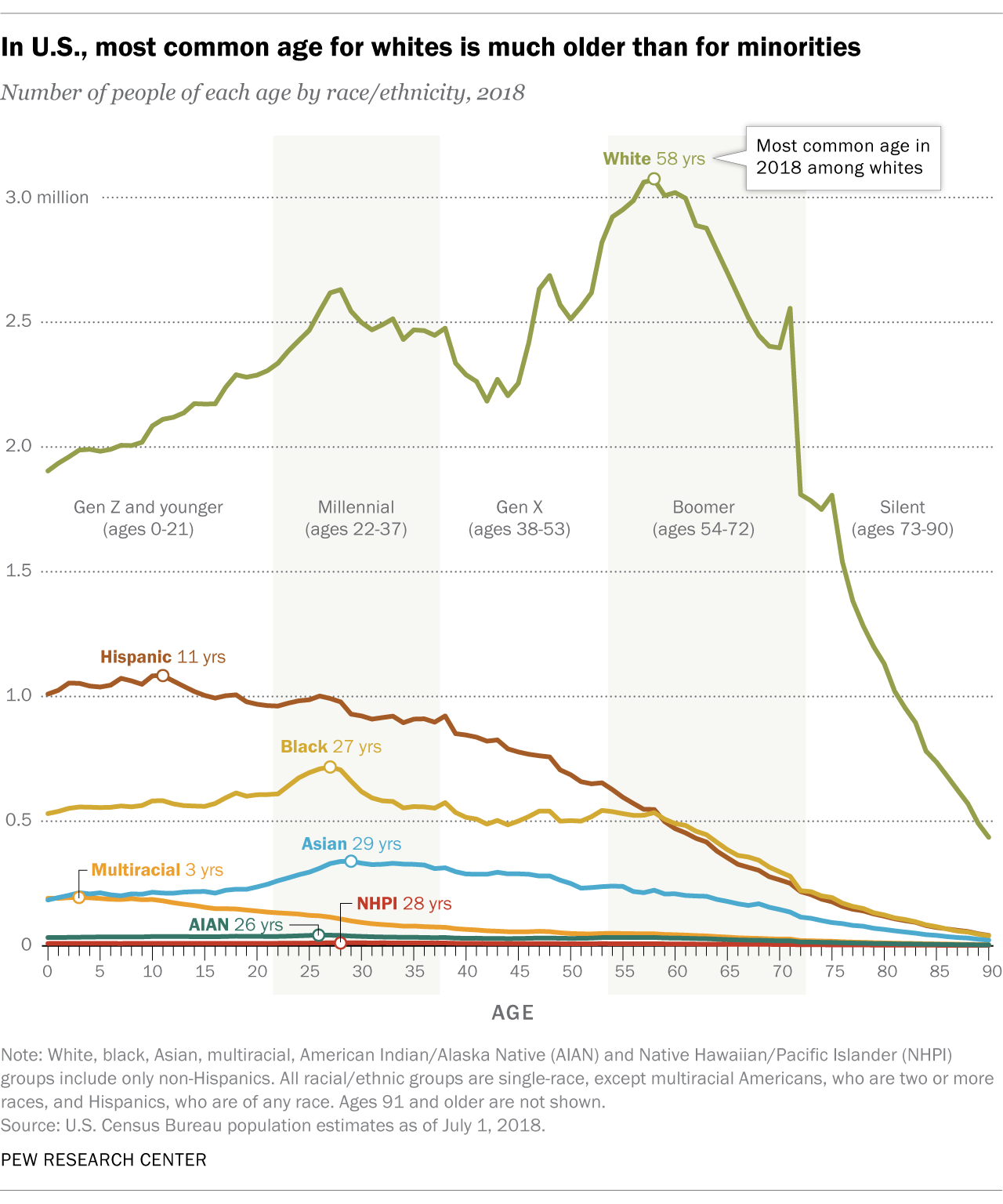
Lots of theories for the changing political proclivities of suburban Americans have been floated, and white Americans are front and center. (White people are the majority in 90 percent of America’s suburban counties.) Class has something to do with it. Over the past few years, college-educated white people have been increasingly more apt to vote for Democrats, while those without a college education skew Republican.

But what do we mean when we talk about “class” and politics?

Indeed, there is a growing body of research from political scientists and others as well as plenty of media interest (example I am quoted in here) on political changes in suburbia. The general pattern is this: Democrats tend to win in communities closer to the city, Republicans tend to win in the exurbs, and the two parties are now dueling over middle suburbs. While these are broad patterns, there can be communities within metropolitan areas that do not exactly fit the mold (as this article notes).

At the same time, I find it odd that this may be the only reason scholars and commentators may pay attention to the suburbs. If the majority of Americans live there (175 million residents, according to the number above), isn’t this enough reason to focus on them? Or, is everything today about counting votes and political races, to the exclusion of the other important factors in suburban life?

This analysis of two Cleveland suburbs also has the pieces for a more accurate and ultimately interesting look at these two communities. In discussions of social class along with race and community history, the article hints at how two suburbs can come to such unique outcomes in a particular election cycle. Think inertia plus community decisions and outside pressure. But, since the goal is to illustrate the issues Democrats face in the suburbs, we are not allowed to consider these suburbs in their own right. Instead, they serve as fleeting communities that are not worth considering more deeply except for their votes.

Limiting cooling and heating emissions from the largest city buildings

New York City has plans to limit emissions from its skyscrapers:

Point is, 70 percent of NYC emissions come from heating and cooling a million buildings—and a third of that carbon comes from just 50,000 buildings of 25,000 square feet or more. Blame the skyscrapers. Trump Tower is apparently a representative of the 2 percent of very, very bad emitters, for what it’s worth. So one of the new bills tells the owners of those big buildings they have to cut their emissions by 40 percent in 2030, and 80 percent by 2050. That’s a lot. “We have to pay attention. The water is speaking to us. In the last century New York Harbor is up one foot,” says John Mandyck, CEO of the Urban Green Council, which helped design the bill. “There’s no question that this bill sets tough, tough carbon limits. It’s not going to be easy. That’s a reflection of the fact that climate change is a tough issue.”

As to how those buildings get there, their owners have a few paths. They can buy green power, which is really more hopeful than realistic at this point; 70 percent of New York City’s power comes from carbon-emitting fossil fuels. But ideally this option will incentivize a market for wind turbines and hydro power, and in fact another bill in the omnibus aims to pave the way for green rooftops with solar panels. Also the building can work with the city to figure out what kinds of improvements would get emissions down—new boilers, better insulation, new windows, all kinds of new investments that would, not coincidentally, translate to thousands of construction and building-trade jobs in the city. Ey, these boilers ain’t gonna install themselves, knowwutImean?

And in an approach out of Kim Stanley Robinson’s post-climate-flood novel New York 2140 (or maybe the Crimson Permanent Assurance) individual buildings would be able to trade carbon credits. “That’s a real breakthrough policy tool. It’s never been done at this scale at a city level,” Mandyck says. “It’s a flexible tool especially for building owners that own portfolios.” So those folks could trade credits among their own buildings, or form alliances and breakaway archipelagos of skyscraping carbon trade routes.

I would guess that few residents would think about buildings as large sources of carbon. This could be for a variety of reasons: building occupants may rarely notice when the heating or cooling is on (though they may be aware of the temperature); carbon reduction efforts have targeted other sources, such as vehicles; and the percent of carbon emissions in New York in buildings may reflect both the number of large buildings and a region unusually dependent on mass transit.

All that said, it will be interesting to watch how these efforts to alter buildings go. The article says little about how building owners have responded. For many, New York will still be a desirable enough market that leaving over these changes i unlikely. Would it make any property owner or potential owner refocus their attention elsewhere? And buying green power or buying and trading credits could prove popular compared to actually making significant changes to buildings which could be costly and require a lot of time and effort. Finally, could alterations remake or restyle some large buildings and introduce a different aesthetic to one of the most important skylines in the world? Images of future cities tend to show more curvy skyscrapers covered in greenery instead of the glass and steel that dominate New York and other American cities. I’m sure there would be ways to make changes that would not just reduce emissions but also push a new look.

Linking secularization and wealth

Political scientist Ryan Burge summarizes part of the sociological conversation about secularization and wealth at a national level:

If you take a course in the sociology of religion at any college or university, the professor will inevitably spend some time on what is known as secularization theory. This theory posits that as societies become more economically prosperous and obtain higher levels of education, the inevitable result is a movement away from organized religion and toward secularization…

ReligionandWealth

The conclusion from this graph is clear: the more economic prosperity a nation enjoys, the fewer citizens of that country say that religion is very important. There are a few outliers, however. China is in the bottom left portion of the graph, which means that based on the country’s economic output it should be more religious than it currently is, with the same occurring in Hungary.

Obviously, both of those countries have a history that is closely associated with communism, which is the likely cause of their low levels of religiosity. On the other hand, the United States is clearly an outlier on this graph. It ranks as the most economically prosperous country in the dataset, but if it were going to be in the middle of the trend line, the overall level of religiosity should be very close to zero.

The takeaway lesson from teaching this in undergrad sociology classes is that the United States is unique in terms of religiosity. Then, the task of sociologists and other social scientists is to tease out why exactly this pattern holds for many industrialized countries and not others. Burge goes on to discuss one explanation from recent sociological research in the United States:

Taken together, the results from this sample tell a simple story: secularization is apparent for older generations of Americans, but for those born after 1950 there is no evidence that education leads to a decline in religious affiliation.

Of course, secularization is not just about wealth. As Norris and Inglehart argue, the more that governments or nations take on the role of providing existential security to residents, the less need residents have for religion.

Or, as a number of scholars have argued, the United States is an outlier for another reason: it has a unique religious market. Because of a lack of government involvement in state religion plus the protection for freedom of religion, religious groups have been free to compete. This competition leads to innovation and religious groups compete for attendees and resources.